
Newton, MA
Kitchen Cabinet Painting in Newton, MA
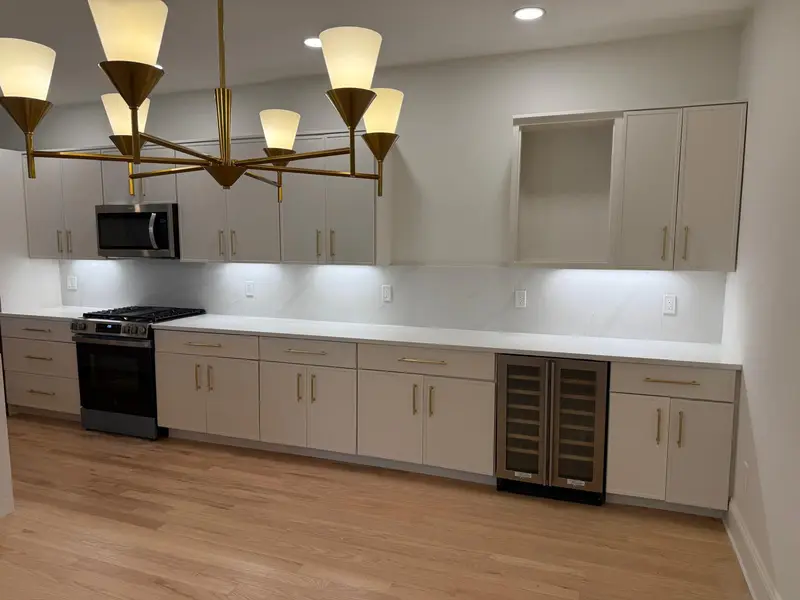
A Newton kitchen with a long run of cabinets and a peninsula. The doors came off, the boxes were painted in place, and the finished kitchen has white cabinets with brass pulls.
See the photos →Siding, trim, porches and windows on Newton houses, from Federal-era mill cottages to Shingle Style and Colonial Revival homes, prepared for wood that has been painted many times.
The outside of a house here is very often original wood. Close to half the homes were standing by 1939, and the city's own preservation guidelines treat painted clapboard, shingles and trim as features to repair and keep rather than cover. That is good news for the look of a street and demanding work for a painter, because a century of coats does not always want to stay stuck.
Newton's design guidelines put the typical repaint cycle for exterior wood at five to eight years and suggest walking around the house every spring and fall to look at the woodwork. If your last full paint job is older than that, the south and west walls, window sills and porch parts are usually where the failure shows first.
For houses inside the four local historic districts (Auburndale, Chestnut Hill, Newton Upper Falls and Newtonville), the city's design guidelines answer this directly: a certificate is not required for paint colors or for painting when the job is limited to repainting. You can choose your colors.
Repair is different. Replacing rotted trim, sills or clapboards with new material, changing a railing, or swapping wood for something else counts as an exterior change, and the commission wants an application. In-kind repairs and ordinary maintenance can often be approved at staff level, and most of those applications are decided within about 15 days of being complete. The guidelines specifically discourage vinyl or aluminum siding and synthetic stucco on historic buildings, so if carpentry is part of the job, plan on matching wood.
Districts do not cover a whole village. Being in Auburndale or Newtonville does not automatically put your house inside the district line, so check the map on the city's historic district page before assuming either way.
Exterior prep on a house this old almost always disturbs lead paint. State rules require a licensed lead-safe renovation contractor, with a certified supervisor on site, for paid work on pre-1978 housing that disturbs more than 20 square feet of painted surface outside, which nearly any real prep job does.
The city's guidelines also advise against heat tools for paint removal and point to Health Department and EPA requirements for lead. We use ground sheeting, hand scraping, wet methods and HEPA-equipped sanders instead of open flame or heat guns, and collect the debris daily. Details are on our lead-safe painting page.
A power washer will strip chalk and loose paint fast, but on old clapboard it can drive water behind the boards and into the wall cavity. Newton's preservation guidelines warn against it for that reason. We wash with a garden-hose rinse and soft brushes, let the wood dry, and then scrape, sand, spot-prime bare wood and caulk open joints before any finish coat.
A 2017 count found that close to four in five of the city's street trees were Norway maples, a dense-shading species, so on a tree-lined street the front of a house can spend much of the day out of the sun. Walls that stay shaded and damp grow mildew and hold moisture longer after rain, so we schedule those elevations for later in the day and use a mildew-resistant finish. Sunny elevations get the opposite treatment: start early, move with the shade, and avoid painting into direct midday heat.
Most exterior painting in Massachusetts runs from late spring into fall, when overnight temperatures stay above what the product label requires. If your house is on our list late in the season, we may split it, finishing the worst walls before the cold and the rest the following spring.
Styles shift across the city. The mill-village houses near the river in Newton Upper Falls are modest Federal and Greek Revival buildings with simple trim, while Chestnut Hill is known for large, often architect-designed Colonial Revival, Georgian Revival and Shingle houses on heavily treed lots. The Waban and West Newton pages cover their own village details. If you are also redoing rooms inside, the interior painting page for Newton covers plaster and indoor lead work.
| Local historic districts | Auburndale, Chestnut Hill, Newton Upper Falls, Newtonville (City of Newton, Local Historic District Commissions) |
| Certificate needed to repaint or change paint color | No, when work is limited to repainting (City of Newton Historic Preservation Design Guidelines) |
| Recommended repaint interval for exterior wood | Every 5 to 8 years (City of Newton Historic Preservation Design Guidelines) |
| Lead-safe threshold, exterior | More than 20 sq ft of painted surface disturbed (Mass.gov, Lead-safe renovation for homeowners) |
| Street trees that are Norway maples | Close to 80% (2017) (Massachusetts Municipal Association (May 2017)) |
A Newton kitchen with a long run of cabinets and a peninsula. The doors came off, the boxes were painted in place, and the finished kitchen has white cabinets with brass pulls.
See the photos →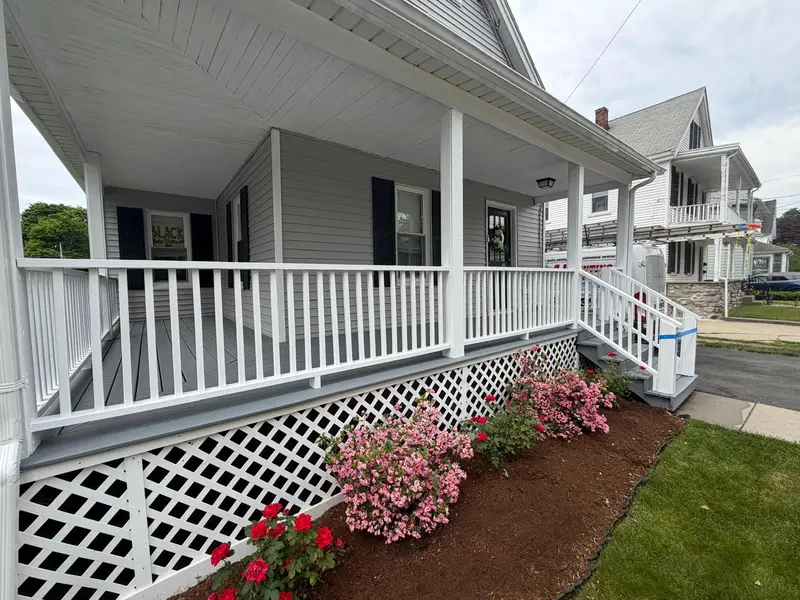
A Norwood home's front and back porches: floor boards and steps painted gray, with railings, balusters and lattice skirting in white.
See the photos →Yes. The city's design guidelines say no certificate is needed for paint colors or painting when the work is limited to repainting. If the job also includes replacing trim, railings or siding boards, file an application for that part; in-kind repairs are often handled at staff level.
One-sided failure usually points to moisture or sun. A shaded, damp wall may be losing paint because water is getting in from a gutter, a missing flashing, or interior humidity, while a south or west wall breaks down faster under UV. We look for the cause before quoting, because new paint over a wet wall will fail the same way.
Small, isolated repairs can be scoped with the prep; anything larger is flagged on the estimate as carpentry so you can decide how to handle it. In a local historic district, plan on matching wood in kind and let the commission know before replacement, since repairs with new material are reviewed even when painting is not.
It is a common thought, but on older houses vinyl can hide rot and trap moisture, and Newton's preservation guidelines treat vinyl and aluminum siding as inappropriate in historic review contexts. Keeping wood painted on a five-to-eight-year cycle is usually the better long-term route.
On older wood houses, the scraping, priming and lead-safe setup drive much of the cost, more than the square footage. Our exterior painting cost guide explains the Massachusetts market ranges, and our Newton painting cost page adds local context. We give you a written estimate after walking the house.
Early fall can be excellent: lower humidity and milder sun. The limit is overnight temperature and dew. Once nights drop below the product's minimum, we pause and pick up again in spring.
We look at every elevation, flag repairs and lead-safe prep, and write up the scope before any work begins. Call (508) 258-4325, Monday to Saturday.
5.0 on Google · 35 verified reviews · Licensed & insured · Written quote in 48h