
Norwood, MA
Porch Floor, Steps & Railings in Norwood, MA
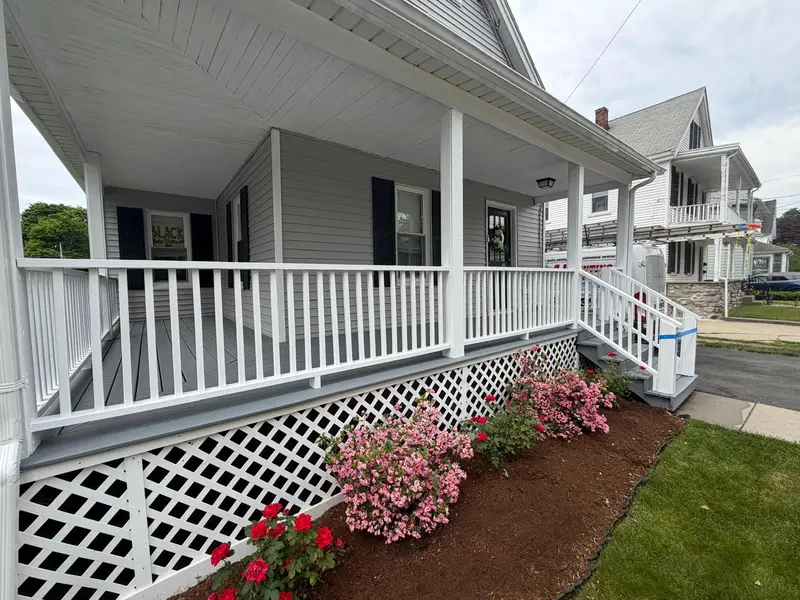
A Norwood home's front and back porches: floor boards and steps painted gray, with railings, balusters and lattice skirting in white.
See the photos →Siding, trim, doors and outbuildings prepared and painted with the woods, the age of the house and the short New England season in mind.
The town's 2023 Master Plan, using MassGIS land cover data, puts deciduous and evergreen forest plus forested wetland at roughly 74% of Rutland's land, while single-family residential land covers just 1.3%. When a house has woods along one or two sides, that shapes how an exterior paint job ages: the shaded walls stay damp, the open walls take the sun, and the two sides of one house can need different attention.
The same plan describes much of the town as zoned for large-lot residential use with a 1.5-acre minimum, with low-density housing spreading out from the Town Center. On a lot that size, walk all four sides before deciding what the house needs; a back wall facing the trees can be in far worse shape than the front.
The Census estimates a median construction year of 1990 for Rutland housing. About 51% of units (1,718 of 3,392) were built in 1990 or later, and the Master Plan cites a surge of new subdivisions between 1997 and 2007 that prompted a moratorium on large numbers of building permit approvals. Siding and trim from that run of construction is now roughly 20 to 30 years old, an age when original caulk and early finish coats have had a long time to weather.
On the other end, the Census counts 603 units from the 1970s (with a wide margin of error, ±264) and 315 from 1939 or earlier. A wood-sided house that old may have been repainted several times, and the condition of those built-up layers decides how much scraping and priming the job really needs.
North-facing and tree-shaded walls are where mildew, green algae and soft trim usually show up first. Those surfaces get a mildew wash and a full dry-out before any primer goes on, and rotten sill or corner-board wood is cut out and replaced rather than painted over. South and west walls fail differently: the paint chalks, fades and cracks across the grain, and the fix is thorough scraping, sanding of feathered edges and a primer suited to bare wood.
Trimming back branches that touch the siding before the job starts helps the new coat last, since contact keeps the wall wet and scuffs the finish.
The Census estimates about 44% of Rutland housing (1,498 units) was built before 1980, the closest cutoff the data offers to the 1978 lead-paint ban. Under the EPA's Renovation, Repair and Painting rule, paid work that disturbs painted surfaces on a pre-1978 home has to follow lead-safe practices: ground covers, containment of paint chips, no open-flame burning and careful cleanup. Our lead-safe painting page walks through what that looks like on a job.
According to the Master Plan, Rutland has no local historic district, and its zoning designates none. The plan recommends the town consider local historic districts and a demolition delay bylaw, and it says paint color would be among the changes exempt from commission review in such a district. As of that plan, there was no town historic-district review of exterior color. Even the 1760s Gen. Rufus Putnam House on Main Street, which is listed on the National Register, sits outside any local district.
Exterior coatings need surface and air temperatures inside the label's range and dry weather while the paint sets. Late spring through early fall is the dependable window, and our post on painting in November covers how late in the year is realistic. For decks and porch floors, see deck staining in Rutland.
| Forest and forested wetland | About 74% of town land (MassGIS 2016) (Town of Rutland Master Plan (2023), Land Use chapter, Table 2) |
| Median year built | 1990 (±10 years) (U.S. Census ACS 2020–2024 5-year, table B25035) |
| Built before 1980 | 1,498 of 3,392 units, about 44% (U.S. Census ACS 2020–2024 5-year, table B25034) |
| Local historic district | None (as of the 2023 Master Plan) (Town of Rutland Master Plan (2023), Historical & Cultural Resources chapter) |
These jobs were in other towns, not in Rutland. Each card names the town where the work was done.
A Norwood home's front and back porches: floor boards and steps painted gray, with railings, balusters and lattice skirting in white.
See the photos →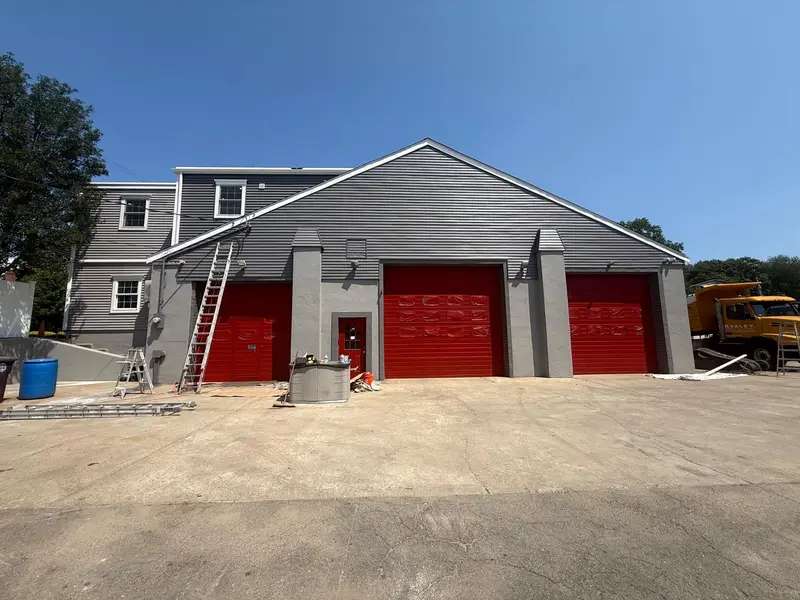
A garage building in Weymouth with white overhead doors and masonry pilasters whose paint was peeling. The doors and service doors were painted red and the pilasters refinished in gray.
See the photos →Based on the 2023 Master Plan, no. The town had no local historic district, and the zoning bylaw's only historic-building provision dealt with wireless equipment. The plan also describes paint color as exempt from review in the districts it recommends, but it is worth checking with the town if you live near Main Street.
Not by itself. The growth has to be killed and washed off, and the wall has to dry fully, or new paint will trap moisture and peel. A finish with mildewcide and more light and air reaching the wall, by trimming branches, keep it from coming back as fast.
Trim has more joints, end grain and horizontal edges than siding, so water gets in there first. Window sills, door casings and corner boards are where to look for soft wood before painting.
Yes, if the siding is sound enough to hold paint. Barn boards that have been bare or stained for years usually need more washing and priming than house siding, and old paint on an older barn may contain lead, so it should be tested and any scraping done with ground covers and chip collection.
It depends on the size of the house, how much scraping and carpentry it needs, and the weather. Prep often takes as long as painting on an older house. The written estimate lays out the scope so you can plan around it.
Mostly the amount of prep, the height and access, wood repair, lead-safe requirements and the paint line chosen. Our exterior painting cost guide explains each of these with Massachusetts market data; the free visit gives you a written number for your house.
Siding, trim and outbuildings looked over in person, with a written estimate at no cost. Call (508) 258-4325, Monday to Saturday, 7 AM to 6 PM.
5.0 on Google · 35 verified reviews · Licensed & insured · Written quote in 48h