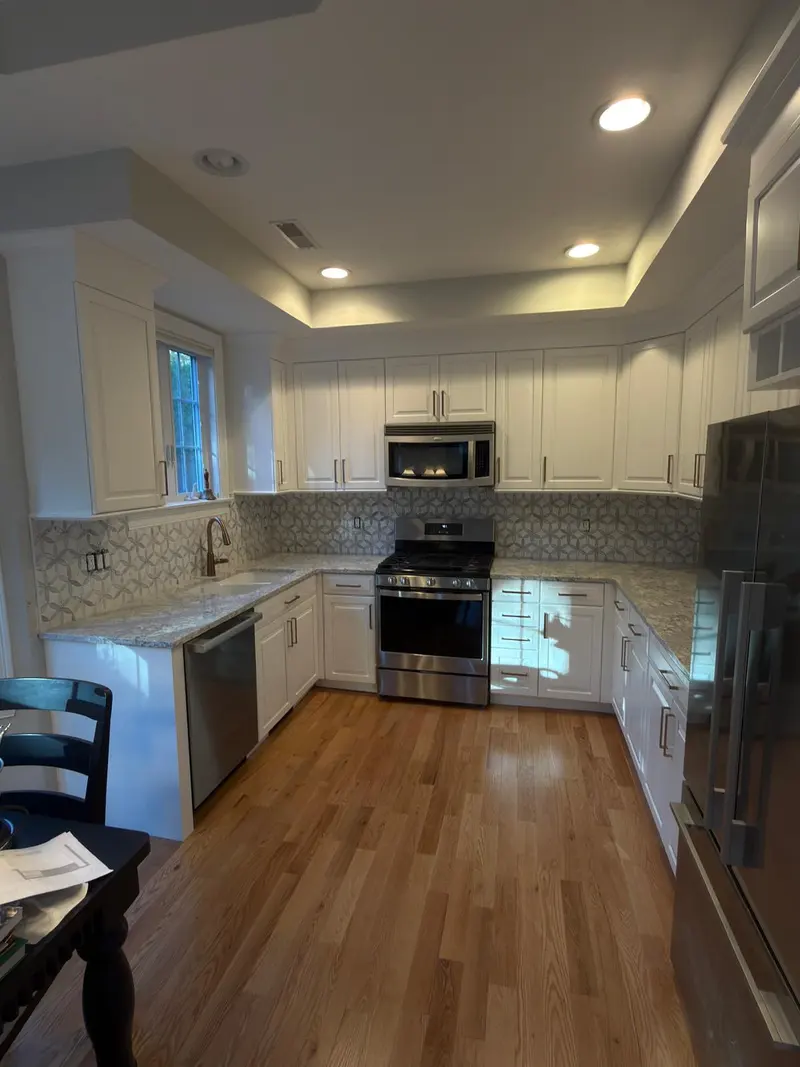
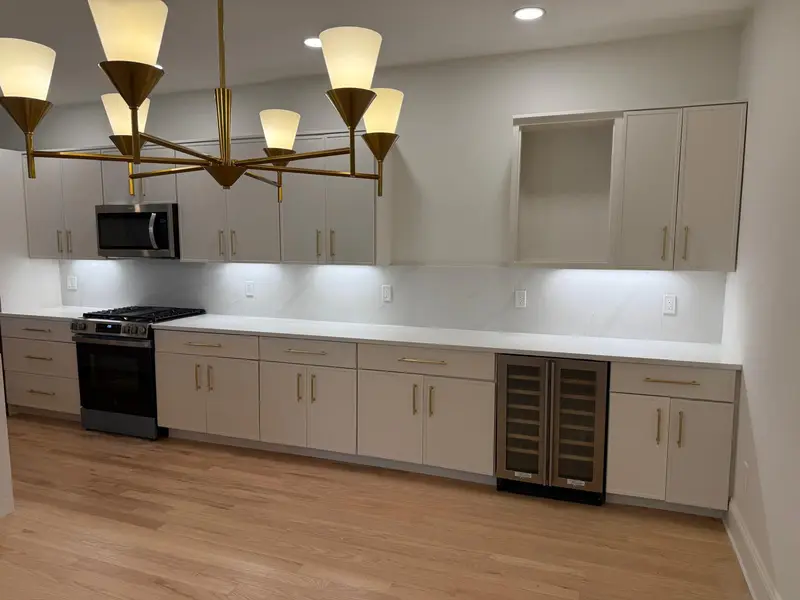
Cabinet paintingRepainting kitchen cabinets instead of tearing them out
Rutland's Master Plan points to a burst of subdivision construction between 1997 and 2007, and Census figures show 609 housing units built in the 1990s and 584 more from 2000 through 2009. A kitchen original to one of those houses is now somewhere around 17 to 36 years old. At that age the cabinet boxes can still be square and solid while the finish has yellowed, worn through at the pulls or simply gone out of style.
That is the situation where painting makes the most sense. If the doors hang straight, the drawers slide and the boxes are not water-damaged, a new finish changes the look of the room without demolition, new boxes or new countertops.
What the cabinets are made of
Before quoting, it matters what the doors actually are. Solid oak and maple take primer well once deglossed, although open-grain oak shows its texture through paint unless the grain is filled. Painted MDF doors sand smoothly and give the flattest finish. Thermofoil or vinyl-wrapped doors are a different case: the plastic skin can peel at the edges, and paint does not fix that, so those doors are usually replaced or refaced instead.
Laminate boxes can be painted with the right bonding primer, but the edges and toe kicks take the most abuse and need careful sanding first.
- Solid wood or veneer: degloss, prime, two enamel coats
- Oak with heavy grain: optional grain filler for a smooth look
- MDF: light sand, seal edges, prime
- Thermofoil: usually a refacing or replacement job
How the work is done
Doors and drawer fronts come off, get labeled and are finished separately, so every edge gets coated and nothing is painted shut. Cabinet faces and end panels are masked and done in place. The surfaces are degreased first, since cooking residue near the range and around handles is the main reason cabinet paint fails to stick. After sanding and a bonding primer, a waterborne alkyd or urethane-modified enamel is applied in thin coats.
The finish feels dry within hours but takes weeks to reach full hardness. Doors go back on when they can be handled, and the kitchen is usable sooner than a remodel, though it needs gentle treatment at first.
Older kitchens and lead
About 44% of the town's housing, 1,498 units in the Census estimate, predates 1980. A kitchen in an older house may have built-in cabinets or shelving that were painted decades ago, and in a home built before 1978 those layers could contain lead. Sanding them without controls spreads dust right where food is prepared. Testing comes first, and if lead is present the work follows the EPA's lead-safe rules described on our lead-safe painting page.
Paint, reface or replace
Painting suits cabinets that are structurally fine and laid out the way you want. Refacing replaces doors and veneer over the existing boxes. Full replacement makes sense when the layout no longer works or the boxes under the sink are swollen from leaks. Our post on cabinet painting vs. replacement compares the three in more detail, and if the walls around the kitchen need fresh color too, see interior painting in Rutland.
Rutland at a glance