
Location not listed
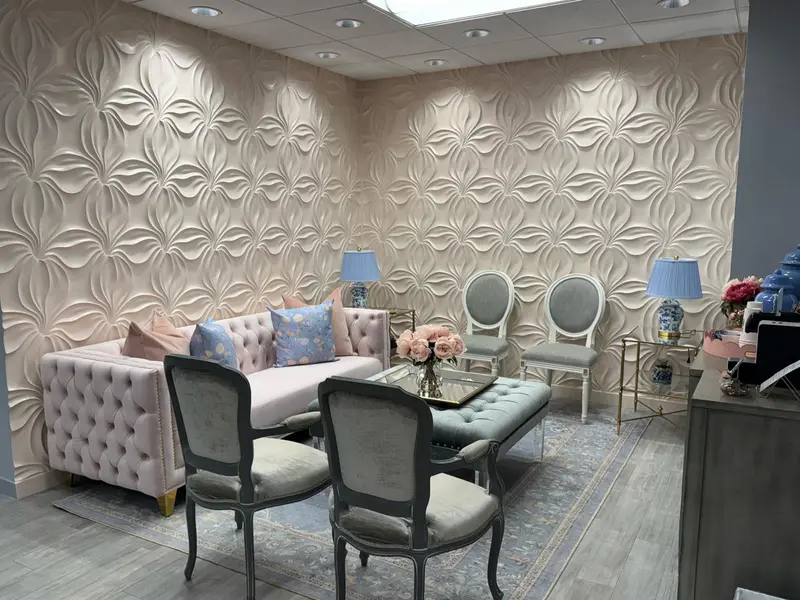
Dental Office Waiting Room
A dental practice's waiting room and reception area, finished in soft gray with applied panel molding, next to a sculpted floral feature wall.
See the photos →Condo units painted for owners and landlords, and hallways, stairwells and exteriors painted for associations, with the paperwork boards and managers ask for.
Single-family houses dominate the town, but not completely. Census estimates count 2,652 units in buildings with five or more units, 19.0% of local housing, and 1,429 of those (10.2%) sit in buildings with 20 or more. Another 1,114 units (8.0%) are single-family attached homes such as townhouses. Some of those are condominiums, where an association controls part of the work; others are rental apartments run by a single owner.
Condo painting splits into two separate jobs: the inside of an owner's unit, and the parts of the property the association maintains. Who pays, who approves and what paperwork is required differ between them.
Interior walls, ceilings and trim inside a unit are generally the owner's to paint, but the master deed and the association's rules decide the details. They may require notice to the manager, a certificate of insurance from the painter, set work hours, and protection for shared elevators and halls while materials come in.
Watch the edges of what you own. The hallway face of an entry door, the exterior of windows and balcony or deck surfaces are often common or limited common elements, so a color change there can need board approval even when the paint is going on your side of the wall.
Common-area painting has to keep the building working. Corridors and stairwells are done in sections so one route stays open, wet areas are marked, and low-odor coatings help in enclosed spaces where residents walk past daily. Doors to units are scheduled with owners so nobody is shut out while paint dries.
Exterior repaints on townhouse rows or garden-style buildings are usually phased by building or elevation. Asking for the estimate itemized that way lets a board compare bids line by line and spread the work over more than one budget year if reserves require it.
A property manager will usually want a certificate of insurance naming the association and the management company as certificate holders before anyone starts. AJ Painting is licensed and insured; request the certificate with the estimate so it does not hold up the start date. A written scope listing surfaces, products, colors and the order of work also keeps the board and owners clear on what is included.
Census data put 67.8% of local units in buildings from before 1980. In any condo building from before 1978, repainting that disturbs more than six square feet of paint in a room, or 20 square feet outside, falls under EPA lead-safe requirements, and that includes common hallways. The lead-safe painting page explains containment and cleanup.
Smaller buildings matter too: two-to-four-unit buildings account for 4.3% of local housing. The 2021 master plan places much of the town's multifamily and condominium housing in North Chelmsford along Middlesex Street and Tyngsborough Road, and the preservation plan describes whole streets there of 19th-century single- and two-family workers' cottages. The North Chelmsford page has more on that village.
Renters occupy 17.9% of occupied units in town. For a landlord who owns a condo, the gap between tenants is the simplest time to repaint, with the unit empty and the work done before the next lease starts. The interior painting page covers wall and ceiling prep in more detail.
| Units in buildings with 5 or more units | 19.0% of housing units (2,652); 10.2% in buildings of 20+ (1,429) (U.S. Census ACS 2020–2024 5-year, table B25024) |
| Single-family attached and 2–4 unit buildings | 8.0% attached (1,114); 4.3% in 2–4 unit buildings (595) (U.S. Census ACS 2020–2024 5-year, table B25024) |
| Renter-occupied housing units | 17.9% of occupied units (2,401) (U.S. Census ACS 2020–2024 5-year, table B25003) |
| EPA lead rule thresholds | Covers paid work disturbing more than 6 sq ft per room inside or 20 sq ft outside in pre-1978 housing (U.S. EPA, Renovation, Repair and Painting Program: Contractors) |
These jobs were in other towns, not in Chelmsford. Each card names the town where the work was done.
A dental practice's waiting room and reception area, finished in soft gray with applied panel molding, next to a sculpted floral feature wall.
See the photos →Usually not for color, but the rules may still require notice to the manager, proof of the painter's insurance and work within set hours. Read the rules and regulations, or ask the manager, before booking.
Check the master deed. The outside face of a unit door, or a townhouse's front door, is often a common or limited common element, so the association may set the color.
If it was built before 1978, yes. Common corridors and stairwells are part of the housing, so paid prep that disturbs more than six square feet of paint per room follows the EPA rule, with containment and cleaning.
By working in sections, keeping one stair or route open, posting the schedule in advance and using quick-drying products so each area reopens quickly.
The master deed sets how common expenses are shared, usually by each unit's percentage interest. Get one written estimate addressed to the association, broken down by elevation, porch and trim, so owners can review it together.
Start with market data in the Massachusetts painting cost guide, then get written estimates for your buildings. Wall area, ceiling height, the number of doors and railings, phasing and after-hours requirements all move the number. AJ Painting's visit and estimate are free.
Call AJ Painting at (508) 258-4325, Mon–Sat 7AM–6PM, for a free walk-through and written estimate. Licensed and insured.
5.0 on Google · 35 verified reviews · Licensed & insured · Written quote in 48h