Exterior painting, WeymouthSiding, shoreline and paint history on Weymouth houses
Seven of every ten housing units in town (70.8%) were built before 1980, and 21.7% go back to 1939 or earlier. On the outside of a house, that age shows up as layers: original wood under several generations of paint, sometimes covered by later siding, sometimes partly replaced. Working out what is on each wall comes before anyone picks a color.
What the siding is made of
National Register nominations for two of the town's historic districts give a useful picture. For the Sea Street district in North Weymouth, the form lists wall materials as wood weatherboard and shingle alongside vinyl and aluminum, and it describes several houses clad in asbestos shingles. The Front Street nomination, covering the district that climbs from Weymouth Landing, says Federal-era houses kept shingle siding while the more ambitious Greek Revival ones often switched to clapboards, and it records vinyl and asbestos shingling added to some buildings.
Each of those materials takes a different approach:
- Wood clapboard and shingle: scrape to sound paint, sand the edges, prime bare wood, then two finish coats
- Asbestos-cement shingles: no sanding, drilling or high-pressure washing; a gentle rinse, then primer and acrylic
- Aluminum siding: wash off the chalky film, prime any bare metal, then a quality acrylic
- Vinyl: only colors the paint maker rates for vinyl, since dark shades can absorb enough heat to warp panels
Water and wind near the rivers
The town's northern edge is shoreline. The master plan describes it as bordered on the north by the Fore River, the Back River and Hingham Bay, and FEMA maps draw VE zones, which mark wave action in a major coastal flood, along both banks of the Fore River, including Idlewell Boulevard. A house facing open water takes wind-driven rain and unshaded sun that a sheltered inland lot may not.
On exposed walls the details carry the job: tight caulk joints at trim, primed end grain on every cut clapboard, and a finish with strong UV resistance. Peeling that starts at the bottom edge of clapboards or under window sills points to moisture rather than bad paint, and the post on common exterior paint failures shows how to read the pattern.
Permits, historic houses and lead
The building department's list of work that requires a permit includes siding, roofing, and window, door or trim replacement. Painting is not on that list, but replacing rotted trim boards or a run of clapboards could bring a job onto it, so ask the inspections office if carpentry is planned.
The Historical Commission administers a demolition delay ordinance for buildings 100 or more years old that meet its significance criteria. It deals with demolition permits rather than paint colors or siding choices; if your house is on the commission's list and you're planning bigger exterior changes, the commission is the place to ask.
Paid work that disturbs more than 20 square feet of painted exterior surface on a pre-1978 house falls under lead-safe rules: ground sheeting, wet scraping, contained debris and a cleanup check. Gardens and play areas next to the foundation are where scraped chips end up without that containment. The lead-safe painting page explains the requirements.
Season and scheduling
Exterior paint needs dry surfaces and temperatures within the product's range overnight as well as by day. Fall dew and short afternoons narrow the window; the post on painting in November explains the limits.
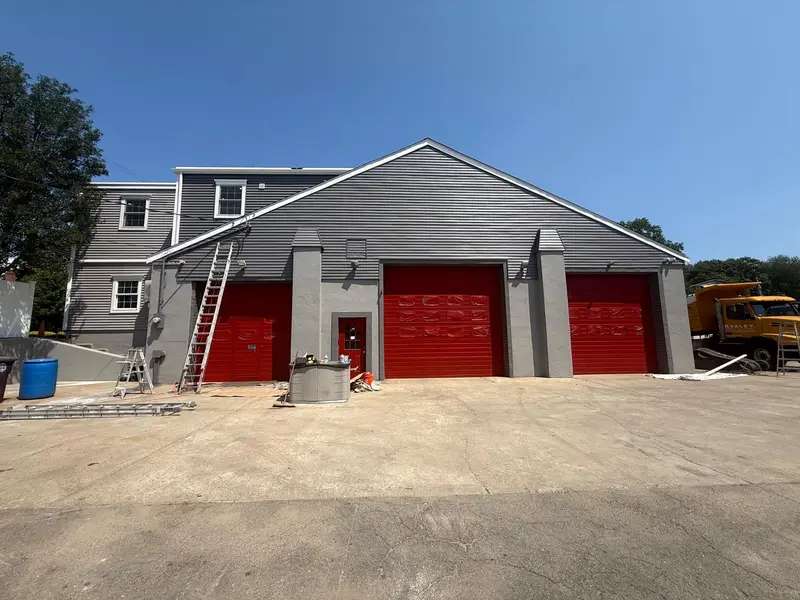
Not every outside job is siding. The Weymouth garage door project shows a building where white overhead doors were painted red and peeling masonry pilasters were refinished in gray. For the peninsula village between the Fore and Back rivers, see North Weymouth, and for the older wood-frame houses around Central Square, see East Weymouth; if a porch or deck is part of the plan, see deck staining in this town.
Weymouth at a glance
| Housing units built before 1980 | 70.8% (18,936 of 26,733) (U.S. Census ACS 2020–2024 5-year, table B25034) |
| Housing units built 1939 or earlier | 21.7% (5,799 units) (U.S. Census ACS 2020–2024 5-year, table B25034) |
| Wall materials, Sea Street Historic District | Wood weatherboard and shingle, vinyl and aluminum; several houses in asbestos shingles (NRHP Registration Form, Sea Street Historic District, Section 7) |
| Coastal flood zones | FEMA VE (wave action) zones along both Fore River shorelines, including Idlewell Boulevard (Town of Weymouth, Planning & Community Development — Flood Maps) |
| Work on the town's permit-required list | Includes siding, roofing and window/door/trim replacement; painting is not listed (Town of Weymouth, Building Permit Information) |