
Norwood, MA
Porch Floor, Steps & Railings in Norwood, MA
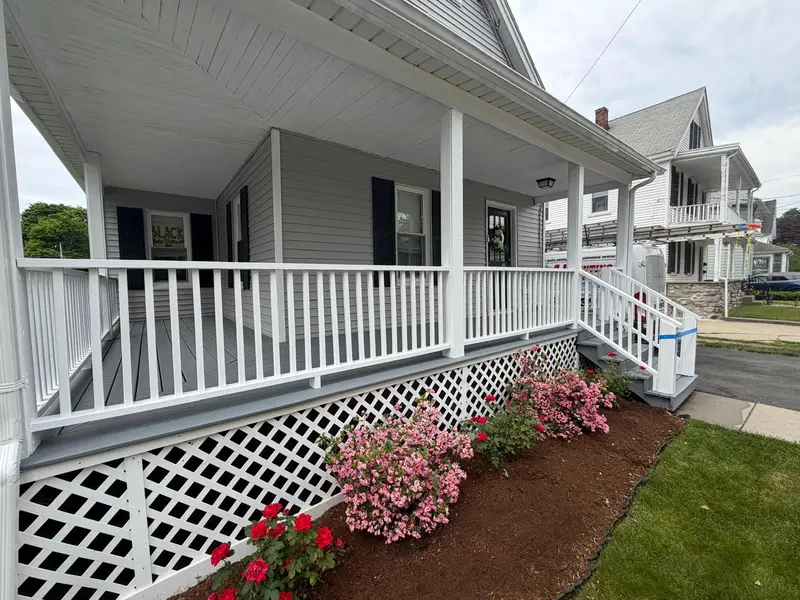
A Norwood home's front and back porches: floor boards and steps painted gray, with railings, balusters and lattice skirting in white.
See the photos →Clapboard, shingle and trim repainting for Wakefield houses, with lead-safe scraping on older siding and prep matched to how worn each side of the house is.
The town's 2025 Housing Production Plan states plainly that Wakefield has no local historic districts. Without a district commission, there is no local board approving paint colors or trim details on a house before work starts. That holds even for houses in the four National Register districts around the Common, along Church and Lafayette streets, in Wakefield Park and on Yale Avenue: the National Park Service notes that Register listing places no federal restrictions on a private owner's work unless federal funding, licensing or permits are involved.
So the color decision is yours. What the house needs underneath that color depends on its age and condition.
Wakefield's Historical Commission keeps a list of 389 Significant Sites and administers a Demolition Delay Bylaw. For a significant building (one on the National Register or on the Commission's inventory), that bylaw can hold off a demolition permit for up to six months from the application. It applies to tearing a structure down, not to scraping, priming or repainting it.
If you own a listed house and want colors that suit its style, there is guidance to draw on. For Wakefield Park, the Wakefield Historical Society quotes the 1990 National Register listing's description of "a remarkable collection of Colonial Revival and Shingle Style homes"; period palettes for those styles exist, and matching them is a design choice rather than a requirement.
Census data shows 70.8% of Wakefield housing units were built before 1980. On a home built before 1978, scraping and sanding painted siding generally counts as regulated renovation under the EPA's RRP rule. That means ground sheeting under each work area, misting or HEPA-shrouded tools instead of dry power sanding, and a cleanup the crew can verify before the plastic comes up.
The oldest clapboard and trim carry the longest paint history, so the setup matters most there. The lead-safe painting page walks through the setup.
Water and wetlands cover about 18% of the town, according to the same housing plan, and federal flood hazard zones sit mainly near Lake Quannapowitt, the Mill River and Reedy Meadow. A wall that stays wet, whether from low ground, a leaking gutter or shrubs pressed against the siding, will shed paint faster than a dry one. Gutter fixes, trimming plants back and letting the wood dry out come before primer on those walls.
The post on common exterior paint failures shows what peeling, blistering and mildew each point to.
Most exterior coatings list a minimum surface and air temperature on the label, so outside work runs from spring into fall and pauses when nights get cold. Booking an estimate during the off-season gives time to pick colors before the calendar opens. For more on timing, read can you paint a house exterior in November.
Decks and porches can be handled on the same visit; see deck staining and painting in Wakefield. Homeowners in Greenwood, Montrose and the West Side can request an estimate the same way.
| Local historic districts | None (no local color or design review) (Town of Wakefield Housing Production Plan FY2026–2030, p. 89) |
| National Register districts | 4 (Common, Church–Lafayette, Wakefield Park, Yale Avenue) (NRHP listings for Wakefield, citing NPS NRIS) |
| Historical Commission Significant Sites | 389 properties (Town of Wakefield Housing Production Plan FY2026–2030, p. 89 (count)) |
| Housing built before 1980 | 70.8% of units (U.S. Census ACS 2020–2024 5-year, table B25034) |
| Land classified as wetland or water | About 18% of town (Town of Wakefield Housing Production Plan FY2026–2030, pp. 71–77) |
These jobs were in other towns, not in Wakefield. Each card names the town where the work was done.
A Norwood home's front and back porches: floor boards and steps painted gray, with railings, balusters and lattice skirting in white.
See the photos →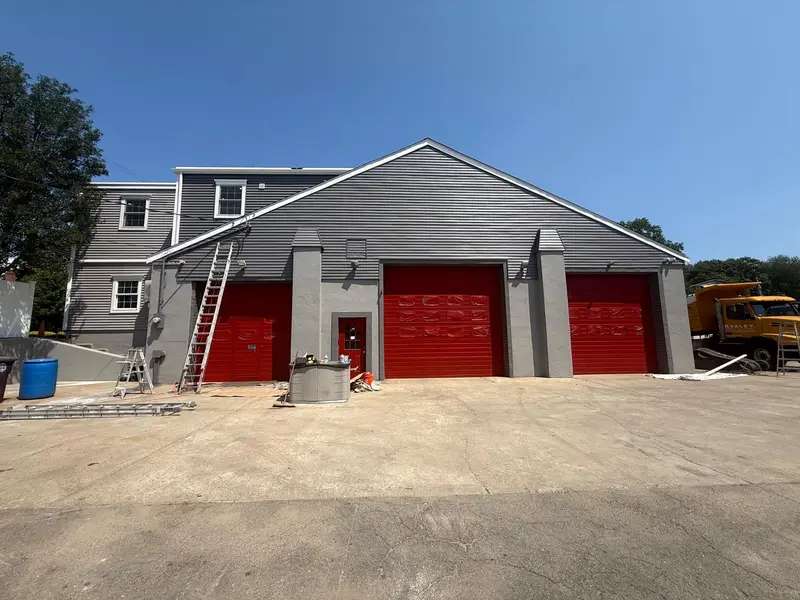
A garage building in Weymouth with white overhead doors and masonry pilasters whose paint was peeling. The doors and service doors were painted red and the pilasters refinished in gray.
See the photos →Not from a local commission, because the town has no local historic districts. National Register listing by itself places no federal restriction on a private owner's painting unless federal money or permits are involved. If you want a period-appropriate palette, that is a choice we can help with.
The list feeds the town's Demolition Delay Bylaw, which concerns demolition permits. Scraping, priming and repainting a listed house are not demolition.
A single failing wall often points to moisture: a gutter overflowing, a bathroom vent nearby, ground that stays wet, or plants trapping damp against the siding. The source is found and fixed before that wall is primed, or the new paint will fail the same way.
Not usually. Sound, well-bonded paint can stay. Loose paint is removed to a firm edge, bare spots are primed, and transitions are feathered. Full stripping is reserved for siding where the old coating has failed across the whole surface.
Getting the estimate done over winter lets you settle colors and repairs before outdoor painting weather starts, so the job can be placed on the calendar early.
AJ does not list prices. The exterior painting cost guide collects Massachusetts market figures; the amount of failing paint, lead-safe setup on a pre-1978 house, carpentry repairs and the height of the walls usually matter more than total square footage.
Free on-site visit and written estimate from AJ Painting, a licensed and insured painter based in Ashland. Call (508) 258-4325, Monday–Saturday, 7AM–6PM.
5.0 on Google · 35 verified reviews · Licensed & insured · Written quote in 48h