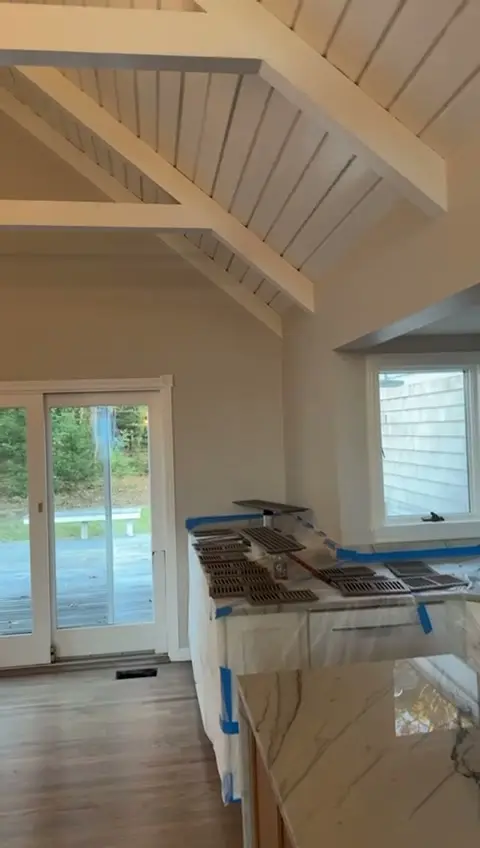
Interior painting, WakefieldInside a town whose median house dates to 1956
Census figures put the median construction year for Wakefield housing at 1956, but that middle number hides a wide spread. Close to a third of the town's units (31.8%) went up in 1939 or earlier, and the 1950s added another 16.4%, more than any other decade after the war. So the stock runs from pre-war houses to postwar ones, and their rooms need different preparation even when the color chart is identical.
The estimate starts with what the walls are made of, how many paint layers sit on the trim, and whether any of that paint is old enough to matter for lead rules. Color comes after.
Plaster rooms versus drywall rooms
A house built before the war may still have plaster on lath. Plaster shows hairline cracks along ceilings and over door frames, and older patches can bulge or sound hollow when tapped. Those spots get re-secured or cut back and skim-coated so the crack does not telegraph through two fresh coats a month later.
Rooms finished with drywall bring their own issues: popped nail heads, tape seams that lift in a damp bathroom, and corner bead dented by decades of furniture moving. Each defect is marked during the walk-through so it can be listed on the written estimate instead of discovered halfway through the job.
- Plaster: crack routing, bonding of loose areas, skim coats where the surface is rough
- Drywall: reset fasteners, re-tape lifted seams, spot-prime every patch
- Both: oil-based or shellac primer over water stains so they do not bleed back
Old paint on trim, windows and stairs
Census counts put 70.8% of Wakefield housing was built before 1980, and the federal Renovation, Repair and Painting rule covers paint-disturbing work in homes built before 1978. Window sashes, stair treads, door edges and baseboards are where sanding and scraping happen, so they are the surfaces handled with plastic containment, HEPA vacuums and a cleaning check at the end.
If you are not sure when your house was built or what is under the current coat, the lead-safe painting page explains how testing and containment work before any sanding begins.
Ceilings, stairwells and two-family hallways
Units in two-unit buildings make up 14.1% of the town's housing. In a two-family, the shared front hall and the stairwell to the second floor carry traffic from both households, and the ceiling over the stairs is the hardest spot to reach without proper staging. Planning that stairwell first lets both households keep using the stairs while the rest of the house is painted room by room.
Ceilings in older rooms may carry ice-dam stains from past winters. The post on ceiling stains after an ice-dam leak explains why the leak has to be fixed and the stain sealed before any ceiling paint goes on.
Painting while the windows stay shut
Interior jobs do not depend on outdoor temperatures, so late fall and winter work well as long as the house is heated and air can move. Low-odor waterborne paints keep the smell manageable with the windows closed; the guide to winter interior painting covers drying times and ventilation in a sealed-up house.
Once inside work is done, the same visit can include an outside look for spring; see exterior painting in Wakefield. Estimates are available across Greenwood, Montrose and the West Side.
Wakefield at a glance