
Norwood, MA
Porch Floor, Steps & Railings in Norwood, MA
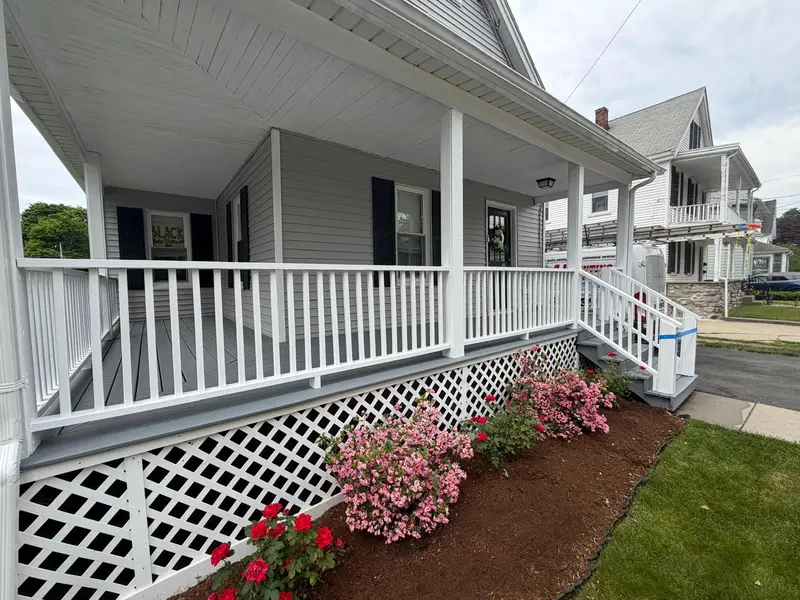
A Norwood home's front and back porches: floor boards and steps painted gray, with railings, balusters and lattice skirting in white.
See the photos →Siding and trim prepared by hand, rot repaired before primer, and paint chosen for wood that has been painted many times over.
Two groups stand out in Sherborn's housing stock. Census estimates put about 20% of the town's homes at 1939 or earlier, and a Town of Sherborn preservation document notes that 77 old houses are listed on the National Register and that six or more houses in town have portions from the late 1600s. On the other side, 815 of the 1,588 housing units (51.3%) were built between 1950 and 1979, and the median year built is 1968.
Those groups need different exterior plans. An eighteenth-century clapboard house may carry many paint layers, some of them lead-based, over wood that has moved with every season since it was nailed up. A house from the 1960s usually has fewer layers and simpler trim, but it has also reached the age where caulk joints, window sills and the bottom courses of siding start to fail.
The Sherborn Center Local Historic District was created by Town Meeting in 1983 and is bounded by North Main, South Main, Washington and Sawin Streets. Under the district's 2007 design review guidelines, exterior changes visible from a public way, a park or a body of water go to the Historic District Commission, and that includes replacing windows, doors, gutters or building materials.
Repainting is treated differently. The same guidelines exempt the color of paint on previously painted surfaces and state that no hearing is needed to repaint a house, though the Commission encourages colors that sit well with the neighboring buildings. Painting masonry that has never been painted is a different matter: the guidelines say it will not be approved. They also rule out swapping wood siding for vinyl or aluminum and recommend repairing original wood siding and trim. Because those guidelines date from 2007, confirm with the Commission before any work that goes beyond paint, such as replacing rotted clapboards with a new profile.
The town also has two National Register districts: Sherborn Center and the Edward's Plain–Dowse's Corner district, which begins at Powderhouse Lane and extends north to North Main Street just north of Rockwood Street. According to the town's own preservation document, a National Register listing places no restrictions on the average private property; it mainly affects projects that use state or federal funds or permits. Outside the local district, then, choosing colors and repairing trim is up to you.
Of the town's housing units, 72.9% were built in 1979 or earlier, so on a large share of houses here, older coats under the current paint may contain lead. Scraping and sanding those surfaces is done under lead-safe work practices: ground covers, containment, and cleanup that keeps chips out of gardens and play areas.
Once loose paint is removed, the job turns to the wood. Soft sills, split corner boards and decayed clapboard ends are cut out and replaced or consolidated with epoxy before any primer goes on. Bare wood gets an oil-based or bonding primer, open joints get flexible caulk, and the finish coats go on at a thickness the manufacturer specifies.
Because every property relies on its own well and septic system, the town requires minimum lots of one, two or three acres, and open space covers more than half of its land. The Massachusetts Historical Commission's 1980 survey also observed that many former colonial farmhouses, particularly in the southern and eastern parts of town, stand far back from the road. For an exterior crew, a setting like that can mean long carries from the driveway, uneven ground for ladders, and trees near the walls that shade some elevations.
The same survey describes a rugged upland with large areas of bog and swamp. Siding that faces wet ground or a stand of trees dries slowly after rain, so mildew is washed off and treated before painting, and a paint with mildew resistance makes sense on those elevations. Exterior painting in Massachusetts generally runs from late spring through early fall, when surface and air temperatures stay within the label range overnight. If rooms inside need attention as well, see interior painting in Sherborn.
| Built 1939 or earlier | About 20% of housing units (319 of 1,588, ±96) (U.S. Census ACS 2020–2024 5-year, table B25034) |
| Median year built | 1968 (U.S. Census ACS 2020–2024 5-year, table B25035) |
| Sherborn Center Local Historic District | Established 1983; repainting previously painted surfaces exempt from color review (Sherborn Center Local Historic District Design Review Guidelines (2007)) |
| National Register-listed old houses | 77, in two districts or individually listed (Historic Preservation in Sherborn (Town of Sherborn)) |
| Minimum house lot size | 1, 2 or 3 acres depending on location (Historic Preservation in Sherborn (Town of Sherborn)) |
These jobs were in other towns, not in Sherborn. Each card names the town where the work was done.
A Norwood home's front and back porches: floor boards and steps painted gray, with railings, balusters and lattice skirting in white.
See the photos →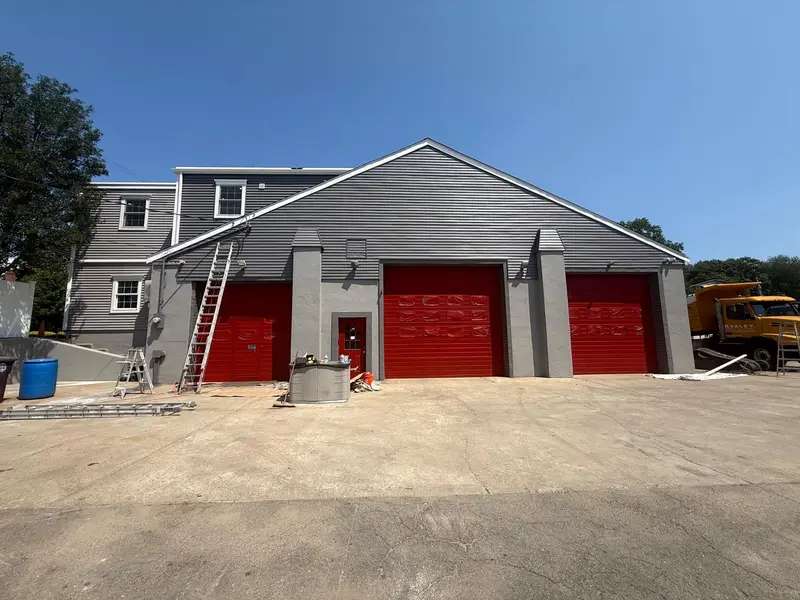
A garage building in Weymouth with white overhead doors and masonry pilasters whose paint was peeling. The doors and service doors were painted red and the pilasters refinished in gray.
See the photos →Under the district's 2007 guidelines, no. Paint color on previously painted surfaces is exempt and no hearing is required, although the Commission encourages harmonious colors. Replacing siding, windows, doors or gutters is reviewed, so check with the Commission if the job includes any of those.
If it is inside the local historic district and has never been painted, the guidelines say that will not be approved. Outside the district it is your call, but painting unpainted masonry traps moisture and commits you to repainting it for good, so it is worth thinking twice.
The town's preservation document states that National Register listing places no restrictions on the average private property. For a privately paid repaint, only the local historic district has a review process; work that uses state or federal funds or permits can be reviewed by the Massachusetts Historical Commission.
Inside the local district, the 2007 guidelines say replacing wood with synthetic siding such as vinyl or aluminum will not be approved and recommend repairing original wood; fiber cement is not named, so ask the Commission first. Outside the district those guidelines do not apply, but replacing a few rotted boards with matching wood and painting them keeps the house consistent and avoids re-siding the whole wall.
Not by itself. The growth is washed off and killed first, and a mildew-resistant finish slows its return. Thinning trees near the wall and keeping gutters clear helps those elevations dry out after rain.
Size, height, the amount of scraping and wood repair, and lead-safe setup drive the number more than gallons of paint. The exterior painting cost guide explains those factors with Massachusetts market data, and the free on-site visit ends with a written estimate.
AJ Painting is based in Ashland, licensed and insured. Call (508) 258-4325 for a free visit and written estimate, Monday to Saturday, 7 AM to 6 PM.
5.0 on Google · 35 verified reviews · Licensed & insured · Written quote in 48h