
Norwood, MA
Porch Floor, Steps & Railings in Norwood, MA
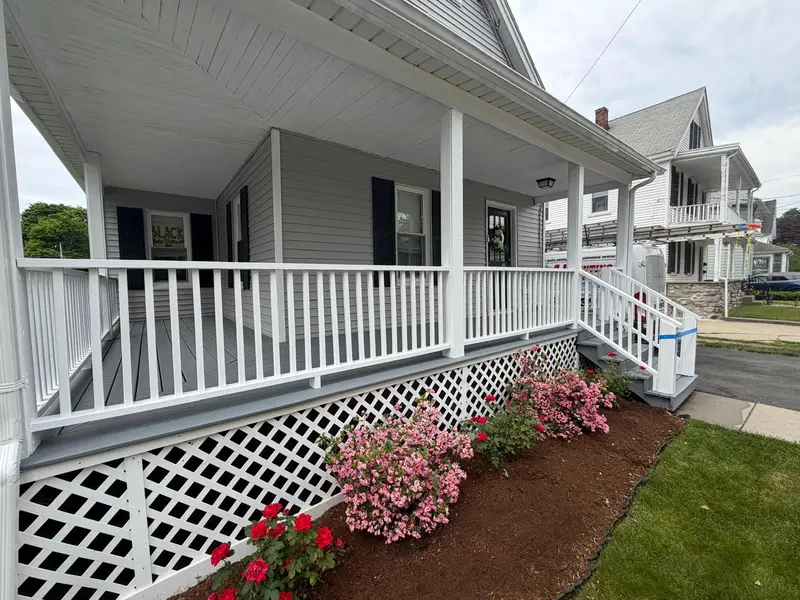
A Norwood home's front and back porches: floor boards and steps painted gray, with railings, balusters and lattice skirting in white.
See the photos →Siding, trim and outbuildings scraped, primed and painted for the material and age of each wall.
The center of town is on the National Register of Historic Places. The Pepperell Center Historic District, listed in 1994, is laid out around the town common along Park, Main, Elm, Townsend and Heald Streets. Its nomination form lists the wall materials found there as wood weatherboard and shingle, brick, aluminum and vinyl, and counts 111 contributing buildings.
That list is a fair summary of what an exterior painter meets in the district: some houses still wear painted wood, some have been covered, and some mix the two, with original wood trim around synthetic siding. Each needs a different plan.
According to the town's 2022 historic resources survey plan, no local historic districts have been established in Pepperell. Local district status was studied for Pepperell Center and Babbatasset Village in 1987 and for the center again in 2002, but it was not adopted. National Register listing on its own does not regulate what color a private owner paints a house.
The Historical Commission does have a formal role in one case: zoning requires its recommendation for projects that adaptively reuse historic buildings. Ordinary repainting of a house is not that. If your project includes larger changes, the commission's page on the town website is the place to ask.
The survey plan says Federal and Greek Revival styles are the most common in Central Pepperell, and that East Pepperell has Greek Revival, Italianate, Mansard and Queen Anne buildings. Those styles carry wide corner boards, cornices, brackets and window hoods, and those details catch water. Rot usually starts at the bottom of corner boards, on window sills and where a porch roof meets the wall.
Painted clapboard of that age often has many coats built up. Where the paint is sound, scraping loose edges, sanding them smooth and spot-priming bare wood is enough. Where it has failed down to the wood in large areas, more removal is needed. The Census counts 46.8% of housing units in town as built before 1980, and paint on any house from before 1978 is handled with lead-safe practices during scraping.
Split-entry ranches are the most prevalent postwar house type in town, according to the survey plan. Because the lower level sits partly below grade, the front wall can combine exposed foundation, siding above it and an entry with its own stoop and railing. Painting one can mean three materials on a single wall.
On vinyl and aluminum siding, paint is usually limited to the wood around it: trim, doors, shutters and soffits. The survey plan makes the point that keeping historic trim on walls and around doors and windows reduces the visual effect of synthetic siding in East Pepperell. Painting that trim well is one of the simplest ways to keep it. The plan also identified about two dozen barns in Central Pepperell and says field reconnaissance found barns and other outbuildings greatly under-documented in the town's inventory. Barn siding is often rougher and drier than house clapboard and soaks up more primer.
Exterior paint needs dry wood and temperatures within the product's range through the drying time, which makes late spring through early fall the main season. Our post on painting in November covers late-season limits. AJ Painting is based in Ashland, licensed and insured, and offers a free on-site visit with a written estimate. For rooms inside, see interior painting in Pepperell, and for the back of the house, deck staining.
| National Register district | Pepperell Center Historic District, listed 1994 (ref. 94000812) (National Park Service NPGallery record) |
| Wall materials in the district | Wood weatherboard and shingle, brick, aluminum, vinyl (NRHP Registration Form, Pepperell Center Historic District (1994)) |
| Local historic districts | None established (as of Sept 2022) (Town of Pepperell Historic Resources Survey Plan (2022)) |
| Built before 1980 | 46.8% of housing units (U.S. Census ACS 2020–2024 5-year, table B25034) |
| Barns identified in Central Pepperell | About two dozen (Town of Pepperell Historic Resources Survey Plan (2022)) |
These jobs were in other towns, not in Pepperell. Each card names the town where the work was done.
A Norwood home's front and back porches: floor boards and steps painted gray, with railings, balusters and lattice skirting in white.
See the photos →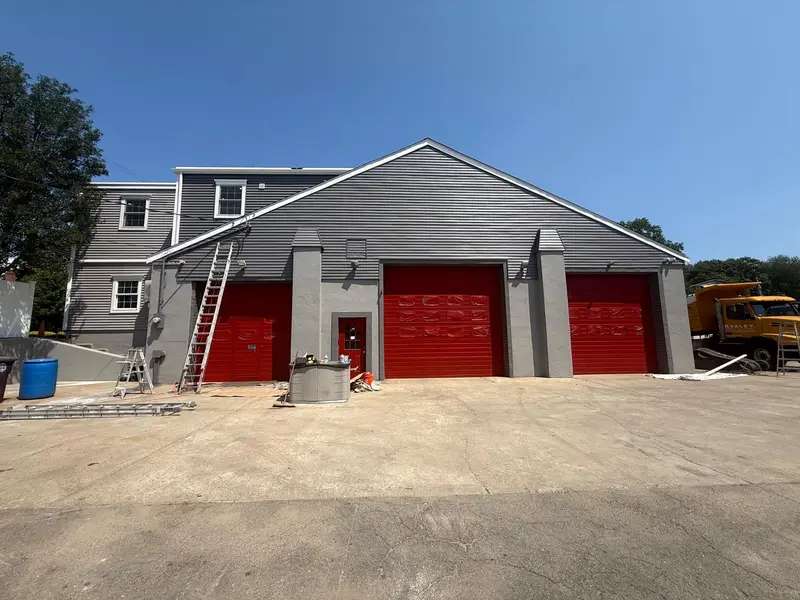
A garage building in Weymouth with white overhead doors and masonry pilasters whose paint was peeling. The doors and service doors were painted red and the pilasters refinished in gray.
See the photos →Based on the town's 2022 survey plan, no local historic district has been adopted, and National Register listing alone does not control paint colors. Zoning does require a Historical Commission recommendation for adaptive reuse of a historic building, so if your project goes beyond repainting, ask the commission first.
Yes. Trim, window casings, doors and shutters are masked off from the siding and painted on their own. If the vinyl itself is faded, some vinyl-safe paints exist, but the color has to be no darker than the manufacturer allows or the siding can warp in sun.
Paint or a solid stain keeps water out of barn boards and slows rot, which matters more than looks on an outbuilding. Rough, weathered boards take more primer and more labor per square foot than house siding, so it is usually quoted separately.
Sides that get little sun stay damp longer, and moisture behind paint pushes it off. Clogged gutters, missing drip edges, or bathrooms and kitchens without vents on that wall can add to it. Fixing the water source matters as much as the scraping and priming.
It depends on prep, weather and how much trim there is. A raised ranch has less wall height to reach than a 2½-story house in the village, but foundation, siding, trim and railings each need their own steps. The written estimate lists the scope so you can see what takes the time.
Our exterior painting cost guide explains how house size, height, siding condition and trim detail drive pricing, using Massachusetts market data. After the free visit you get a written estimate specific to your house.
Siding, trim and outbuildings checked before we quote. Call (508) 258-4325, Monday to Saturday, 7 AM to 6 PM.
5.0 on Google · 35 verified reviews · Licensed & insured · Written quote in 48h