
Norwood, MA
Porch Floor, Steps & Railings in Norwood, MA
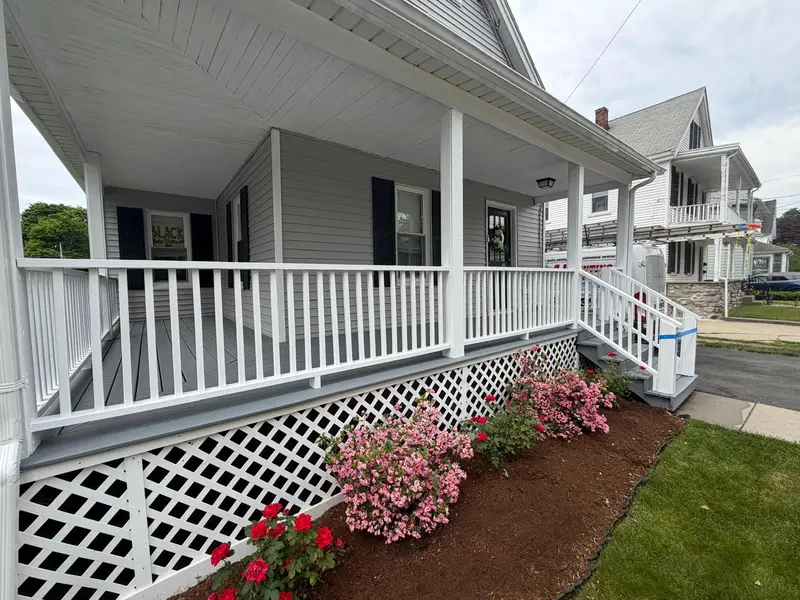
A Norwood home's front and back porches: floor boards and steps painted gray, with railings, balusters and lattice skirting in white.
See the photos →Siding, trim, doors and porches scraped, repaired and primed before a single topcoat goes on.
Exterior painting here is mostly single-family work. The Census counts 1,560 of 1,753 housing units in town, 89.0%, as detached single-family homes, and 91.8% of occupied units are lived in by their owners. In practice that means each house is its own project with its own siding, its own exposure to sun and wind, and its own history of past paint jobs, rather than a block of identical units on a shared schedule.
The age of those houses shapes the prep more than anything else. With a median build year of 1967 and 674 units from the 1950s and 1960s alone, a house from that era has had six decades to collect coats of paint, and unless the siding was stripped or replaced, those layers sit under whatever goes on next.
Peeling down to bare wood, blistering on the sunny side, mildew streaks on the north wall and cracking in a crisscross pattern each point to a different cause, from trapped moisture to too many brittle layers. Our guide to common exterior paint failures shows what each looks like. The fix is chosen from the diagnosis: a moisture problem calls for repairing flashing, gutters or a missing vent before painting, while built-up layers may need heavier scraping or sanding to get back to a sound surface.
Clapboard and shingle siding get scraped, sanded at the edges of sound paint, spot-primed on bare wood and caulked at joints between trim and siding. Soft or split boards around windows, door casings and corner boards are replaced rather than filled, since paint over rot fails first.
Of the town's housing units, 1,178 (67.2%) were built before 1980, and the 171 built in 1939 or earlier are the most likely to carry many layers of original paint on their clapboards and trim. On any pre-1978 house, scraping is done with ground sheeting to catch chips, wet methods to keep dust down and daily cleanup, so paint debris does not end up in garden beds or the lawn where kids play. Our lead-safe painting page has the details.
The town has a local historic district under Chapter 40C, run by the Paxton Historic District Commission. According to the town's own description and map, it covers a small set of town-owned civic properties in the center, such as the Town Hall, the Common and the Richards Memorial Library, not private homes. Even inside the district, the bylaw specifically excludes paint color from review, along with repairs that do not alter or replace material.
For a private house, then, choosing a new color does not go through that commission. If an exterior project also involves replacing trim profiles, windows or siding, ask the building department what applies; the town takes permit applications through its online permitting portal.
Exterior coatings need surface and air temperatures inside the range on the can, along with time to cure before dew or rain. In central Massachusetts that usually limits the main exterior window to late spring through early fall, with shoulder-season days possible when the forecast cooperates; see whether November painting can work. A quality acrylic topcoat over the right primer generally outlasts a cheaper paint on the same prep.
AJ Painting is based in Ashland, licensed and insured, and the on-site visit and written estimate are free. Working on rooms inside too? See interior painting in Paxton, or deck staining for the back of the house.
| Single-family detached homes | 89.0% of housing units (1,560 of 1,753) (U.S. Census ACS 2020–2024 5-year, table B25024) |
| Owner-occupied homes | 91.8% of occupied units (1,579 of 1,720) (U.S. Census ACS 2020–2024 5-year, table B25003) |
| Built before 1980 | 67.2% of housing units (U.S. Census ACS 2020–2024 5-year, table B25034) |
| Local historic district | Town-owned civic properties in Paxton Center; paint color excluded from review (Town of Paxton, Historic District Bylaw (sec. 8.1) and Historic District page) |
These jobs were in other towns, not in Paxton. Each card names the town where the work was done.
A Norwood home's front and back porches: floor boards and steps painted gray, with railings, balusters and lattice skirting in white.
See the photos →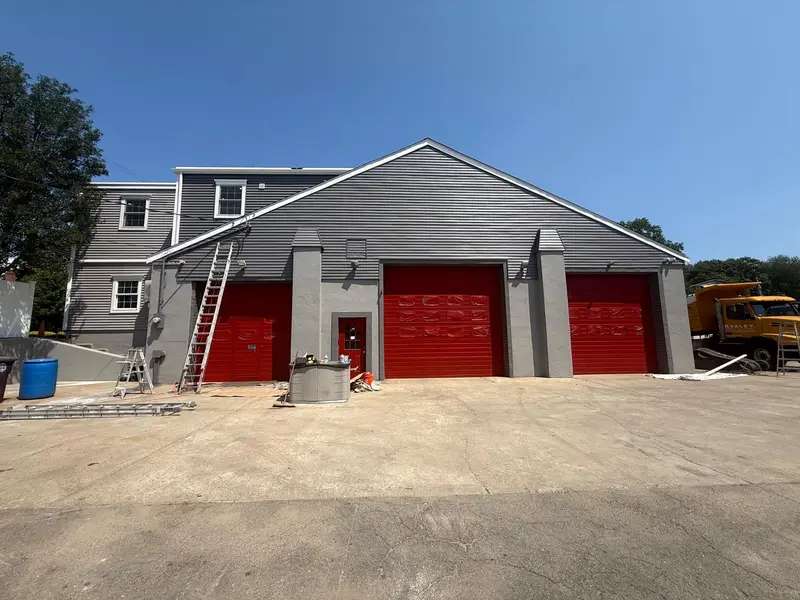
A garage building in Weymouth with white overhead doors and masonry pilasters whose paint was peeling. The doors and service doors were painted red and the pilasters refinished in gray.
See the photos →Based on the town's description, the local historic district is made up of town-owned civic properties in the center, not private homes. The bylaw also excludes paint color from review even inside the district. If you are unsure whether your property is affected, the town's Historic District page has the map.
Uneven peeling often comes from moisture moving out through the wall or from heat and sun breaking down an old, brittle paint film faster on one side. Checking for wet insulation, missing vents or failed caulk on that wall comes before deciding how much to scrape.
It depends on the product's minimum temperature and on getting dry hours before evening dew. Some acrylics are rated for cooler temperatures, but short fall days still limit the work. Exterior jobs are best booked for the warmer months, with interior work filling the cold season.
Mostly the prep: the amount of scraping, wood repair, lead-safe containment on an older house, the number of colors and how high the siding goes. The exterior painting cost guide breaks down those factors with Massachusetts market data, and we put our own written number in front of you after the free visit.
It can if done carelessly. On a house built before 1978, the ground is covered, paint is wetted before scraping, chips are collected each day and power sanding uses dust collection. That keeps debris off the yard and out of the house.
Yes, with a paint made for vinyl and a color no darker than the siding manufacturer allows, since dark colors can make vinyl warp in the sun. Trim, doors and shutters are often painted at the same time.
We look at the siding, trim and old paint first, then write it up. Call (508) 258-4325.
5.0 on Google · 35 verified reviews · Licensed & insured · Written quote in 48h