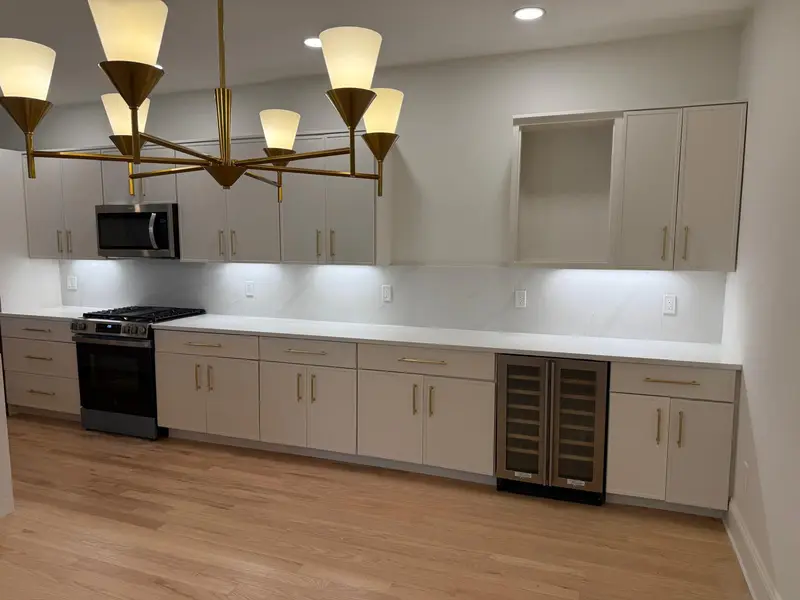
Cabinet paintingIs the kitchen worth painting instead of replacing?
The answer depends on the cabinet boxes more than on the color you have in mind. Paxton's housing stock gives a starting picture: the median house was built in 1967, 674 units date from the 1950s and 1960s, and another 305 went up in the 1980s and 1990s. A kitchen in any of those houses may still have original cabinets, a remodel from a later decade or something installed last year. Each of those calls for a different approach, so the first step is opening doors and looking at what the cabinets are made of.
Our longer comparison of painting versus replacing cabinets covers the trade-offs in detail. In short, sound boxes with a layout you like are good candidates for paint; a kitchen that needs new plumbing locations, more storage or different appliance openings usually is not.
What the cabinets are made of
Water damage under the sink, swollen particleboard and drawer boxes that are falling apart are signs that replacement, at least of the damaged units, makes more sense than paint.
- Solid wood doors and face frames (oak, maple, birch, cherry) take primer and paint well once cleaned and sanded. Open-grain oak shows its grain through paint unless it is filled first.
- Painted or stained plywood boxes are usually fine to paint, inside and out.
- MDF doors paint smoothly, but raw cut edges soak up primer and need sealing.
- Thermofoil (a vinyl skin over MDF) is a poor candidate. When the skin peels near the stove or dishwasher, paint will not hold it down.
- Laminate can take a specialty bonding primer, but results vary and it is worth a test door first.
Why prep decides how long it lasts
Kitchen cabinets carry years of cooking grease and hand oils, especially around pulls and above the range. Paint will not bond to that film, so the work starts with a degreasing cleaner and a rinse, followed by scuff-sanding every surface. Old shiny finishes, whether factory lacquer or a past coat of oil paint, need a bonding primer. Dents and gouges are filled and sanded, and holes are filled if you are switching to different hardware.
Doors and drawer fronts come off, get numbered and are finished flat on racks, which gives a smoother result than painting them upright. Boxes and face frames are painted in place after the countertops, floor and appliances are masked. Our step-by-step cabinet process shows the full sequence.
Older kitchens and finish choice
Of the town's homes, 67.2% were built before 1980. If your cabinets are original to a house from before 1978 and have been painted, those layers could contain lead, and sanding them falls under the practices on our lead-safe painting page. Stained or factory-finished cabinets are less of a concern, but a quick test settles it.
For the topcoat, cabinet-grade waterborne alkyd or urethane-modified acrylic enamels level out well and harden to a surface that takes wiping. They need time to cure fully, so doors are rehung gently and heavy scrubbing waits a few weeks. Satin is forgiving of small imperfections; semi-gloss is easier to clean but shows every flaw.
Getting started
AJ Painting is based in Ashland and is licensed and insured. The visit is free and ends with a written estimate. If the walls and ceiling in the kitchen need attention too, interior painting in Paxton can be scheduled around the cabinet work.
Paxton at a glance