

Norwood, MA
Porch Floor, Steps & Railings in Norwood, MA
A Norwood home's front and back porches: floor boards and steps painted gray, with railings, balusters and lattice skirting in white.
See the photos →Siding, trim, doors and shutters on Hingham houses, including homes inside the town's local historic districts.
Hingham has 21 miles of shoreline, borders the Atlantic and Hull to the north, and wraps around Hingham Harbor. Two-thirds of its housing units (66.8%) are detached single-family houses, where the siding and trim are the owner's to maintain rather than an association's. For houses in certain parts of town, that decision also involves local review.
Hingham voted its first local historic district into being in 1966 and adopted the state's Chapter 40C historic district law in 1987. The town now counts six districts, most of them strung along Main Street, among them Lincoln, Glad Tidings, Hingham Centre, Bachelor's Row–Pear Tree Hill, Liberty Plain and Tower–Wilder.
Inside a local district, paint color counts as an exterior architectural feature whenever it can be seen from a public street, way, place or body of water. Repainting needs no building permit, but it does fall under the commission's review. The practical route is to file with the HDC first. Repainting in the existing color, or switching to a color on the approved roster, is handled through a Certificate of Non-Applicability, which is simpler than a full certificate review.
Town guidance places responsibility for certification on the owner, not the contractor, so settle the paperwork before the job goes on the calendar.
The commission's written guidelines go beyond color. They are worth reading even if your house sits outside a district, because they describe sound practice for old wood:
Of Hingham's housing units, 54.6% were built before 1980, and 19.5% date to 1939 or earlier. Exterior paint on houses that old may include lead in its lower layers, and the scraping and sanding that a proper repaint requires is exactly the kind of work the EPA's Renovation, Repair and Painting rule regulates for pre-1978 homes. Outdoors, that means ground sheeting to catch chips, misting to keep dust down, limits on open power sanding, and careful cleanup of the beds and lawn. Our lead-safe painting page lays out the requirements.
Paint does not wear evenly around a house. The sides that take full afternoon sun or wind-driven rain can fail years ahead of a sheltered wall, and on a lot open to the harbor that contrast can be sharper. Inspecting each elevation separately, rather than assuming one condition for the whole house, keeps the scope honest. Our post on common exterior paint failures shows what peeling, alligatoring and mildew tell you.
Exterior coatings need surface and air temperatures inside the range printed on the label, plus dry days for the paint to set. Late in the year, short afternoons and cold nights narrow that window; see whether a house can be painted in November. Related services for the same property: Hingham deck staining and Hingham interior painting.
| Shoreline | 21 miles, including Hingham Harbor (Town of Hingham, About Hingham) |
| Local historic districts | 6, first created in 1966 (Town of Hingham, About Hingham; Historic Districts By-Law and Commission) |
| Paint rule in historic districts | Oil may not go over latex; Historic New England palette (Town of Hingham, Guidelines for Work in Hingham's Historic Districts) |
| Housing units built before 1980 | 54.6% (5,543 of 10,144) (U.S. Census ACS 2020–2024 5-year, table B25034) |
| Detached single-family homes | 66.8% of housing units (U.S. Census ACS 2020–2024 5-year, table B25024) |
These jobs were in other towns, not in Hingham. Each card names the town where the work was done.
A Norwood home's front and back porches: floor boards and steps painted gray, with railings, balusters and lattice skirting in white.
See the photos →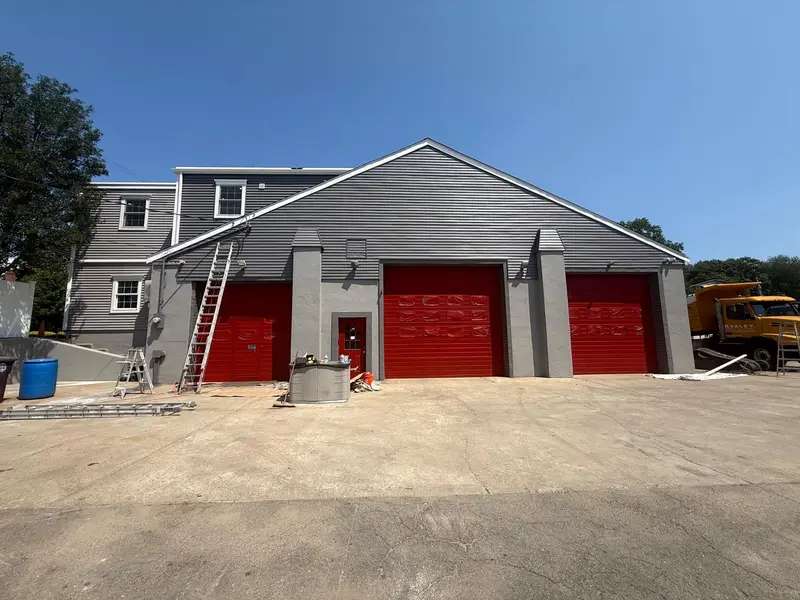
A garage building in Weymouth with white overhead doors and masonry pilasters whose paint was peeling. The doors and service doors were painted red and the pilasters refinished in gray.
See the photos →Not a building permit. If the house is inside one of the local historic districts and the painted surfaces can be seen from a public street, way, place or body of water, the work falls under Historic Districts Commission review, so file with the HDC first.
Town materials point to filing either way. A repaint in the existing color, or in a color from the approved roster, is one of the listed grounds for a Certificate of Non-Applicability, which is a lighter process than a full review. The owner is the one responsible for obtaining it.
The guidelines say the HDC uses and approves colors from the palette developed by Historic New England. You can stay with your current color or choose a new one from that palette. Bring the color names to the application.
In a district, only if no latex has been applied since: the guidelines allow oil or latex over oil, but not oil over latex. Outside a district the same rule is good practice, because oil over latex tends to crack.
Not inside a local historic district. The guidelines state that aluminum, vinyl and concrete siding will not be approved there. That guideline is written for the local districts, and any wood trim left exposed after re-siding would still need paint.
The biggest factors are how much scraping and repair the wood needs, the height and number of stories, trim detail, and whether lead-safe practices apply. Our exterior painting cost guide summarizes Massachusetts market data, and the on-site visit and written estimate are free.
A licensed, insured painter will walk every side of the house with you and leave a free written estimate. Call (508) 258-4325, Monday–Saturday.
5.0 on Google · 35 verified reviews · Licensed & insured · Written quote in 48h