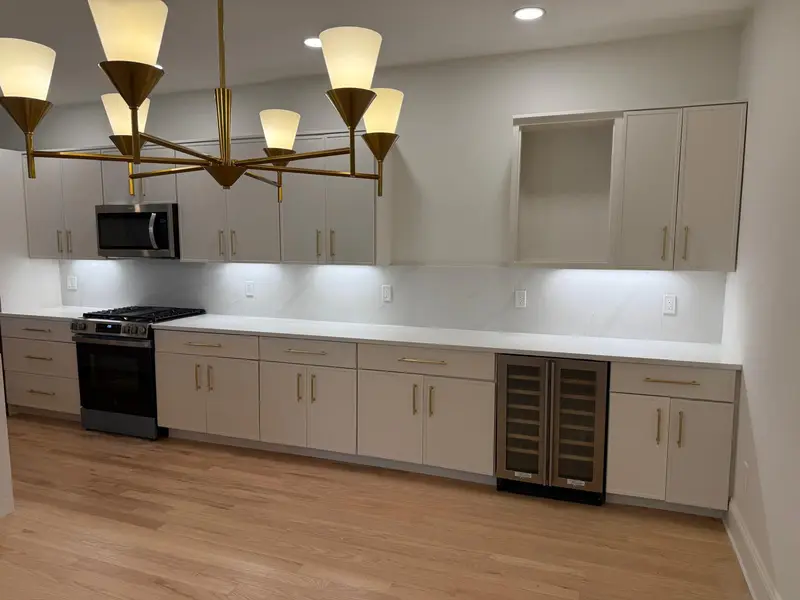
Cabinet painting, HinghamHingham kitchen cabinets: when paint makes sense and how it is done right
Kitchens in Hingham come from several building booms. The town's draft Master Plan counts 2,131 single-family homes from 1946 to 1970 and another 1,050 from 1971 to 1990, while census data shows 30.3% of all housing units were built in 2000 or later. Kitchens from those periods can differ in cabinet construction and factory finish, and that shapes whether paint is the right answer.
The same plan reports 127 demolition-and-rebuild permits between 2010 and October 2019, with smaller older houses torn down for large new ones. For homes that are staying put, painting the cabinets is one way to update a kitchen without a full remodel.
Solid wood, veneer, MDF or thermofoil
What the doors are made of matters more than their age. Solid hardwood frames and doors, and MDF doors, take primer and enamel well once cleaned and sanded. Wood veneer over particleboard paints fine if the veneer is intact; peeling edges have to be glued down first. Thermofoil, the vinyl wrap used on some flat-panel doors, is a poor candidate, because the film can lift with heat and paint will not hold it in place.
Factory-finished cabinets from the last few decades often carry a hard catalyzed coating. Paint will not bond to it by itself; the surface has to be degreased, scuff-sanded and given an adhesion primer suited to slick finishes. Skipping that step is what leads to chipping at door edges.
Refinish or replace
Paint is worth considering when the boxes are square and sound, the layout works, and the doors are a style you can live with in a new color. Replacement makes more sense when drawers are falling apart, the base cabinets have water damage under the sink, or you want to move the sink or range. Our refinish-vs-replace guide and the cabinet painting vs. replacement article compare the two in more depth.
How a cabinet repaint proceeds
A durable cabinet finish is mostly preparation. The usual sequence is below; the cabinet painting process article walks through each stage.
- Remove doors, drawer fronts and hardware, and label each piece
- Degrease every surface, since cooking residue blocks adhesion
- Scuff-sand, fill dings and open grain where a smooth look is wanted
- Prime with a bonding primer chosen for the existing finish
- Apply two coats of a hard cabinet enamel, with drying time between
- Let doors cure before rehanging and adjusting the hinges
Old built-ins and lead
In Hingham, 1,981 housing units date to 1939 or earlier, and 54.6% of units were built before 1980. Painted pantry cupboards, china cabinets and kitchen built-ins in houses that old may carry lead under the top coats. Sanding them is paint disturbance under the EPA's Renovation, Repair and Painting rule when the house predates 1978, so the work needs certified practices, containment and a HEPA cleanup. See our lead-safe painting page.
Condo kitchens
Town assessing records cited in the draft Master Plan count 1,057 residential condominium units, and 21.7% of all housing units sit in buildings with five or more units. Cabinets inside a unit generally belong to the owner, but associations can set work hours, elevator use and rules on spraying or ventilation, so check the bylaws or ask management before scheduling. Our Hingham interior painting page covers walls and trim if the rest of the kitchen needs color too.
Hingham at a glance