
Norwood, MA
Porch Floor, Steps & Railings in Norwood, MA
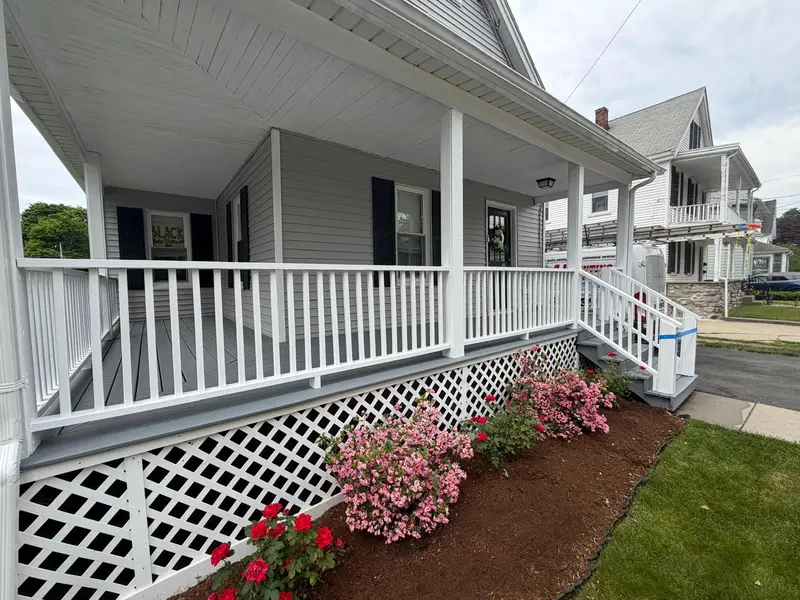
A Norwood home's front and back porches: floor boards and steps painted gray, with railings, balusters and lattice skirting in white.
See the photos →Scraping, carpentry repairs, primer and finish coats matched to your siding, with plain answers on what the town's historic district bylaw does and does not cover.
Single-family detached houses account for 82.5% of Charlton's 5,197 housing units in the Census Bureau's 2020–2024 estimates, and 84.9% of occupied homes are lived in by their owners. A detached house has four exposed elevations, and each one weathers on its own schedule: south and west walls take the strongest sun and chalk or fade first, while north walls and tree-shaded sides stay damp longer and tend to show mildew and peeling.
That is why one side of a house can look ready for paint years before the others. A walk-around with a scraper and a moisture meter shows where the coating has actually failed and where a wash and a single coat would do.
The 1995 National Register nomination for the Charlton Center Historic District, about 85 acres around an elliptical Common, describes most of its 1½- and 2½-story houses as well preserved with wood clapboard or shingle siding. It also counted three dwellings covered in asbestos shingles and ten with synthetic siding installed over the original clapboards. Each surface calls for different handling:
The town's local historic district is the Northside Historic District, created under Chapter 40C at the May 1977 Annual Town Meeting in three segments, with the South segment extended in 1997. Inside it, building or altering anything that affects exterior features visible from a public street, way or place requires a certificate from the Historic Districts Commission, and no building permit for that work is issued until the certificate is.
Two sections matter when you only want to repaint. Section 7 lists paint color among the items the commission does not review, and Section 8 says ordinary maintenance or repair that involves no change in design, material or outward appearance is not prevented. Swapping clapboard for a different material, removing trim, or changing windows is another matter. The commission, at 37 Main St. (508-248-2207), decides within 14 days whether a project is subject to review.
Charlton Center is a National Register district. The bylaw text creates only the Northside segments, so ask the town before assuming any local review applies on the Common.
This is a town of drumlins, with most hills between 800 and 1,000 feet and the north-central section rising past 1,000, according to the Historical Commission's 1984 survey. The same report found that the town's recent suburban building, as of 1984, leaned toward scenic ridge sites. A house on open high ground has few trees or neighbors breaking the wind and sun, so its weather side can wear faster than the sheltered ones. A house in a wooded hollow has the opposite problem: shade and slow drying, which favor mildew on siding and soffits.
Exterior coatings need dry wood and air and surface temperatures within the label's range through drying, which sets the working season; see the best time of year to paint. With 40.0% of the town's units built before 1980, scraping on a pre-1978 house falls under lead-safe rules, with the ground covered and chips collected; our lead-safe painting page explains the steps.
Siding type, height and access, how much scraping and carpentry the walls need, and the amount of trim drive the scope. The exterior painting cost guide lays out those factors from Massachusetts market data, and AJ Painting Services gives a written estimate after a free on-site visit.
| Single-family detached homes | 82.5% (4,286 of 5,197 units) (U.S. Census ACS 2020–2024 5-year, table B25024) |
| Local historic district | Northside Historic District (Chapter 40C), adopted 1977, South segment extended 1997 (Town of Charlton, Historic District Bylaw) |
| Paint color under the bylaw | Excluded from commission review (Section 7) (Town of Charlton, Historic District Bylaw, Section 7) |
| Siding in Charlton Center Historic District | Mostly wood clapboard or shingle; 3 asbestos-shingled and 10 synthetic-sided dwellings (1995) (NRHP Registration Form, Charlton Center Historic District (1995)) |
| Elevation | About 600 ft in the southeast valleys to over 1,000 ft north-central; most hills 800–1,000 ft (Massachusetts Historical Commission, Reconnaissance Survey Town Report: Charlton (1984)) |
These jobs were in other towns, not in Charlton. Each card names the town where the work was done.
A Norwood home's front and back porches: floor boards and steps painted gray, with railings, balusters and lattice skirting in white.
See the photos →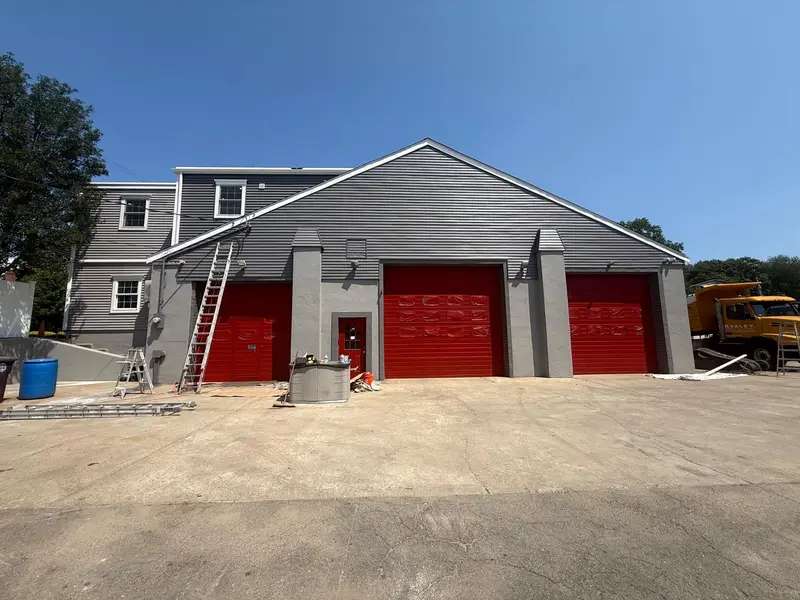
A garage building in Weymouth with white overhead doors and masonry pilasters whose paint was peeling. The doors and service doors were painted red and the pilasters refinished in gray.
See the photos →Color itself is not reviewed: Section 7 of the bylaw exempts paint color, and the commission issues a certificate of non-applicability for exempt items. Call the Historic Districts Commission before work starts to confirm whether your project needs that paperwork.
Section 8 allows ordinary repair or replacement with no change in design, material or outward appearance, so matching boards of the same profile fall under maintenance. Changing to a different material, profile or trim detail on a street-visible side is the kind of alteration that needs a certificate.
Charlton Center was listed on the National Register in 1995, and National Register listing by itself places no restrictions on what a private owner does with private funds. The local bylaw text creates the three Northside segments, but confirm with the town for your address before changing exterior features.
Yes, as long as they are intact. They are washed at low pressure, primed if chalky, and coated with acrylic. Cracked or broken shingles should not be cut or sanded; replacement or removal of damaged pieces follows asbestos handling rules.
The paint is a small part of the job. Scraping hours, carpentry, ladder and staging access on hillside lots, trim detail, number of colors and lead-safe work on pre-1978 houses all differ from one house to the next. The exterior cost guide and why painting quotes vary explain those factors.
It depends on each product's minimum temperature, how many daylight hours are left for the surface to dry before evening dew, and whether the siding itself is dry. Our post on painting outside in November covers the limits.
Siding, trim and repairs checked side by side, then a written estimate. Call (508) 258-4325, Monday to Saturday.
5.0 on Google · 35 verified reviews · Licensed & insured · Written quote in 48h