
Norwood, MA
Porch Floor, Steps & Railings in Norwood, MA
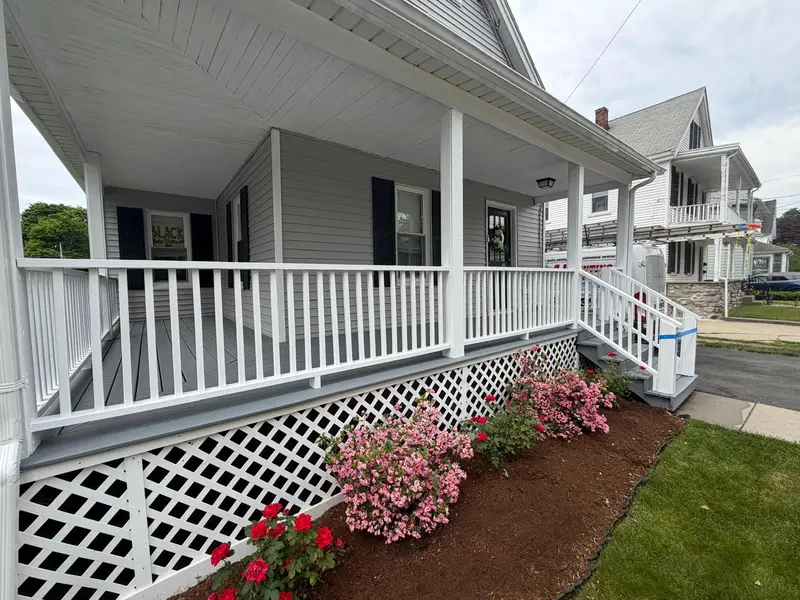
A Norwood home's front and back porches: floor boards and steps painted gray, with railings, balusters and lattice skirting in white.
See the photos →Painting for unit owners, small self-managed associations and property managers, from one unit's bedroom to the stairwells, doors and siding a building shares.
Shared buildings make up a large part of the local housing stock. The Census counts 26.9% of the town's housing units in buildings of five or more units: 971 in buildings of five to nine units, 1,344 in buildings of ten to nineteen, 835 in buildings of twenty to forty-nine and 560 in buildings of fifty or more. Another 19.3% are in two- to four-unit buildings, and 7.1% are single-family attached homes. Not every one of those units is a condominium, but each of these building types can be one.
In a condominium, the master deed and bylaws divide the property into units and common elements. Before any painting is planned, that division settles who approves the work, who pays for it and whose insurance it falls under.
The local count includes 1,199 units in two-unit buildings and 1,461 in buildings of three or four units. In South Norwood, the Norwood Historical Society describes rows of triple-deckers built between 1900 and 1920. When a building like that is converted to condominiums, the result can be an association of two or three owners with no property manager.
In a small association, painting the siding, the front stairs or the shared hall is a group decision, and the bylaws say how many owners must agree. Getting that vote, and a color everyone accepts, before asking for estimates saves time. A building of that age also has lead paint to account for: common-area trim, railings and stair treads disturbed by paid work must be handled under the EPA lead-safe rules, explained on our lead-safe painting page. See the South Norwood page for neighborhood background.
Buildings with ten or more units hold 2,739 local housing units. Their corridors, lobbies and stairwells have to stay usable while they are painted. That calls for work in sections so one route is always open, notices posted ahead of each phase, wet areas marked, and low-odor coatings that dry quickly.
Labels on fire-rated doors and frames should stay unpainted so inspectors can read them. Scrubbable finishes such as eggshell or satin on walls and semi-gloss on doors and trim stand up to moving days and carts better than flat paint.
Interior walls, ceilings and trim inside a unit are generally the owner's to paint, but the master deed defines the exact boundary. Associations may still require notice to management, a contractor's certificate of insurance, elevator reservations or set work hours, so read the rules before scheduling.
Renters occupy 46.0% of the town's occupied homes, and a condo that is rented out turns over like any other rental. A repaint during the vacancy, in a washable finish, keeps a unit ready to show. Our interior painting page goes into plaster, lead and ceilings in more depth.
A condominium's master insurance policy typically covers the common elements, while each owner's own policy covers the unit interior. Because of that split, it makes sense for a board or manager to ask any contractor for a certificate of insurance naming the association before work starts. AJ Painting is licensed and insured and can provide one on request.
For exterior work on siding, trim and entry doors, a phased plan by building or elevation lets an association spread the cost across budget years. Our exterior painting page covers the siding and season questions in detail.
| Units in buildings with 5 or more units | 26.9% (3,710 of 13,815) (U.S. Census ACS 2020–2024 5-year, table B25024) |
| Units in 2–4 unit buildings | 19.3% (1,199 in two-unit, 1,461 in 3–4 unit buildings) (U.S. Census ACS 2020–2024 5-year, table B25024) |
| Single-family attached units | 7.1% (976 units) (U.S. Census ACS 2020–2024 5-year, table B25024) |
| Renter-occupied homes | 46.0% of occupied units (U.S. Census ACS 2020–2024 5-year, table B25003) |
| Housing units built before 1980 | 71.5% (U.S. Census ACS 2020–2024 5-year, table B25034) |
A Norwood home's front and back porches: floor boards and steps painted gray, with railings, balusters and lattice skirting in white.
See the photos →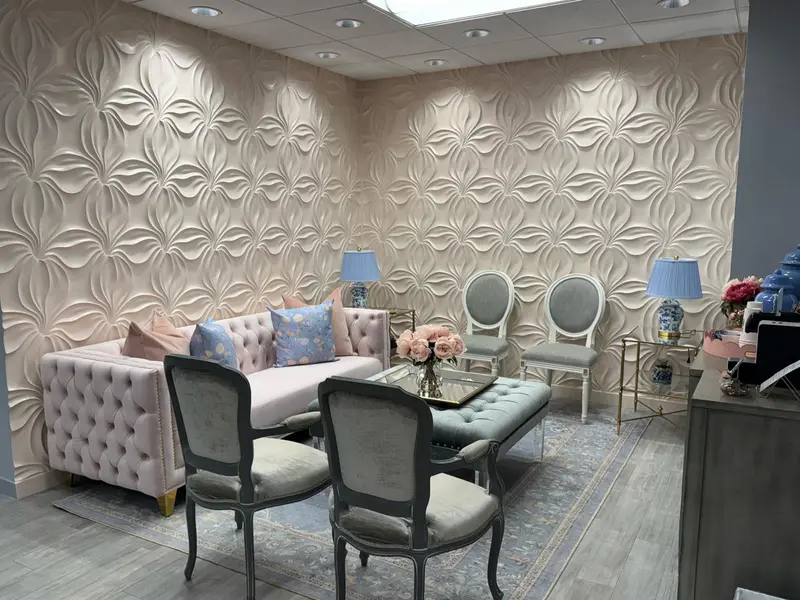
A dental practice's waiting room and reception area, finished in soft gray with applied panel molding, next to a sculpted floral feature wall.
See the photos →The bylaws set the vote required, which may be a majority or every owner. Since the exterior is normally a common element, the association typically hires the painter and splits the cost by each unit's percentage interest in the master deed.
Yes. AJ Painting is licensed and insured, and a certificate naming the association or the management company can be issued before the start date.
Yes. The stairs can be done in sections, with one side or one flight wet at a time and the rest passable. Notices posted in advance let residents know which days to expect work.
Check first. Entry doors that face a common hallway or the street are often limited common elements, and some associations require a uniform color. The inside face of the door is more likely to be yours to choose.
It was built before 1978, so paid work that disturbs existing paint in halls, on railings or on exterior trim falls under the EPA lead-safe rules, which Massachusetts administers. A lead test on the surfaces being disturbed shows what precautions are required.
Square footage of halls and stairwells, the number of doors, siding area and access needs decide the cost. Our Massachusetts painting cost guide lists market ranges for planning, and a written estimate can be split by building or phase for reserve planning.
Unit owners and boards can book a free on-site visit and written estimate, with an insurance certificate on request. Call (508) 258-4325.
5.0 on Google · 35 verified reviews · Licensed & insured · Written quote in 48h