
Location not listed
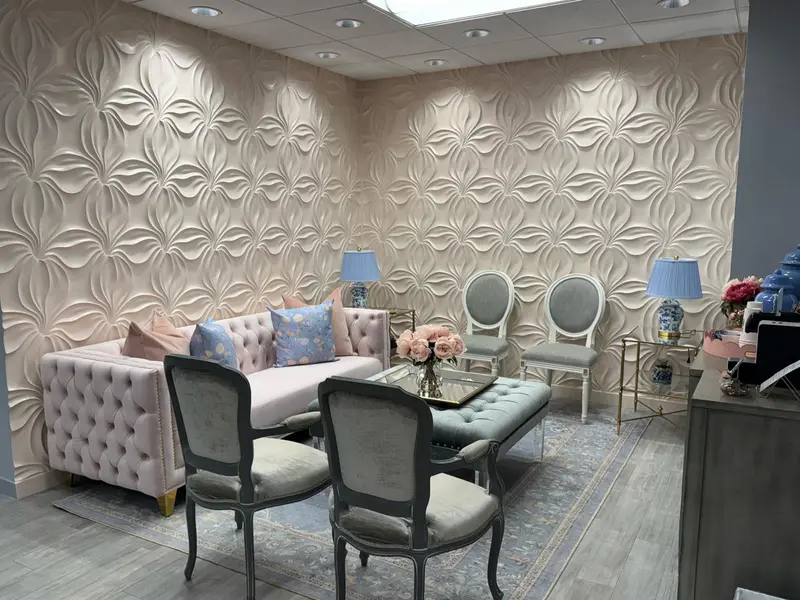
Dental Office Waiting Room
A dental practice's waiting room and reception area, finished in soft gray with applied panel molding, next to a sculpted floral feature wall.
See the photos →Painting for individual condo owners and for associations: unit interiors, corridors, stairwells and building exteriors, scheduled around the people who live there.
Condominiums are a substantial share of housing here. In the town Assessor's January 2016 data, reported in the 2017 Housing Production Plan, they were the second most common housing type after single-family homes, with 950 units or 10.8% of the total. The newer Census estimates place 17.7% of all units in buildings of five or more, including 611 units in buildings of 50 or more.
A condo paint job can have two different clients: the owner, who controls the inside of the unit, and the association, which typically controls the exterior, hallways and anything shared. Settle which side a surface falls on before anything else, because the master deed and bylaws decide it, not the painter.
Painting inside a unit resembles painting a house, with a few extra steps. Associations can require contractors to register with management, show a certificate of insurance, use a particular entrance or elevator, and park in guest spaces only. Work hours may be tighter than the town allows. Bring the association's contractor rules to the free on-site visit so the estimate reflects them.
Shared walls and corridors mean dust control matters more: drywall sanding is kept inside the unit, and doors to the hallway stay closed. In a building from before 1978, find out whether lead paint is present before any sanding; the lead-safe page covers what changes if it is.
Census figures show 24.4% of occupied homes in town are rented. For an owner who rents a unit out, a repaint between tenants fits the vacancy gap more easily when the new color stays in the same family as the old one.
One point of contact on the board or at management, a written schedule shared with residents, and color samples approved before work starts keep a common-area project from turning into a stream of individual complaints.
Associations carry a master insurance policy and commonly ask every contractor for a certificate of insurance naming the association, and sometimes the management company, as certificate holder or additional insured. AJ is licensed and insured and can supply a certificate for the job. Unit owners generally hold an HO-6 policy for their interiors; check whether the master policy covers the unit only to the bare walls or includes finishes.
Not every condo is in a large building. The Census counts 8.8% of local units in two- to four-unit buildings and 7.5% as attached single-family homes, and condominium ownership can apply to any of those building types. In small complexes the line between unit and common area can blur: a deck, an entry door or a run of siding may belong to the owner in one complex and the association in another. The deck staining page and the exterior painting page cover those surfaces.
| Condominium units (Assessor, 2016) | 950 units, 10.8% of housing; second only to single-family (Town of Bridgewater Housing Production Plan (Old Colony Planning Council, 2017), Table 16) |
| Units in buildings of 5 or more | 17.7% (1,672 units), incl. 611 in buildings of 50+ (U.S. Census ACS 2020–2024 5-year, table B25024) |
| Units in 2–4 unit buildings | 8.8% (827 units) (U.S. Census ACS 2020–2024 5-year, table B25024) |
| Renter-occupied homes | 24.4% of occupied units (2,224 of 9,100) (U.S. Census ACS 2020–2024 5-year, table B25003) |
These jobs were in other towns, not in Bridgewater. Each card names the town where the work was done.
A dental practice's waiting room and reception area, finished in soft gray with applied panel molding, next to a sculpted floral feature wall.
See the photos →Check the master deed and bylaws. Entry doors may be defined as part of the unit or as limited common area, and the answer differs between complexes. If the association controls the color, it may also require its approved paint and sheen even when the owner pays.
Interior wall color is normally the owner's choice, but the work itself may fall under contractor rules: proof of insurance, work hours, elevator reservations and where debris goes. Ask management for those rules before booking.
Treat repainting as a recurring reserve item and collect written bids each cycle. AJ provides written estimates after a walkthrough rather than flat rates. For statewide reference figures, see painting costs in Massachusetts and, for corridor-style work, the interior painting cost guide.
Yes. Corridors are done in sections with wet-paint signs and low-odor paint, and one stairway stays open throughout. Work runs within Monday–Saturday 7AM–6PM, and the board can pick the days that disrupt residents least.
Usually a certificate of insurance naming the association, a written scope and schedule, color and product specifications, and a plan for notifying residents. For buildings from before 1978, add how lead paint will be tested for and handled.
Yes, on a smaller scale. A two- or three-unit condominium still has common areas and a master deed. The owners usually act as the board, so getting everyone to agree on scope and colors in writing before work begins avoids disputes later.
Licensed and insured, with certificates available for your association. Call (508) 258-4325, Monday–Saturday 7AM–6PM.
5.0 on Google · 35 verified reviews · Licensed & insured · Written quote in 48h