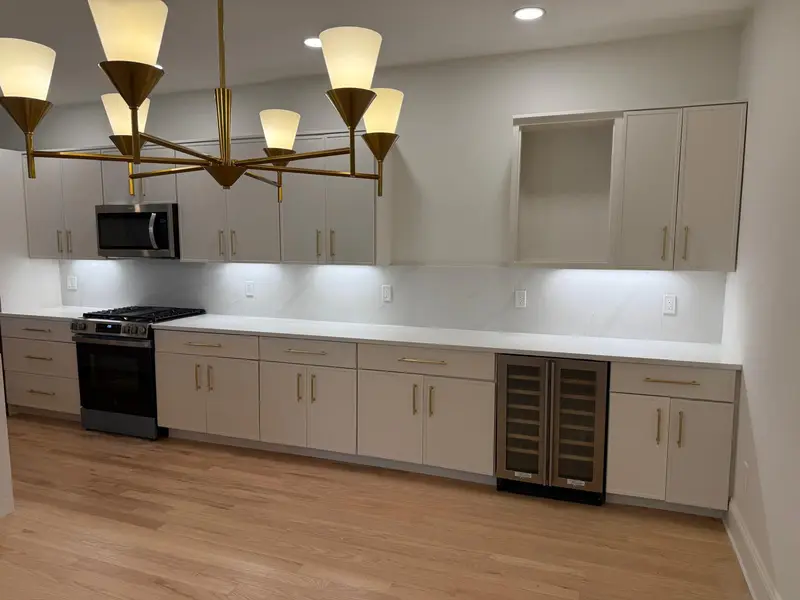
Cabinet painting, Bridgewater MARepainting kitchen cabinets in a Bridgewater house instead of tearing them out
Cabinet boxes in an older kitchen can be perfectly sound under a tired finish. If the doors close square, the face frames are tight and the shelves are not sagging, a new coating changes the room with far less upheaval than a remodel. The deciding question is whether you like the layout: paint changes the color, not where the dishwasher sits.
Census estimates put 18.4% of local homes in the 1970s, the largest single decade, with a median build year of 1984. Unless a kitchen has been remodeled since, its cabinets could date from those years. At the other end, 15.8% of homes were built in 2010 or later, where the cabinets are newer and wear is less likely to drive the decision.
What the doors are made of decides the prep
Looking at a door edge or the back of a drawer front generally tells which you have, and the answer shapes both the primer and the hours involved.
- Solid oak: open grain shows through paint unless it is filled with grain filler or built up with a high-build primer
- Maple and birch: tight grain that paints smoothly, but the hard factory finish needs a bonding primer to hold
- MDF: smooth and stable; edges that have swelled near the sink or dishwasher need sanding and sealing
- Thermofoil and laminate: a plastic skin; if it is lifting, paint will not hold it down
- Veneer over particleboard: paintable while the veneer is intact; the sink base is the usual weak point
Old finishes and lead in pre-1978 kitchens
In a house built before 1978, painted cabinets, or the casing and trim around them, may have lead paint under later coats. Factory stained-and-varnished boxes are less of a concern than site-built painted ones, but anything painted in an older kitchen is worth testing before it is sanded. Census figures place 44.6% of homes in town before 1980, so the question is relevant in a large share of houses here. A positive result moves sanding into a contained setup described on the lead-safe page.
How the work proceeds
Doors and drawer fronts come off, get numbered, and are finished lying flat so the enamel levels without runs. Boxes and face frames are coated in place after counters, backsplash, floors and appliances are masked. Cooking grease ruins adhesion, so every surface is washed with a degreaser before a scuff sand. A bonding or shellac-based primer comes next, followed by two coats of a urethane-modified or catalyzed enamel.
The kitchen will be partly out of service for several days. These enamels feel dry within hours but can take weeks to reach full hardness, so doors go back on with soft bumpers and hard scrubbing waits until the finish has cured.
Paint, reface or replace
Refacing, meaning new doors on the existing boxes, sits between painting and replacement. It makes sense when the boxes are good but the door style is the real complaint, such as flat slabs you would rather swap for a shaker profile. The refinish vs. replace guide and the post on cabinet painting vs. replacement go deeper. If the walls and trim are being repainted too, cabinets work best as their own stage; the interior painting page covers the rest of the room.
Bridgewater at a glance