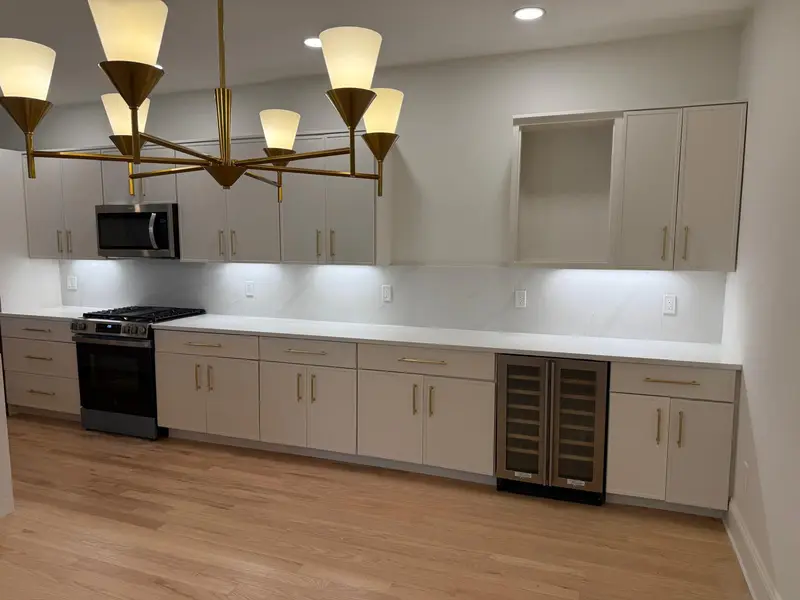
Cabinet painting, Saugus MARepainting the kitchen cabinets you already have in a Saugus home
The median Saugus home was built in 1962, according to Census estimates, and 3,025 housing units date from the 1950s and 1960s alone, with another 2,865 from 1970 through 1989. Those dates describe the house, not the kitchen. A sixty-year-old house may still have its first cabinets or may be on its third set, so the useful question is what the boxes and doors in front of you are made of and how they were finished.
Paint suits cabinets that are structurally sound but tired-looking: dated stain, worn clear coat, a color that no longer fits the room. It does not repair swollen particleboard under a sink, sagging shelves or drawers that have lost their glides. Sorting those problems out first decides whether a painted finish will last.
Identify the material before choosing a primer
A quick test tells you a lot: wipe a hidden spot with denatured alcohol. If the finish turns soft or tacky, it is likely shellac; if nothing happens, it may be lacquer, varnish or a catalyzed coating, and a primer made to grip glossy surfaces is the safer choice.
- Red oak: open grain that telegraphs through paint; filling the grain first gives a smooth look, skipping it leaves visible texture
- Maple, birch and cherry: tight grain that takes enamel smoothly once the factory topcoat is scuffed
- Factory-finished doors: often a hard catalyzed coating that needs thorough sanding and a bonding primer
- Thermofoil or vinyl-wrapped doors: a plastic skin that can lift with heat; peeling foil has to come off, and paint over it is a gamble
- Site-built painted cabinets in older houses: may carry several old layers, including oil paint, and sometimes lead
When painting beats replacement, and when it does not
Painting keeps the existing layout, countertops and plumbing in place, which is the main reason it costs less and takes less time than tearing out a kitchen. Replacement makes more sense when the boxes are water-damaged, when the layout is the actual problem, or when the doors are a material that paint will not bond to. Cabinet painting vs. replacement walks through that decision in more detail.
Old painted built-ins and lead
In town, 8,202 of 11,402 housing units, or 71.9%, were built in 1979 or earlier, a group that includes every home finished before lead paint was banned for residential use in 1978. A pantry or kitchen built-in in one of the 3,349 units built in 1939 or earlier can have lead in its bottom layers even if the visible coat is modern latex.
Sanding is exactly what turns that into dust. EPA's lead renovation rule applies to paid interior work in pre-1978 homes that disturbs more than six square feet of paint in a room, and cabinet faces, doors and shelves add up past that quickly. Testing first settles the question; our lead-safe painting page explains the containment and cleanup involved when the test is positive.
How a cabinet refinish is sequenced
Doors and drawer fronts come off and are labeled by position so they go back where they were. Every surface gets a degreaser, because paint does not bond to the cooking film that builds up near a range. Then comes scuff-sanding, dust removal, primer, and two finish coats of a waterborne alkyd or urethane-modified enamel. The frames and boxes are painted in place with the counters and floor masked.
Enamel is dry to the touch in hours but keeps hardening for days to weeks, so hardware goes back on carefully and doors are handled gently at first. Our kitchen cabinet painting process lists each stage, and the interior painting page covers walls and trim if the kitchen is getting a full refresh.
Kitchens in two-family houses and condo units
Census counts show 882 units in two-unit buildings and 2,050 in buildings of five or more. If your kitchen is in a rental unit, refinishing between tenants avoids working around someone's meals. In a condominium, the master deed says whether cabinets inside the unit are yours to change, and building rules on work hours and carrying doors through shared halls still apply; the condo painting page covers association logistics.
Saugus at a glance
| Median year housing was built | 1962 (U.S. Census ACS 2020–2024 5-year, table B25035) |
| Housing units built 1950–1969 | 3,025 units (1,373 in the 1950s, 1,652 in the 1960s) (U.S. Census ACS 2020–2024 5-year, table B25034) |
| Housing built 1979 or earlier | 71.9% (8,202 of 11,402 units) (U.S. Census ACS 2020–2024 5-year, table B25034) |
| Interior lead-safe threshold | More than 6 sq ft of paint disturbed per room, pre-1978 housing (U.S. EPA, Renovation, Repair and Painting Program: Contractors) |