
Norwood, MA
Porch Floor, Steps & Railings in Norwood, MA
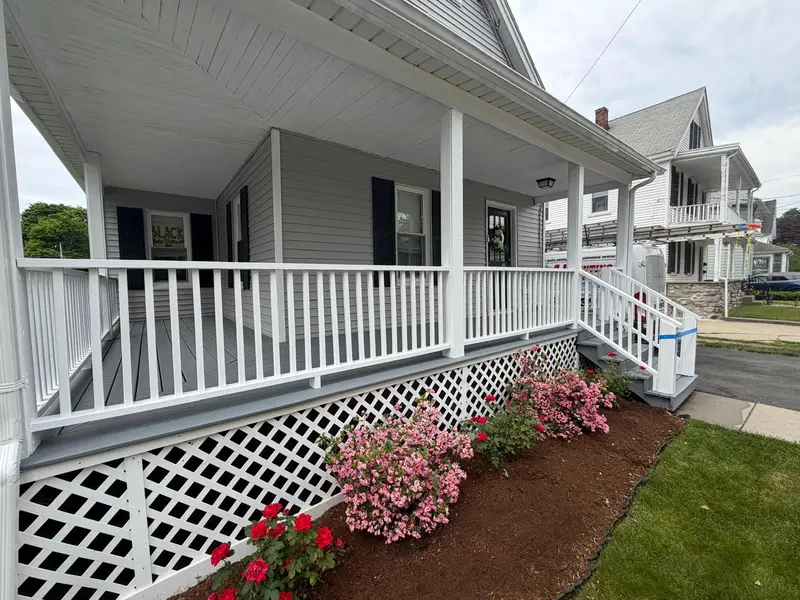
A Norwood home's front and back porches: floor boards and steps painted gray, with railings, balusters and lattice skirting in white.
See the photos →Decks, stairs, railings and porch floors cleaned, repaired and coated with a stain or porch enamel suited to the lumber, the shade and the moisture around it.
Single-family detached homes make up 65.6% of the housing units in Saugus, by Census estimate, and another 510 units are single-family attached. That is the housing stock where a back deck or front porch is the owner's own decision and maintenance job. In two-family buildings and condominiums, check who owns the deck before planning work; the condo painting page covers that question.
Lot size shapes the job too. The Massachusetts Historical Commission's 1985 survey notes that the subdivisions opened between 1915 and 1940, including Lynnhurst, Pleasant Hills, the Baker Hill section of Cliftondale and the area between Walnut and Central Streets in East Saugus, were laid out with small lots. On a tight lot a deck can sit a few steps from a fence line or a neighbor's car, so cleaning runoff, overspray and stain drips need extra control.
Breakheart Reservation covers 652 acres across Saugus and Wakefield, including a hardwood forest, and the Saugus River crosses the whole town from northwest to southeast, with about two miles of marsh in the south. A deck under hardwood canopy or close to wet ground faces a different set of problems from one in full sun: wet leaves that leave tannin stains, boards that dry slowly after rain, and mildew in the gaps between planks.
For those decks, the cleaning step matters more than the stain brand. Gaps get cleared so water drains through, mildew is killed with a deck cleaner, and the boards are left to dry until a few drops of water soak in rather than bead. A stain with mildewcide added makes sense in heavy shade, and so does a lighter color that shows dirt but runs cooler in the sun.
EPA notes that manufacturers stopped making CCA-treated lumber for homeowner uses in December 2003 and that it does not require removal of existing CCA structures. It does say a regularly applied penetrating coating, oil- or water-based, may reduce how much of the treatment chemicals leach from the wood.
Transparent and semi-transparent stains wear by fading, which makes them easy to renew: clean, brighten and apply another coat. Solid-color stains and porch paints hide weathered boards but wear by peeling, and once that starts the next refinish means scraping. A deck that was painted years ago generally has to stay with an opaque product unless it is stripped. Our paint vs. stain guide for decks compares the two in detail, and deck stain through a New England winter explains what freezing and thawing does to each.
The MHC survey lists porches among the Queen Anne details added to local gable-front houses between 1870 and 1915. On a house from the 29.4% of local housing built in 1939 or earlier, a painted porch floor and its steps can hold lead in their lower coats. Scraping a porch floor and stairs can cross EPA's 20-square-foot exterior threshold for lead-safe work on pre-1978 homes; our lead-safe painting page explains what is required.
Tongue-and-groove porch flooring takes a porch and floor enamel rather than a deck stain. Ends and edges that have rotted should be cut out and replaced before painting, since a new coat seals moisture in a soft board instead of stopping the decay.
Stain needs dry wood, a dry forecast and mild temperatures, which in eastern Massachusetts generally points to late spring through early fall. After a cleaning and brightening, boards need a dry day or two before the coating goes on. If the house siding is also due, the exterior painting page explains that work, and painting the house before the deck keeps ladder marks and drips off fresh stain.
| Single-family detached homes | 65.6% of units (7,476 of 11,402) (U.S. Census ACS 2020–2024 5-year, table B25024) |
| 1915–1940 subdivisions | Small lots in Lynnhurst, Pleasant Hills, Baker Hill (Cliftondale), East Saugus and others (Massachusetts Historical Commission, Reconnaissance Survey Town Report: Saugus (1985)) |
| Breakheart Reservation | 652 acres in Saugus and Wakefield, with hardwood forest and two freshwater lakes (Wikipedia, Breakheart Reservation (citing DCR acreage list)) |
| CCA lumber for residential use | Phased out at the end of 2003 (U.S. EPA, Chromated Arsenicals (CCA)) |
| Housing built 1939 or earlier | 29.4% (3,349 units) (U.S. Census ACS 2020–2024 5-year, table B25034) |
These jobs were in other towns, not in Saugus. Each card names the town where the work was done.
A Norwood home's front and back porches: floor boards and steps painted gray, with railings, balusters and lattice skirting in white.
See the photos →Black spotting is usually mildew feeding on dirt and pollen in a damp deck. A thorough cleaning that kills the growth, clear gaps between boards, and a stain with a mildewcide slow it down. Trimming low branches to let in more sun helps the boards dry.
When the wood is dry enough to absorb water. Sprinkle some on the boards; if it beads, wait. Depending on the lumber and the weather, that can take several weeks to a few months.
On tongue-and-groove porch flooring, a floor enamel is the usual finish, and switching to stain would mean stripping to bare wood. If the house is pre-1978, have the old paint tested before scraping, since lead-safe methods may be required.
It may be CCA-treated, which was sold for residential use through 2003. EPA does not require removing it. Keep it coated with a penetrating finish, avoid burning scraps, and wash hands after handling the wood.
If the building is a condominium, the master deed says whether the deck is a common or limited common element and who covers upkeep. In a two-family that one person owns, it is simply the owner's maintenance item.
Railing and baluster count, stairs, stripping old paint, and board replacement add the most labor. Our deck staining cost guide explains Massachusetts market data, and AJ Painting gives a free written estimate after seeing the deck.
AJ Painting is licensed and insured. Call (508) 258-4325, Mon–Sat 7AM–6PM, to set up a free look at your deck or porch and a written estimate.
5.0 on Google · 35 verified reviews · Licensed & insured · Written quote in 48h