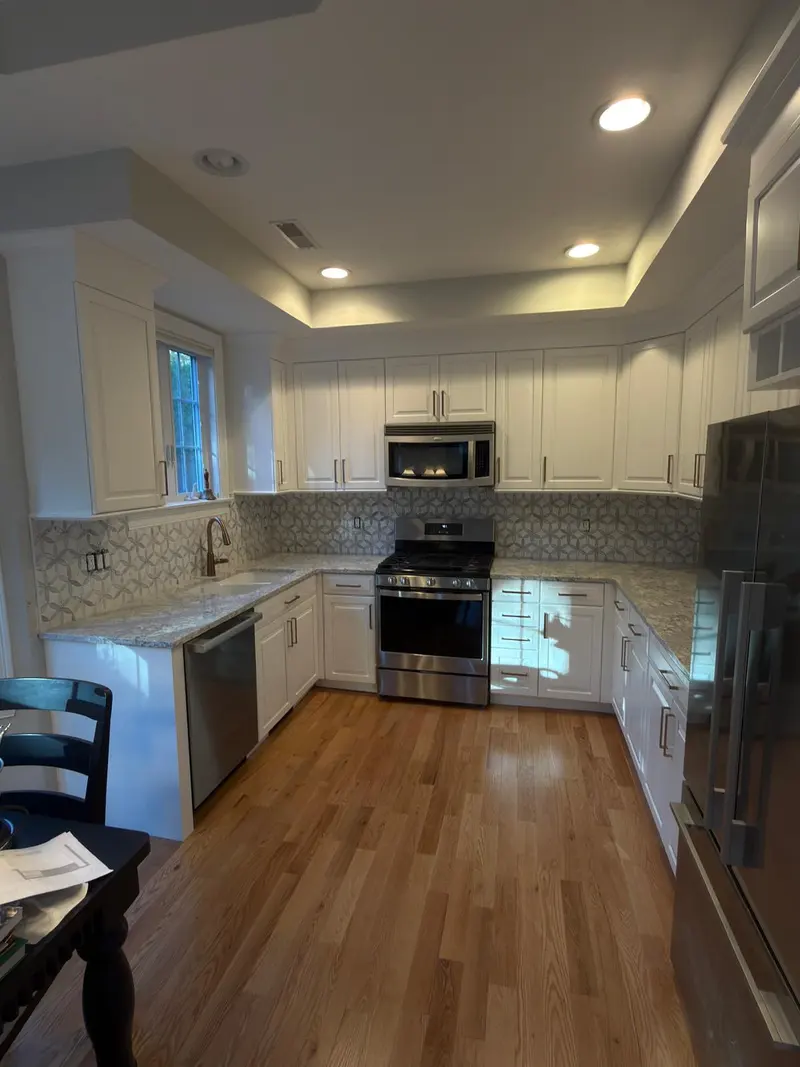
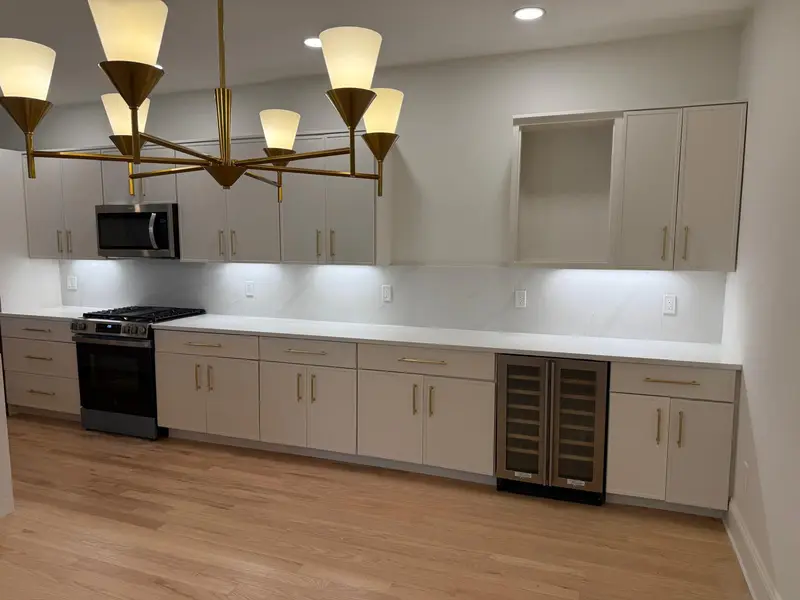
Cabinet painting, QuincyRepainting kitchen cabinets across Quincy's mix of eras and building types
The median housing structure in the city was built in 1958, and more than a third of units predate 1940, yet one in ten went up in 2010 or later. That spread means the cabinets in question might be painted boxes from a midcentury kitchen, a stained set from a later remodel, or a condo kitchen with a slick factory finish less than a decade old. None of those take paint the same way.
Before anything else, it pays to identify what the doors are made of and what is on them now. Solid wood, plywood and MDF all paint well with the right primer. Laminate and thermofoil are trickier: laminate can be painted with a bonding primer if it is firmly attached, while thermofoil that is already lifting at the edges will keep peeling and is usually better replaced.
Is paint the right fix for your kitchen?
Painting changes color and sheen and can make a dated kitchen look current. It cannot fix boxes that have swollen under a leaking sink, drawers whose bottoms have dropped out or a layout that wastes a corner. If the frames are square and the doors close flat, refinishing keeps the counters, plumbing and appliances where they are and avoids the weeks without a kitchen that a tear-out brings.
Our page on refinishing versus replacing cabinets lays out the decision step by step, and you can see a finished example on the Newton cabinet project.
- Worth painting: square frames, flat doors, a layout that works
- Worth replacing: water-damaged bases, lifting thermofoil, sagging particleboard
- Can be upgraded during painting: hinges, pulls, soft-close slides
Two kitchens under one roof
About 21.3% of local housing units are in buildings with two to four units, and the Massachusetts Historical Commission calls the two-family the predominant multi-family type here in the early twentieth century. An owner of a two-family may be looking at two kitchens of different ages: one updated for their own use, one left original for a tenant.
Painting both at once keeps the scope simple and lets doors from both units be finished in the same spray setup. If the rental kitchen is occupied, it can be scheduled separately so the tenant loses the kitchen for the fewest possible days. Cabinets that will see a turnover of tenants benefit from a harder enamel and a satin or semi-gloss sheen make sense there even if you prefer a softer look upstairs.
Lead on original cabinets and built-ins
Since 68.5% of units were built before 1980, original kitchen cabinets, pantry doors and dining-room china cabinets in older houses may carry lead in an early layer. Sanding a full set of doors easily disturbs more than the 6 square feet per room that triggers Massachusetts lead-safe renovation rules for paid work. A test before prep settles whether containment and specialized cleanup are needed. If a child under six lives in a pre-1978 unit you own, the state Lead Law also places deleading duties on you as owner. Details are on the lead-safe painting page.
Factory finishes in newer condos
Recently built condo kitchens, whether in the multi-unit buildings the city's hazard plan describes at Marina Bay or in another complex, may have cabinets finished at the factory in a catalyzed lacquer or conversion varnish. Those coatings are tough and glassy, which is exactly why ordinary paint will not grip them. They are degreased, scuff-sanded until the shine is gone and primed with a bonding product before the topcoat. Skip any of those steps and the paint chips at handles and door edges within months.
The process for any kitchen is the same in outline: doors and drawer fronts come off and are labeled, boxes are cleaned and masked in place, then primer and two coats of cabinet enamel go on with drying time between. The cabinet painting process post walks through each step.
Quincy at a glance