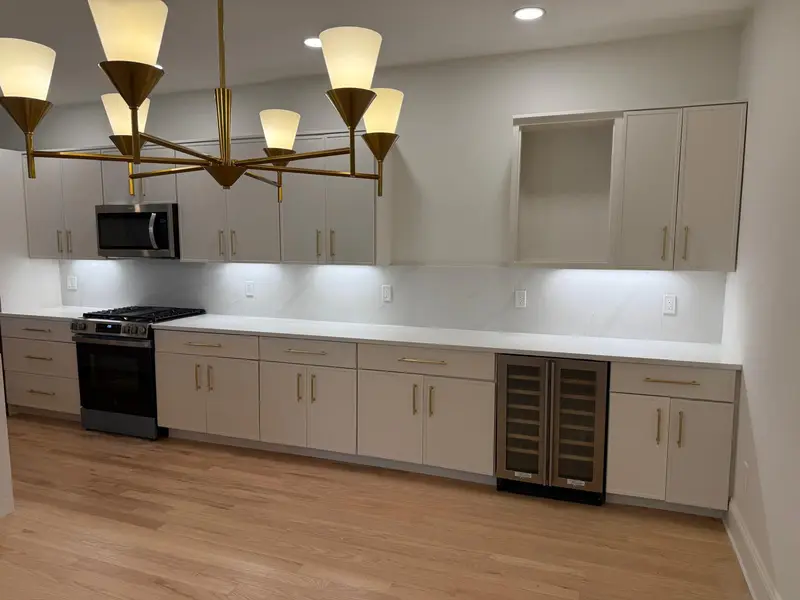
Cabinet painting, LynnRefinishing cabinets in older houses and multi-unit kitchens
Only 7.8% of Lynn's housing units were built in 2000 or later, according to census estimates, and the median year built is 1946. A kitchen in a house that age may have been redone more than once, so its cabinets could date from almost any decade: site-built painted boxes, solid oak doors from a 1980s remodel, or newer maple or MDF from a recent update. The material decides the method far more than the house does.
Painting is a good fit when the boxes are solid and square and the layout works. It is a poor fit when the doors are peeling laminate, the bases are swollen from a leak, or the floor plan itself is the problem. Our cabinet painting vs. replacement article goes through that decision in more detail.
How each cabinet material takes paint
Each species and substrate behaves differently under a sprayed enamel. Getting the prep right for the material is what keeps the finish from chipping at the edges in the first year.
- Red oak: open grain telegraphs through paint; grain filler is needed if you want a smooth, furniture-like face
- Maple and birch: tight grain, paints smoothly, but needs a strong bonding primer over the factory finish
- Cherry: tannins can bleed through light colors, so a stain-blocking primer goes on first
- MDF doors and panels: smooth and stable, but cut edges soak up primer and need sealing
- Thermofoil or vinyl-wrapped doors: paint adhesion is unreliable, and peeling foil can't be painted over
Painted built-ins in pre-1978 kitchens
Census tables show 78.1% of the city's homes predate 1980, which is the nearest decade break to the 1978 lead-paint ban. If a pantry, a china cabinet or original kitchen cupboards carry old paint, assume lead may be in the lower layers until a test says otherwise. Sanding those doors in the kitchen spreads dust onto counters and food surfaces, which is the opposite of what a kitchen needs. EPA's Renovation, Repair and Painting rule requires lead-safe certified contractors for this kind of work in pre-1978 homes; our lead-safe painting page explains the containment.
Old built-ins may already carry several coats. Where layers are cracked or alligatored, stripping the doors can give a better result than adding another coat on top.
One building, several kitchens
Buildings of two to four units hold 32.5% of the city's housing, and renters occupy 51.9% of occupied homes. In a two-family or three-decker, an owner may be weighing two or three kitchens at once: a unit to refresh between tenants, and the owner's own kitchen to upgrade. Painting the same cabinet style across units in one color keeps touch-ups simple when a tenant moves out.
In a standard cabinet repaint, doors and drawer fronts come off, get labeled and are finished in a protected area, while boxes are painted in place. Planning around a tenant means knowing how many days the kitchen will be without doors and agreeing on that in writing. MHC's survey records workers' cottages surviving around the Brickyard and side-hall two-families out toward West Lynn, older buildings where several kitchens may share one owner.
Finish, hardware and what to expect
A cabinet finish should be a hard enamel, either a waterborne alkyd or a urethane-modified acrylic, not wall paint. Hardware can be reused, or new pulls can be fitted; if the new hardware has a different hole spacing, the old holes are filled before priming. Our kitchen cabinet painting process post walks through each step, and the rest of the house is covered on the interior painting page.
Lynn at a glance