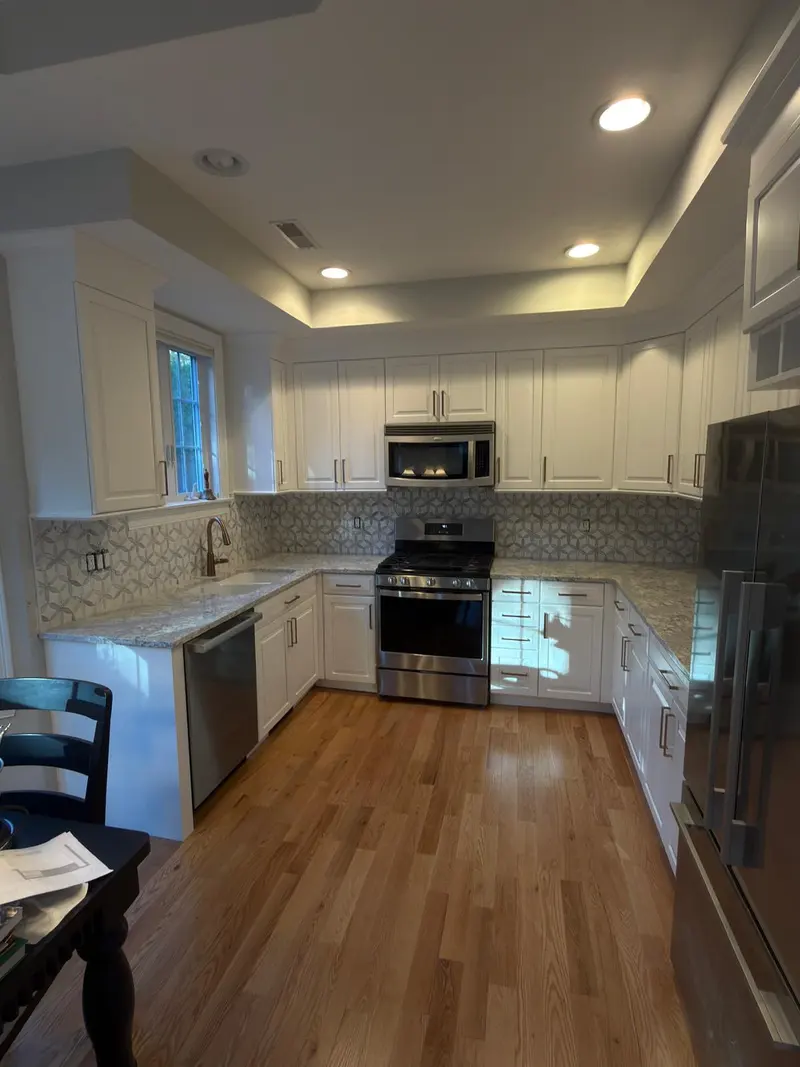
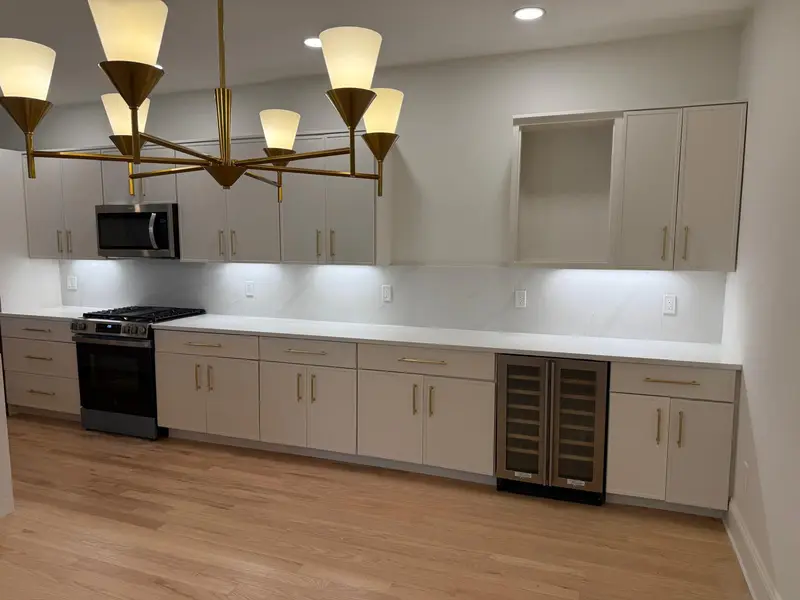
Cabinet painting, HolbrookNew color, same cabinets: deciding whether a Holbrook kitchen is a refinishing job
Owners occupy 84.0% of the town's occupied housing units, according to Census estimates, and the median housing unit dates to 1957. Over that many decades a kitchen may have been remodeled once, twice or not at all, so the cabinets in a Holbrook kitchen could come from almost any era, and the right finish depends on what they are actually built from.
Two-family owners face the question twice. The Census counts 127 units in two-unit buildings in town, and an owner refreshing both apartments can match the two kitchens with one color and one schedule.
What the doors are made of
Solid wood and plywood boxes with hardwood doors are the best candidates. Oak has deep, open grain that telegraphs through paint; if you want a smooth, furniture-like look, the grain gets filled before priming. Maple, birch and cherry have tight grain and paint smoothly with less work.
MDF doors paint well on the faces, but cut edges are thirsty and need sealing. Thermofoil, a vinyl skin heat-pressed over MDF, is a poor candidate: if it is already peeling at the edges, paint will not hold it down. Plastic laminate can be coated after a scuff-sand and a bonding primer made for slick surfaces, though the edges take wear.
Refinish or replace?
Refinishing fits when the boxes are square, the drawers run, shelves are flat and the layout works for you. Replacement fits when the sink base has water damage, the face frames are loose, you want to move the range or add an island, or the doors are thermofoil that is coming apart.
There is also a middle path: boxes painted, a few doors replaced, new hinges and pulls. Our refinish vs. replace guide and the blog post on painting vs. replacing cabinets go deeper into the trade-offs.
When the cabinets were painted long ago
The Census puts 79.5% of Holbrook's housing units in the built-before-1980 category, and 843 of them predate 1940. Built-in pantry cupboards, china cabinets and kitchen cabinets that were painted decades ago may have lead in their first coats, since the sale of lead-based paint for home use was banned only in 1978.
Sanding those layers is regulated work. Under the EPA's lead renovation rule, a certified firm sets up containment in the kitchen, keeps dust off counters and food areas, and verifies the cleanup. Stripping the doors off-site in a controlled area is sometimes cleaner than sanding them in place. Our lead-safe page explains each step. If lead is confirmed and you want it gone rather than sealed, Holbrook Community Development offers deleading loans.
How a cabinet job runs
Our cabinet painting process article shows each stage in more detail. If the walls and ceiling around the cabinets need fresh paint too, the Holbrook interior painting page covers that work.
- Doors and drawer fronts come off, are numbered, and hinges and pulls are bagged by location.
- Every surface is degreased; cooking residue near the range and above the sink is the main cause of paint that will not stick.
- Surfaces are scuff-sanded, dusted and primed with a bonding primer; dents and gouges are filled.
- A hard cabinet enamel goes on in thin coats, sprayed or brushed, with drying time between them.
- Doors are rehung and adjusted once the finish is dry enough to handle; full hardness takes longer, so the first weeks call for gentle use.
Holbrook at a glance