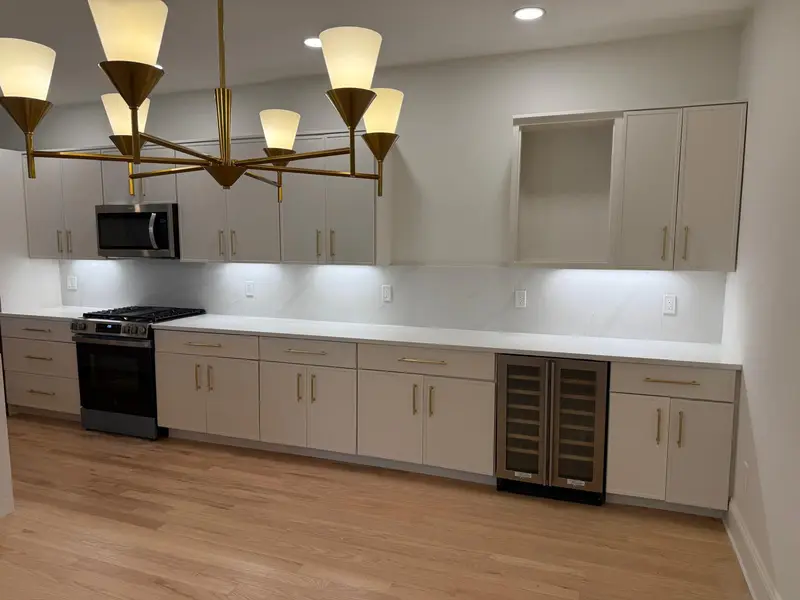
Cabinet painting, FranklinRepainting Franklin kitchen cabinets: what the age of the kitchen tells you
More than a third of local housing, 36.8% of units according to the Census, was built in the 1980s and 1990s, and another 22.1% dates from 2000 or later. A kitchen from those years may now look dated, or worn around the handles. When the boxes underneath are still square, solid and firmly attached to the wall, painting makes the most sense: the structure is fine and only the surface needs work.
Cabinet painting is a different trade from wall painting. The finish is handled every day, wiped constantly and exposed to steam and grease, so it has to be built up in thin, hard coats over thorough prep.
Paint or replace?
Replacement is the right call when boxes are water-damaged under the sink, shelves sag, or the layout itself no longer works. Painting fits when the problem is color, finish or wear. A practical test is to open every door and drawer: if the hinges hold, the drawer boxes slide and the face frames are tight, the cabinets are good candidates. Our article on cabinet painting versus replacement goes through the trade-offs in more depth.
New hardware, soft-close hinges or a changed crown molding can be part of the same project and often make painted cabinets feel newer than color alone.
Wood species and what they need
The species of the doors changes the prep more than anything else. Check yours on the back of a door or inside a drawer front, where the original finish is least worn.
- Oak: open, deep grain that shows through paint as texture unless a grain filler is applied first
- Maple and birch: tight grain that takes paint smoothly once the factory finish is deglossed
- Thermofoil or laminate doors: a vinyl or plastic face that needs a specialty bonding primer, and peeling foil cannot be painted over
- Previously painted cabinets: old layers checked for adhesion and chipping before anything new goes on
Older kitchens and lead
The town has 1,011 housing units from the 1950s and 1,464 from the 1960s, the decade the master plan names as the start of a residential boom, in the same passage that credits Interstate 495 and its two local exits with reshaping development. A house from that era may still have original built-in cabinets, or later cabinets hung beside original painted trim and window casings. Any painted surface in a pre-1978 kitchen can hide lead under newer coats.
Sanding is a core step in cabinet work, so in those kitchens it has to be done with containment, HEPA dust collection and careful cleanup. A quick lead test on old painted doors before the job is scheduled settles the question. See our lead-safe painting page for how that work is handled in Massachusetts.
How the work is sequenced
Doors and drawer fronts come off, are labeled, and are finished flat so the coats level out without runs. Boxes and face frames are degreased, sanded and primed in place while counters, floors and appliances stay covered. The kitchen can be out of service for part of the project, so plan simple meals and keep a coffee maker in another room.
Curing time is the step people underestimate. A cabinet enamel can be dry to the touch in hours but take a couple of weeks to reach full hardness, so doors should be closed gently and not scrubbed during that time. Our post on the kitchen cabinet painting process has a fuller walkthrough.
Franklin at a glance