
Location not listed
Dental Office Waiting Room
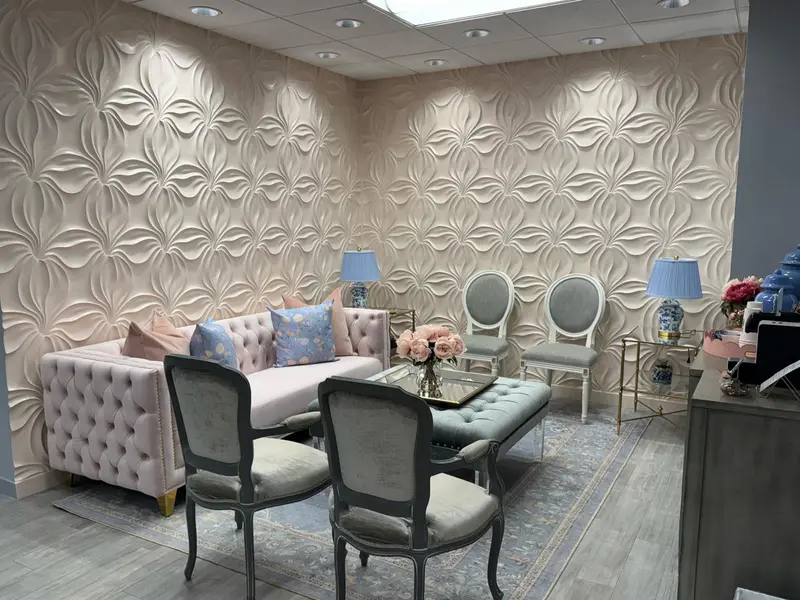
A dental practice's waiting room and reception area, finished in soft gray with applied panel molding, next to a sculpted floral feature wall.
See the photos →Painting for condo owners, townhouse associations and property managers, from one unit's living room to the hallways and siding a whole complex shares.
Shared-wall housing takes several forms here. Census figures show 18.0% of housing units in buildings of five or more units, including 906 units in buildings of fifty or more. Another 9.9% are single-family attached homes, the Census category for townhouse-style units, and 9.4% sit in two- to four-unit buildings. Not every one of those is a condominium, but together they account for more than a third of the town's homes.
For painting, the key question in any condo is who owns the surface. The master deed and bylaws divide the building into units and common elements, and the answer decides who approves the work, who pays and whose insurance certificate the job needs.
The town's 2025 master plan traces its manufacturing history to straw hat production starting in the 1790s and notes that by the late 1880s the Ray family owned and managed fourteen mills. It also states that many mill buildings have since been rehabilitated into commercial space, condominiums or apartments. Downtown, the plan describes some brick-faced buildings with businesses on the first floor and condominium or apartment units above.
Units in those older buildings can combine exposed brick, tall windows and heavy timber with newer drywall partitions, and each surface takes a different primer. Where original painted woodwork remains, the building's age means lead has to be considered before sanding. If you live near the center, our Downtown Franklin page describes that area, the Unionville page covers the western mill area, and the City Mills page covers the old mill village in neighboring Norfolk once called Franklin City.
Interior walls, ceilings and trim within a unit often fall to the owner, depending on the master deed, but some associations still require notice to management, a contractor registration or limits on work hours and hallway use. Read the rules before booking, since a missing approval can stall a start date.
If you rent your unit out, a turnover is a natural time to repaint. Renters occupy 21.8% of the town's occupied homes, and a neutral, washable finish between tenants keeps a unit ready to list.
Exterior siding, trim, entry doors and shared decks on a townhouse complex are often common or limited common elements, so the board, not individual owners, schedules and pays for them. A phased plan, grouped by building or by side, lets the association spread the work across seasons and match it to its reserve budget.
Interior common areas such as lobbies, corridors and stairwells need a schedule that keeps at least one route open for residents, notices posted ahead of time and scrubbable low-odor finishes. If management needs a certificate of insurance naming the association before work begins, AJ Painting is licensed and insured and can supply one. In a building built before 1978, scraping or sanding common-area trim and railings should follow the practices on our lead-safe painting page.
| Units in buildings with 5 or more units | 18.0% (2,341 of 13,011) (U.S. Census ACS 2020–2024 5-year, table B25024) |
| Single-family attached (townhouse) units | 9.9% (1,287 units) (U.S. Census ACS 2020–2024 5-year, table B25024) |
| Units in 2–4 unit buildings | 9.4% (1,217 units) (U.S. Census ACS 2020–2024 5-year, table B25024) |
| Renter-occupied homes | 21.8% of occupied units (U.S. Census ACS 2020–2024 5-year, table B25003) |
| Mill buildings reused as housing | Many rehabilitated into commercial space, condominiums or apartments (Town of Franklin Master Plan, Final Report (January 2025), Ch. 7) |
These jobs were in other towns, not in Franklin. Each card names the town where the work was done.
A dental practice's waiting room and reception area, finished in soft gray with applied panel molding, next to a sculpted floral feature wall.
See the photos →In many condominiums the exterior is a common element, so the association pays from its operating or reserve funds and individual owners do not hire their own painter. Your master deed and bylaws are the final word, and some assign doors or decks to individual owners.
Inside your unit, usually yes. Exposed brick, timber beams or original windows may be treated differently, and some associations restrict changes to anything visible from outside. Check the rules before painting surfaces that are not plain interior walls.
Yes. AJ Painting is licensed and insured, and a certificate naming the association or management company can be issued before the start date.
The work is split into sections so a path stays open, with notices posted in advance and wet areas marked. Fast-drying, low-odor coatings let each section reopen quickly.
Building count, height, siding condition and access drive the total. Our Massachusetts painting cost guide gives market-wide ranges for planning, and a written estimate can be broken out by building or phase for reserve studies.
Owners and boards can book a free on-site visit and a written estimate, with an insurance certificate on request. Call (508) 258-4325.
5.0 on Google · 35 verified reviews · Licensed & insured · Written quote in 48h