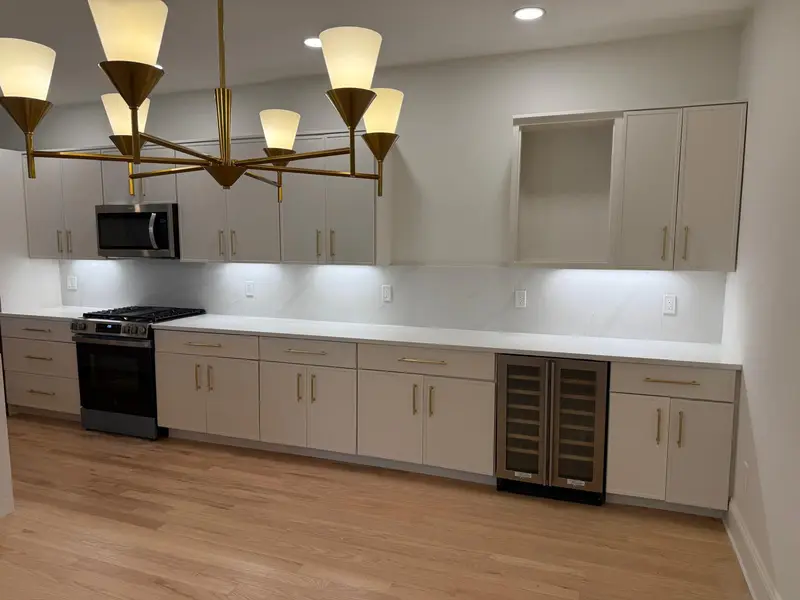
Cabinet painting, FitchburgRepainting kitchen cabinets instead of tearing them out
Fitchburg's housing spans a long building history. Census estimates count 7,596 units from 1939 or earlier, 6,361 from the 1940s through the 1970s, and 1,696 built since 2000. A kitchen can be original to the house or remodeled several times since, so the cabinets in a 1920s home might be 1990s oak, and a 1950s house might still have its first painted pine. What matters for painting is the box material, the door construction and the finish already on them, not the year on the deed.
Painting makes the most sense when the cabinet boxes are solid and square, the doors close properly, and the layout already works. If the problem is a cramped layout or water-damaged sink bases, new paint will not fix it. Our post on cabinet painting versus replacement goes through that decision in more detail.
Reading the wood and the existing finish
A quick look inside a door and at the cabinet back usually shows whether a box is plywood, particleboard or solid wood, which affects how it handles moisture near the sink.
- Red oak has deep, open grain that shows clearly through paint. It can be left as visible texture or filled with a grain filler before priming for a smooth look; filling adds labor.
- Maple, birch and cherry are tight-grained and take paint smoothly once the clear coat is scuffed and primed.
- Previously painted wood needs failing layers removed and a test for lead before any sanding.
- Laminate and thermofoil doors have a plastic surface. Laminate can sometimes be painted with a bonding primer; peeling thermofoil generally cannot be painted reliably.
Old painted cupboards and lead
Of the city's 17,744 housing units, 78.7% were built before 1980, and lead paint was sold for homes until 1978. Pantry cupboards, china cabinets and kitchen built-ins in older houses may carry old coats under newer ones. Sanding doors and face frames is the core of cabinet prep, so in a pre-1978 home the EPA's lead-safe work rules can apply: containment of the work area, sanding with HEPA dust collection rather than open machine sanding, and verified cleanup in a room where food is prepared. Our lead-safe painting page explains the process.
What a durable cabinet finish takes
Kitchen cabinets take more abuse than any wall: grease, steam, wet hands and daily hinges. A finish that lasts starts with a degreasing clean, because cooking residue is invisible and paint will not stick to it. Then come a scuff sand, a bonding primer suited to the old finish, and two coats of a hard cabinet enamel, such as a waterborne alkyd or urethane-modified acrylic.
Doors and drawer fronts are removed, labeled, and painted lying flat so the enamel levels without runs. Hinges and pulls come off rather than getting taped. The boxes and face frames are painted in place with the counters, floors and appliances covered. The step-by-step process on our blog shows each stage.
Rental kitchens and multi-family owners
Nearly half of occupied homes in the city, 45.9%, are rented. For a landlord, painted cabinets can refresh a dated rental kitchen at turnover without the downtime of a full remodel. The tradeoff is cure time: enamel is dry to the touch within hours but takes longer to reach full hardness, so a gap of several days before a new tenant moves in and starts slamming doors helps the finish last.
AJ Painting is licensed and insured, and the on-site visit and written estimate are free. If the rest of the room needs work too, see the interior painting page for this city.
Fitchburg at a glance