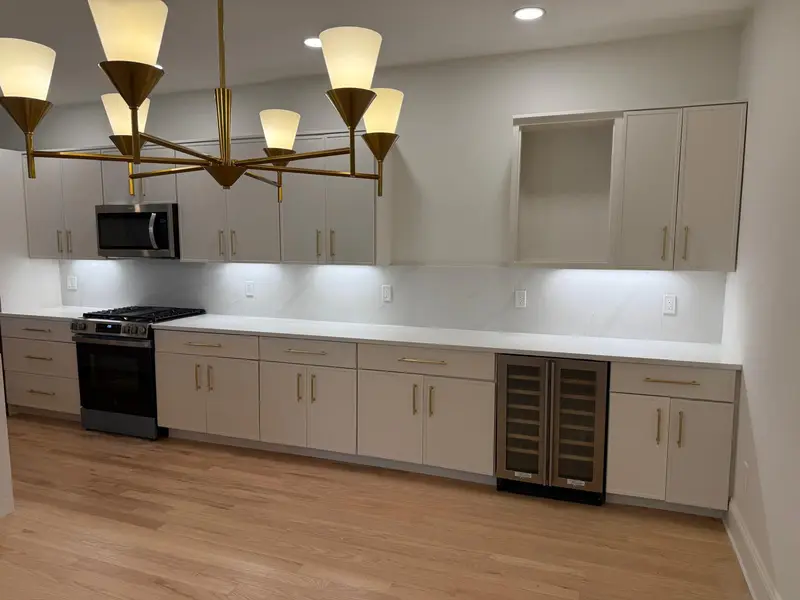
Cabinet painting, Berlin MARefinishing the cabinets you have instead of tearing out the kitchen
Painting cabinets makes sense when the boxes are solid, the layout works and the problem is the finish: dated stain color, worn clear coat around the handles, or a painted surface that has chipped. It does not fix sagging shelves, water-swollen sink bases or a kitchen that needs more storage. Sorting out which situation you are in is the first conversation.
Local housing comes in very different vintages. Census figures put about 42% of units in the 2000-or-later range and about 20% in the 1940s through 1970s, with another 22% from 1939 or earlier. A kitchen can be remodeled long after a house is built, so the build year is only a starting clue.
What the wood and finish tell us
Pre-catalyzed conversion varnish and many factory finishes are slick and chemical-resistant, which is good for daily use and bad for adhesion. Degreasing and sanding them is the step that decides whether the new paint grips or peels in a year.
- Red or white oak: open grain shows through paint unless it is filled; whether that texture is welcome is a matter of taste
- Maple, birch and cherry: tight grain that paints smoothly once the factory finish is scuffed and primed
- Thermofoil or laminate doors: vinyl-wrapped surfaces need a specialty bonding primer, and peeling wrap cannot be painted over
- MDF painted doors: easy to recoat, but swollen edges near the sink or dishwasher have to be sealed or replaced
- Previously painted wood: test the old coat for adhesion, and for lead if it may predate 1978
Kitchens in the newer houses
With roughly 630 of the town's 1,495 housing units built since 2000, a good number of homes are recent enough that the original builder's cabinets may still be in place. Where they are stained or clear-coated hardwood with sound boxes, painting is a way to change the room while keeping the boxes, counters and plumbing where they are. Hinges, slides and hardware can be replaced at the same time if they are worn, and new hardware holes can be drilled after old ones are filled.
Mid-century and older kitchens
In a house built before 1980, built-in cabinets, pantry doors or china cupboards may carry original paint underneath later coats. Before sanding anything painted in a home of that age, testing for lead is the safe move. If the result is positive, EPA's lead-safe rules for interior work apply once more than 6 square feet of painted surface is disturbed, which a full set of cabinet doors can exceed. Our lead-safe painting page has the details.
Older site-built cabinets can be worth keeping for their solid wood and fit even when the paint is rough. Stripping or deglossing, filling dents and priming gives them a clean new surface without losing what makes them part of the house.
How the work runs
Doors and drawer fronts are labeled, removed and finished off site or in a set-up area, while the boxes are masked and painted in place. Each surface is cleaned with a degreaser, sanded, primed with a bonding primer, then given two coats of a cabinet-grade enamel. The kitchen stays usable for most of the job, with the counters and appliances covered. Enamels need time to harden after they feel dry, so doors are rehung with care and the first couple of weeks call for gentle use. Our cabinet painting process post walks through each stage.
Berlin at a glance