Interior painting, Berlin MAPainting inside a town where the housing splits between two centuries
Census figures show an unusual split in Berlin's housing. About 22% of units were built in 1939 or earlier, while roughly 42% went up in 2000 or later, which puts the median year built at 1992. Between those two groups sits a smaller band of houses from the 1940s through the 1970s. Each group calls for a different approach indoors, so the first step on any interior job is figuring out which one your rooms belong to.
That matters more than color choice. A coat of paint over a sound, clean, properly primed surface looks good for years; the same paint over chalky old distemper, glossy oil trim or a fresh skim coat that was never sealed can fail within months.
Older rooms: plaster, tall stair halls and layered trim
The Massachusetts Historical Commission's survey of the town describes the typical house of 1830–1870 as a gable-end, side-passage plan in Greek Revival or Italianate dress, and in its 1915–1940 section it notes a local variation where the passage runs only as deep as the front room. Inside houses like these, the stair hall can be the hardest space to paint well: it is narrow, the wall may climb two stories, and the handrail and balusters may carry decades of coats.
The same survey records a local builder in the 1920s who employed up to 35 carpenters, plasterers and painters. If your walls are original plaster rather than drywall, expect hairline cracks, loose keys near door frames and patches from past repairs. Failed patches get cut out, loose areas re-secured or filled, and repairs primed separately so they do not flash through the finish coat.
- Cracks that reopen every winter usually need mesh tape or a bonding repair, not just more spackle
- Old oil-based trim needs scuff sanding and a bonding primer before a waterborne enamel will stick
- Ceilings in older rooms are checked for sagging plaster before anyone rolls paint on them
Lead dust is the first question in pre-1980 rooms
Census data put 42.7% of the town's housing units in the built-before-1980 range, and lead-based paint for homes was banned in 1978. Sanding window sashes, scraping stair treads or opening up a wall in one of those houses can release lead dust. Under EPA's Renovation, Repair and Painting rule, paid work that disturbs more than 6 square feet of painted surface in a room of a pre-1978 home must follow lead-safe practices: plastic containment, no open-flame burning or power sanding without a HEPA-shrouded tool, HEPA cleanup and a cleaning verification at the end.
If you are not sure of your house's age or history, testing comes before scraping. Our lead-safe painting page walks through what that work looks like in an occupied home.
Newer houses: drywall, open plans and first repaints
Homes built since 2000 will normally have drywall rather than plaster. Issues to look for include nail pops, settling cracks at the corners of cathedral or two-story ceilings, and, in some houses, a thin original coat. Open floor plans also make it harder to stop a color: a wall that runs from the kitchen through the family room has to be planned so a new color ends at an inside corner rather than in the middle of a surface.
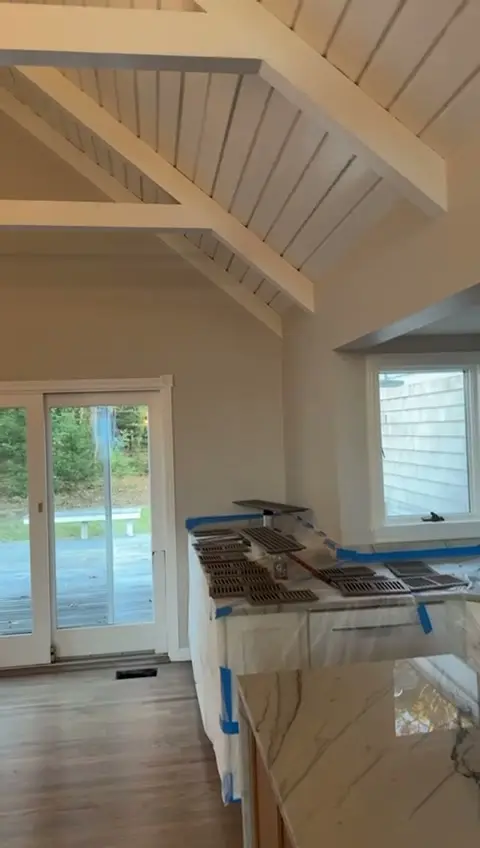
If you have a tall great room or two-story foyer, the walls and ceilings may call for planks or a lift. Access is part of the free on-site visit, so the written estimate reflects it.
Attached homes and smaller rentals
About 20% of local housing units are single-family attached, and another 12.6% sit in two-to-four-unit buildings. Painting inside a townhouse or a side-by-side unit is mostly the same work, with a few extras: keeping dust and odor out of shared stairwells, scheduling around a neighbor's access, and, in a rental, turning a unit around between tenants without leaving fresh paint on a weekend move-in day.
If the unit belongs to an association, check whether the bylaws say anything about entry doors or hallway walls before choosing colors. Inside your own walls the decision is normally yours.
How a room is done
Furniture moved to the center and covered, floors protected, switch plates removed, holes and cracks filled and sanded, bare spots primed, caulk renewed where trim meets wall, then two finish coats. Ceilings first, then walls, then trim and doors. Work hours are Monday through Saturday, 7AM to 6PM.
Berlin at a glance