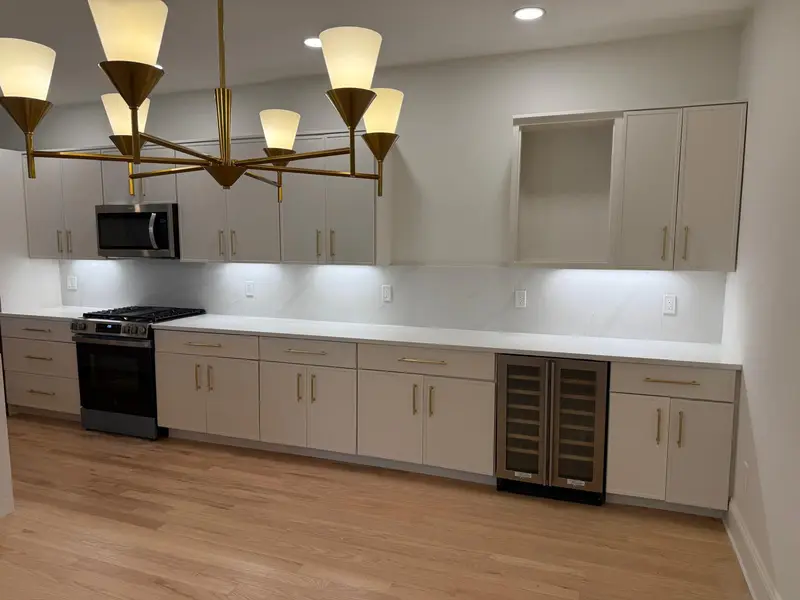
Cabinet painting, AvonDeciding whether your kitchen cabinets are worth painting
The Census Bureau's estimate of Avon's median year built is 1954, and the single largest post-1940 decade in its housing table is the 1950s, with 412 units. A kitchen in a house that old may have been remodeled one or more times, so the cabinets you are looking at may date from the original build, a 1970s or 1990s update, or a recent renovation.
That is why a cabinet estimate starts with the boxes, not the color. What the doors are made of, how they are finished now and how well the boxes are holding up decide whether paint is a good investment.
What makes a good candidate
Solid wood or plywood boxes with solid wood or MDF doors take paint well when they are cleaned, deglossed, primed with a bonding primer and finished with a cabinet-grade enamel. Oak's open grain will show through paint unless it is filled first, which is worth deciding before the job starts rather than after.
Thermofoil doors that are peeling, particleboard boxes swollen from a leaking sink, and doors with failing laminate edges are poor candidates. Paint will not hold those materials together. The refinish-or-replace guide walks through the decision in more detail.
- Press on the sink-base floor: soft or swollen means water damage
- Look at door edges for lifting film or exposed particleboard
- Check hinges and drawer slides; worn hardware is easier to replace during painting
- Note whether the doors are a style you still like, since paint changes color, not shape
Old finishes and lead
Census figures show 77.4% of the town's homes were built before 1980. Original built-in cabinets, pantry shelving and painted trim around a kitchen in a pre-1978 house can carry lead in their earliest coats. Scuff-sanding those surfaces for adhesion is exactly the kind of disturbance that releases dust.
Testing the existing finish before prep tells you whether lead-safe methods are needed: containment around the work area, HEPA vacuuming and wet cleanup. The lead-safe painting page explains the rule and the practices. Factory-finished cabinets from a later remodel usually avoid this question, but painted built-ins in older houses should be checked.
Two kitchens under one roof
ACS data counts 264 units in two-unit buildings and 271 in three- and four-unit buildings, about 31% of the housing stock combined. An owner of a two-family may be weighing cabinet painting in the unit they live in and in a rental unit, and the goals differ: a durable, easy-to-touch-up finish for the rental, perhaps a custom color for the owner's kitchen.
Painting a vacant rental kitchen is simpler because the room can be fully emptied and the doors can be away for as long as the finish needs to cure. In an occupied kitchen, the boxes are masked and sprayed or brushed in place while the doors are finished separately, so the room stays usable for basics.
How the work proceeds
On a typical cabinet job, doors and drawer fronts are removed and labeled, hardware is bagged, and the boxes are degreased, since grease left on the surface keeps paint from bonding. After sanding and a bonding primer, finish coats go on in thin layers. Cabinet enamels feel dry within hours but take weeks to reach full hardness, so the first days after reinstallation call for gentle use. The cabinet painting process post shows each step.
If the walls and ceiling around the kitchen are part of the plan, see interior painting in Avon so both can be quoted together.
Avon at a glance