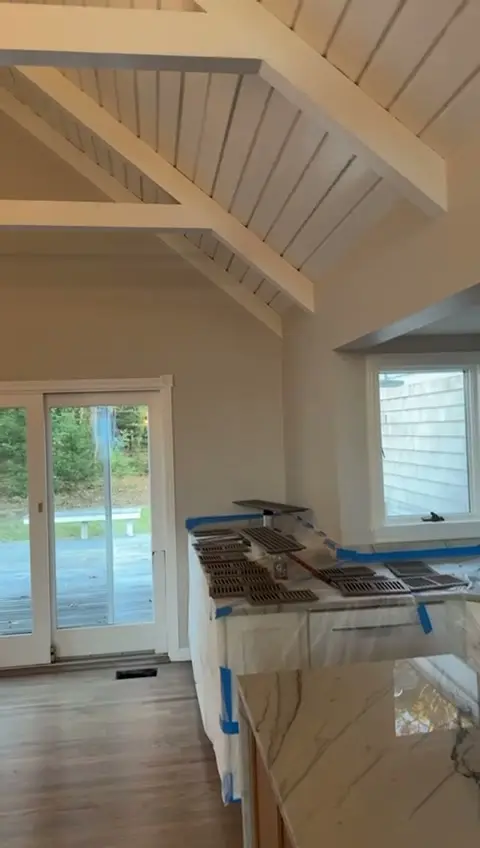
Interior painting, Weston MAInterior painting for plaster-walled antiques, midcentury builds and newer homes
Inside a house, the year it was built tells a painter what the walls are made of and what might be in the old coats on the trim. Locally the range is wide. Roughly 909 of 3,969 housing units, close to a quarter, went up in 1939 or earlier; another 1,130 date from the 1950s and 1960s; and about 714 were built in 2000 or later. A room in a central-chimney Colonial and a room in a ten-year-old house share little in their prep.
Owners occupy 87.5% of the town's occupied homes. When the household stays in the house during the work, that shapes the schedule: which rooms are cleared first, where furniture goes, and how bedrooms are returned to use by evening.
Plaster, drywall and what each needs
Pre-war houses tend to have plaster on wood or metal lath. Plaster is hard and quiet, but it develops hairline cracks along lath lines and, where the keys behind it have broken, loose sections that flex when pressed. Patching those areas means re-securing the plaster, filling with a setting compound rather than ready-mix, and priming the patches so the topcoat does not flash.
Homes from the 1950s and 1960s can have either plaster or early gypsum board, and some have a mix after additions. Drywall from any era shows nail pops, taped seams that have cracked, and dents at corners. Newer houses usually need the least repair, though builder-grade flat paint often marks easily and benefits from a more washable finish; the paint finish comparison explains the sheen choices room by room.
Lead dust on trim, sashes and stairs
Window sashes, door jambs and stair treads are friction surfaces, and when they carry lead paint, opening and closing them grinds it into dust. With about 65% of local housing built in 1979 or earlier, that is a real question for many interiors. EPA's rule for pre-1978 homes applies once paid work disturbs more than 6 square feet of painted surface in a room. In practice that means plastic sheeting, sealed doorways, no open-flame burning or power sanding without a HEPA attachment, HEPA vacuuming and a wipe-down verified at the end. The lead-safe painting page describes each step.
Ceilings, stairwells and tall rooms
Ceilings take the most effort per square foot: they show every lap mark, and water stains bleed through ordinary paint unless they are sealed with a stain-blocking primer first. If a brown ring appeared after a winter thaw, the source should be fixed before painting; the ice dam ceiling stain guide covers that sequence. Two-story foyers and open stairwells need planks or a staircase scaffold rather than a tall ladder leaning on fresh walls.
Painting through the colder months
Interior work does not depend on the weather the way siding does, which makes late fall and winter a practical time to get rooms done. Low-odor waterborne paints keep the house livable with the windows mostly closed, and this ventilation guide explains how to manage fumes and drying in a sealed-up house. Kitchen cabinets are a separate process with their own prep and finish; see the cabinet painting page.
Weston at a glance