Interior paintingInside a Douglas home: what the walls are made of decides the prep
Interior work is less about the brand of paint than about what sits under it. In Douglas, the answer varies widely. Of 3,497 housing units counted in the Census survey, 761 date from 1939 or earlier, 686 from the 1940s through the 1970s, 1,148 from 1980 to 1999, and 902 from 2000 on. The town's median year built is 1986, and 2,050 units (58.6%) date from 1980 or later, but the older group is far from small.
Plaster walls in older houses
Houses built before about 1940 were typically finished with plaster over wood lath rather than drywall. Plaster holds up well, but over time it develops hairline cracks, bulges where the keys have let go of the lath, and patched spots that show through a fresh coat. Good prep here means securing loose areas, cutting out and refilling cracks, skim-coating patches so they match the surrounding texture, and priming every repair so the topcoat dries to an even sheen.
The trim in those rooms is often wood with many coats of oil-based enamel on it. Latex paint does not bond reliably over glossy oil, so the surfaces are cleaned, scuff-sanded and primed with a bonding primer before the finish coat. Ceilings in older houses deserve a look for old water stains, which bleed through latex unless they are sealed with a stain-blocking primer.
Lead dust is an indoor problem first
In Douglas, 41.4% of housing units were built before 1980 (the Census groups the 1970s together), and federal lead rules cover homes built before 1978. Indoors, the risk is dust: sanding a windowsill, scraping a door edge or opening up a wall can spread fine lead particles across floors where children play. Paid work that disturbs paint in a pre-1978 home falls under the EPA Renovation, Repair and Painting rule, which calls for containment, HEPA cleanup and a cleaning check at the end. Read more on our lead-safe painting page.
Drywall homes from the 1980s, 1990s and 2000s
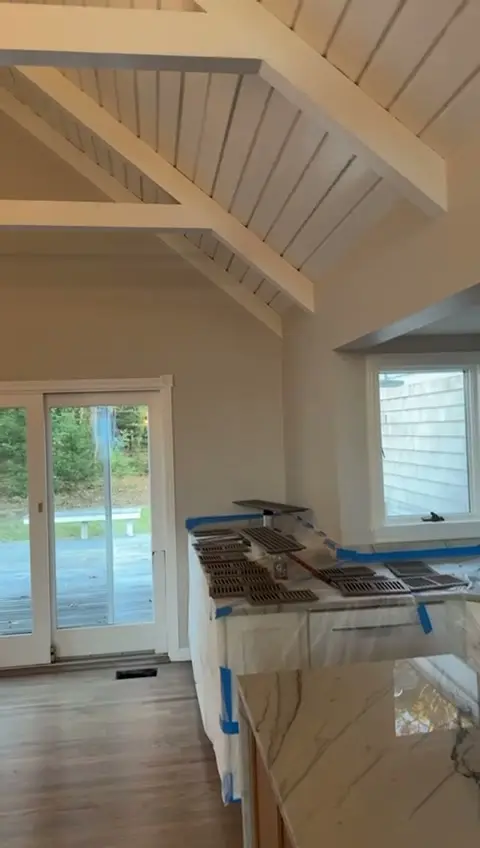
Drywall interiors bring their own list. Nail pops, cracked corner tape and dents along hallways are common repairs before repainting. Builder-grade flat paint marks easily; an eggshell or washable matte stands up better in living areas, with satin or semi-gloss on trim and doors. Where a house has a two-story foyer or vaulted ceiling, taller ladders or scaffolding come into the scope.
- Move and cover furniture, mask floors and fixtures
- Fill nail holes, set popped fasteners, retape cracked seams
- Sand and spot-prime patches
- Cut in, roll two coats, then paint trim and doors
Planning around the household
If you are living in the house during the work, going room by room keeps part of the house usable, and low-VOC paints reduce odor during the work. Fall and winter are workable seasons for interiors as long as rooms can be ventilated; our post on painting indoors with windows closed covers that. For budgeting, the interior painting cost guide explains what drives the price, and the on-site visit and written estimate are free. Call (508) 258-4325, Monday to Saturday, 7 AM to 6 PM.
Douglas at a glance