
Norwood, MA
Porch Floor, Steps & Railings in Norwood, MA
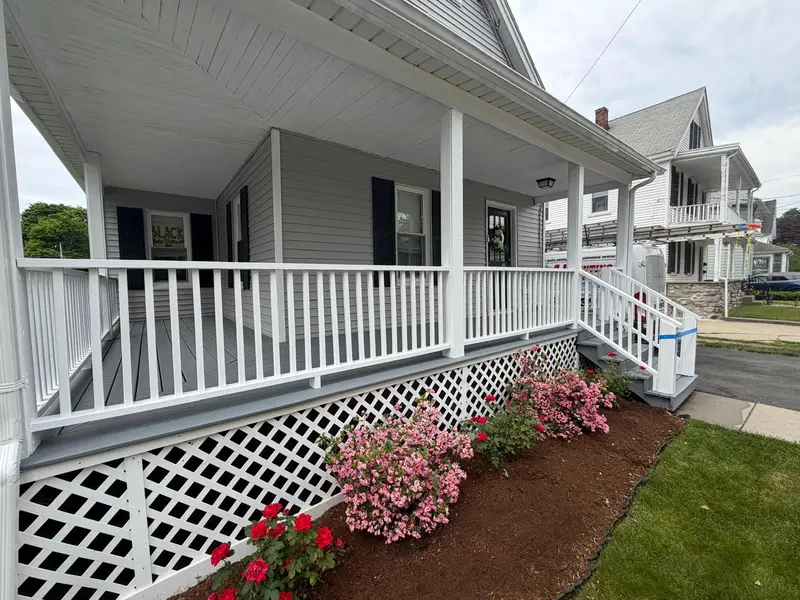
A Norwood home's front and back porches: floor boards and steps painted gray, with railings, balusters and lattice skirting in white.
See the photos →Washing, board repair and a stain or coating picked for your lumber and for how much shade and dampness the deck lives with.
Douglas is mostly forest. The town's 2025 Hazard Mitigation Plan estimates that 78% of its land is wooded, much of it in the western part of town within the 5,525-acre Douglas State Forest. Add roughly 900 acres of ponds and streams, and you have conditions that work hard on a deck: shade, falling debris and moisture that lingers on horizontal boards.
A deck that gets little direct sun stays wet for hours after rain or heavy dew. Leaves, needles and pollen collect between boards and hold water against the wood. That combination grows mildew and green algae, softens the surface fibers, and wears stain off the walking paths first. The town-wide forest figure says nothing about your particular yard, but if your deck sits under a canopy, plan on cleaning it each spring and on a recoat schedule shorter than a deck in full sun would need.
Simple steps stretch the life of a finish: blow debris out of the board gaps through fall, trim overhanging limbs where you can, and choose a stain that contains a mildewcide.
Wallum Lake, Manchaug Pond, Whitin Reservoir and Badluck Pond are among the town's major water bodies, and the Mumford River runs through East Douglas. For a deck or dock-side platform close to the water, ground moisture and humid air keep the framing damp. Posts set in soil, joists close to grade and ledger boards against the house are the spots to check for soft wood before any finish goes on, because stain does not restore strength.
New pressure-treated boards can arrive wet from treatment. Follow the stain maker's instructions on drying time; a few drops of water on the board will bead if it is not ready and soak in if it is. Cedar and redwood take penetrating oil and semi-transparent stains well and show their color. Dense tropical hardwoods need a thin oil made for hardwood, since ordinary stain sits on the surface.
Transparent and semi-transparent stains soak in and wear gradually, so a recoat is mostly cleaning and reapplying. Solid stains and deck paints cover gray, patchy or mismatched boards, but they form a film that can peel where feet and standing water work on it, and peeling means scraping before the next coat. One workable split is penetrating stain on the walking surface and a solid color on railings, posts and fascia.
If a porch or deck is attached to a house built before 1978, its painted railings, balusters and steps may have old lead-containing layers, and scraping them falls under lead-safe rules; our lead-safe painting page explains them. Before any staining, it helps to read our notes on how New England winters treat deck stain. Deck area, height, railing length, repair needs and the current finish all shape the scope, and the deck staining cost guide explains those factors. AJ Painting is based in Ashland, licensed and insured; the on-site visit and written estimate are free. Call (508) 258-4325, Monday to Saturday, 7 AM to 6 PM.
| Forested land | An estimated 78% of the town's land area (Town of Douglas Hazard Mitigation Plan 2025 Update) |
| Ponds and streams | About 900 acres; about 74 miles of streams (Town of Douglas Hazard Mitigation Plan 2025 Update, Surface Water) |
| Douglas State Forest | 5,525 acres, including Wallum Lake (Wikipedia, citing the DCR acreage listing) |
| Single-family detached homes | 82.6% (2,888 of 3,497 units) (U.S. Census ACS 2020–2024 5-year, table B25024) |
These jobs were in other towns, not in Douglas. Each card names the town where the work was done.
A Norwood home's front and back porches: floor boards and steps painted gray, with railings, balusters and lattice skirting in white.
See the photos →Clean it each spring with a deck wash that kills mildew, keep leaves and needles out of the gaps, and cut back branches that block sun. A stain with a mildewcide helps. In heavy shade, expect to recoat more often than on a sunny deck.
On the boards you walk on, a penetrating stain is easier to maintain because it fades rather than peels. Solid stain or paint hides badly weathered wood but will need scraping when it fails. You can also combine them: stain underfoot, solid color on rails.
Being near water mostly means the framing and posts stay damper. Check post bases, joists near the ground and the ledger for soft spots before staining, and keep soil and mulch away from the posts so they can dry out.
When the wood is dry enough to absorb finish, which can take weeks or more. Sprinkle water on a board: if it beads, wait; if it soaks in, it is ready. The product label has the final word.
Square footage, railing and stair count, deck height, how much cleaning and repair the wood needs, and whether old solid stain must be stripped. Our deck staining cost guide explains each factor, and the written estimate after the free visit covers your deck.
Yes, if the wood is dry and temperatures stay above the label minimum through the drying period. Short, cool days and heavy dew under trees slow drying, so a clear forecast of a couple of days matters more than the calendar.
Boards, posts and shade first, then the right finish. Call (508) 258-4325.
5.0 on Google · 35 verified reviews · Licensed & insured · Written quote in 48h