
Norwood, MA
Porch Floor, Steps & Railings in Norwood, MA
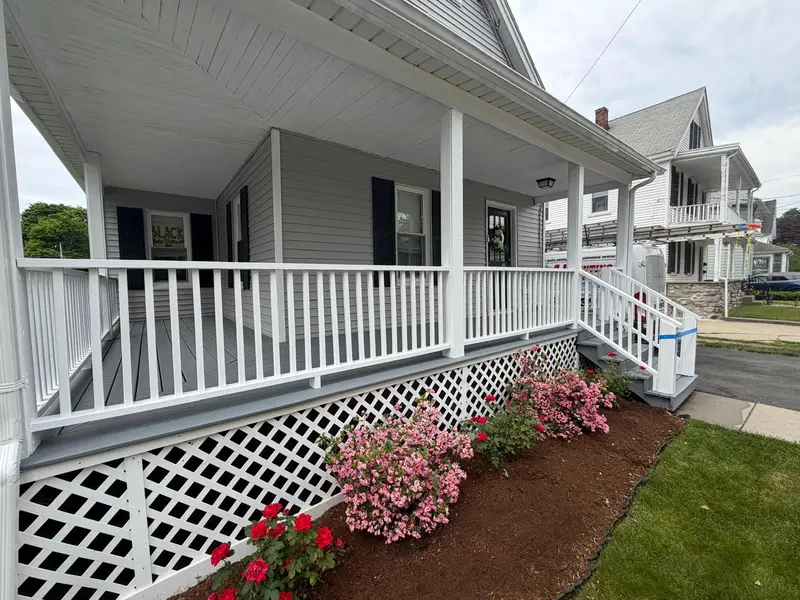
A Norwood home's front and back porches: floor boards and steps painted gray, with railings, balusters and lattice skirting in white.
See the photos →Siding, trim, doors and shutters scraped, repaired and repainted, with the paperwork handled up front when a house sits inside one of the town's historic districts.
Exterior work here starts with two questions that have nothing to do with brushes: is the house inside a local historic district, and how old is the paint on it. The answers decide whether a color change needs review, and whether scraping the clapboards falls under federal lead-safe rules.
Census figures put the median year of construction for the town's housing at 1969, and 64.7% of units were built before 1980, including the 22.6% that date to 1939 or earlier. Any of those houses can carry lead-based paint under its newer coats, so the scraping and sanding that a good repaint depends on has to be planned with containment in mind.
The Historic Districts Commission dates to a 1960 act of the legislature, and Concord was the fourth community in Massachusetts to create local districts. There are now six: American Mile, Barrett Farm, Church Street, Hubbardville, Main Street, and Monument Square/North Bridge. Inside them, any exterior paint color change visible from a public way goes through review, covering walls, trim, doors, shutters and fences.
Two details are easy to miss. First, the town's guidelines count the Concord, Assabet and Sudbury Rivers as public ways, so a rear elevation seen from the water can be just as reviewable as the front. Second, a repaint in the existing colors needs no hearing, but owners are asked to send the commission a written statement, and a paint chip or color name is appreciated.
For a color change, the application should include chips for every surface and recent photos of the house. The guidelines also caution that several nearby houses wearing similar or identical schemes may not be appropriate, which is worth knowing before settling on the same palette as the neighbors.
District guidance expects wood clapboard to stay a painted surface. Wood shingles are treated differently: depending on the building's history they may be painted or left to weather, so the right answer for a shingled ell can differ from the clapboard front of the same house. Masonry and brick that were never painted are best left that way, and the guidelines discourage painting them.
Vinyl and aluminum siding are never considered appropriate in the districts, and shutters are expected to be wood. For a district house, that can mean carpentry before paint: split clapboards, rotted sills and corner boards, and wood shutters repaired rather than swapped for plastic. Ordinary maintenance and repair needs no hearing, but the guidelines say that exemption does not cover replacement or a change in color, material, design or size, so ask the Planning Division before replacing whole boards or shutters.
The town's guidelines name eight architectural styles common locally, each with period color information: Colonial (1700–1740), Georgian (1740–1780), Federal (1780–1830), Greek Revival (1830–1850), Italianate (1840–1880), Gothic Revival/Early Victorian (1850–1870), Mansard/Second Empire (1855–1885) and Colonial Revival (1895–1940). The Planning Division keeps a book of suggested colors, and looking through it before choosing a scheme makes the review conversation shorter.
Style also shapes the prep. Wide flat trim boards and pilasters show every scraping mark, and brackets, cornices and window hoods add many more edges to sand and prime, so the estimate depends on what a given facade actually carries. The color combinations guide can help narrow choices before you bring chips to the commission.
On housing built before 1978, EPA's Renovation, Repair and Painting rule applies once paid work disturbs more than 20 square feet of exterior paint, a threshold a full repaint can easily pass. That means plastic sheeting on the ground, controlled scraping, and careful cleanup so chips do not end up in garden beds. The lead-safe painting page describes the steps.
Paint needs dry wood and temperatures inside the product's application range, so exterior work runs from spring into fall. If a color change needs commission review, apply well before you want work to start. Choosing the best time of year to paint in Massachusetts and common exterior paint failures are useful reading before the estimate visit.
| Local historic districts | 6 (four from the 1960 act, Hubbardville added 1998, Church Street 2005) (Town of Concord, Historic Districts Design Guidelines (amended August 2015)) |
| Paint color in the districts | Color changes visible from a public way are reviewed; same-color repaint needs only a written notice (Town of Concord, Historic Districts Design Guidelines, 'Painting' section) |
| Housing units built before 1980 | 64.7% (4,518 of 6,984) (U.S. Census ACS 2020–2024 5-year, table B25034) |
| Built 1939 or earlier | 22.6% of housing units (U.S. Census ACS 2020–2024 5-year, table B25034) |
| Exterior lead-safe threshold | More than 20 sq ft of paint disturbed on pre-1978 housing (U.S. EPA, Renovation, Repair and Painting Program: Contractors) |
These jobs were in other towns, not in Concord. Each card names the town where the work was done.
A Norwood home's front and back porches: floor boards and steps painted gray, with railings, balusters and lattice skirting in white.
See the photos →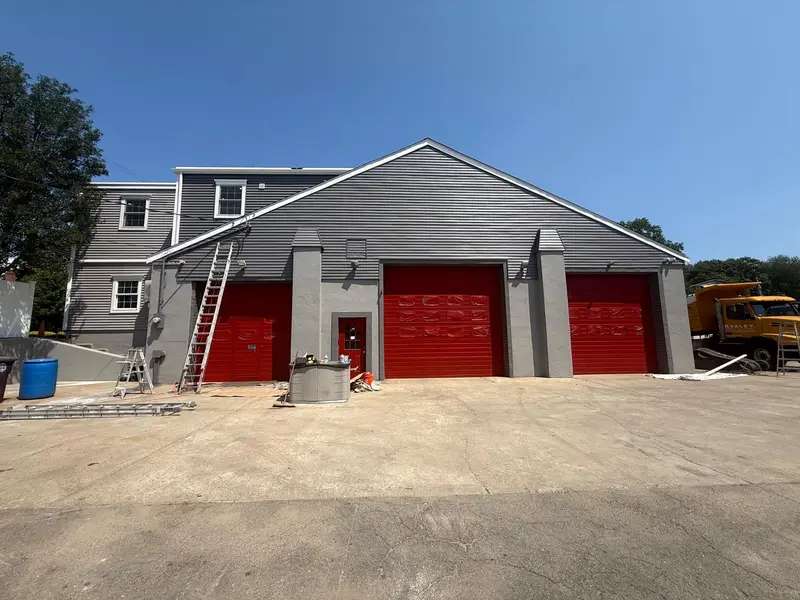
A garage building in Weymouth with white overhead doors and masonry pilasters whose paint was peeling. The doors and service doors were painted red and the pilasters refinished in gray.
See the photos →No hearing is required for a same-color repaint, but the commission asks for a written statement saying what you plan to do, ideally with a paint chip or color name. A change of color on any visible surface is reviewed.
It can. The district guidelines treat the Concord, Assabet and Sudbury Rivers as public ways, so a color change on an elevation visible from the river falls under the same review as one visible from the street.
If they have never been painted, the town's guidelines encourage owners in the districts not to paint them. Outside the districts it is your choice, but once masonry is painted it has to be repainted periodically from then on.
Not necessarily. The district guidelines say wood shingles may be painted or left to weather depending on the building's history, unlike clapboard, which is expected to stay painted. A stain or a natural weathering finish can also suit a shingled house outside the districts.
It can be. The federal rule covers housing built before 1978, and the 1960s are the largest single decade of construction in town after the pre-1940 stock. Testing before scraping tells you whether lead-safe practices are required.
Siding condition, carpentry repairs, lead-safe containment and the amount of detailed trim move the number more than square footage alone. The exterior painting cost guide and the Concord cost page summarize Massachusetts market data; AJ Painting gives a written estimate after a free visit.
AJ Painting is licensed and insured. Call (508) 258-4325, Mon–Sat 7AM–6PM, to set up a free on-site visit and a written estimate.
5.0 on Google · 35 verified reviews · Licensed & insured · Written quote in 48h