
Location not listed
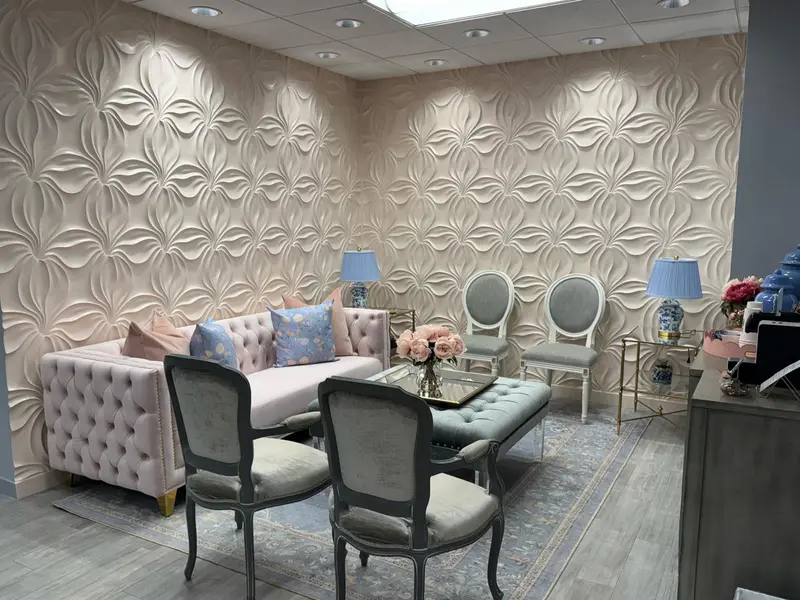
Dental Office Waiting Room
A dental practice's waiting room and reception area, finished in soft gray with applied panel molding, next to a sculpted floral feature wall.
See the photos →Painting inside individual condo units and in the shared halls, stairwells and exteriors that Needham associations maintain, with the paperwork boards and managers ask for.
Multi-unit housing is a minority here, but not a small one. Census figures count 1,995 units (16.7% of the total) in buildings with five or more units, and 1,215 of those sit in buildings of 20 or more. Another 625 units (5.2%) are single-family attached, the Census category that covers townhouses, and 427 are in two- to four-unit buildings.
Those numbers mix rentals and condos, since the Census counts buildings, not ownership type. Still, they describe the range a condo project can fall into: a unit in a mid-rise with an elevator and a management company, a townhouse with its own front door and a shared exterior, or one half of a converted two-family run by a two-person board.
Massachusetts condominiums are organized under General Laws Chapter 183A. The master deed and its plans define where your unit ends and the common area begins, and common expenses are shared according to each owner's percentage interest. For painting, that line determines who chooses the color and who pays.
Walls and ceilings inside a unit generally fall to the owner. Entry doors, the hallway face of those doors, balcony railings and exterior trim can be classed as common or limited common elements, even when only one owner uses them; the documents for your building say which. Read the master deed and rules, or ask the manager, before changing anything visible from a hallway or the street.
Unit work is ordinary interior painting with a few added constraints: building work hours, elevator reservations, where to park a van and where materials can be staged. An association may require a certificate of insurance on file before a contractor's first day, even for work inside a single unit.
With 63.9% of local housing built in 1979 or earlier, older buildings carry the same lead questions as older houses. In a pre-1978 building, paid work that disturbs more than six square feet of paint per room must follow EPA lead-safe practices, and in a multi-unit building that containment also protects neighbors and the shared hallway. The lead-safe painting page explains what to expect.
For an owner who rents out a unit (16.9% of occupied homes in town are rentals), turnover painting between tenants is its own kind of job, and neutral colors with a scrubbable finish make it simpler to repeat. For the walls and trim in more detail, see the interior painting page for this town.
Corridors and stairwells have to stay usable while they are painted. Work can be sequenced floor by floor with notices posted ahead of time, wet-paint signs on fresh walls and low-odor waterborne coatings chosen for occupied buildings. Durable eggshell or satin on walls and semi-gloss on handrails and door frames hold up to luggage, strollers and move-in days.
A written estimate can break a large scope into pieces such as building by building, floor by floor, or interior and exterior, so a board can match it to a reserve study and spread it over more than one year.
AJ Painting is licensed and insured. Ask the manager for the exact certificate-holder wording the association wants on a certificate of insurance and pass it along with the estimate, so the paperwork is settled before the first day of work.
Exterior repainting of townhouse rows and small converted buildings follows the same prep rules as single-family homes, including the 20-square-foot exterior lead threshold on pre-1978 structures, but the color decision belongs to the board. The exterior painting page for this town covers siding and trim, and the Needham Center page describes housing near the town center.
| Units in buildings with 5 or more units | 16.7% of housing units (1,995) (U.S. Census ACS 2020–2024 5-year, table B25024) |
| Units in buildings with 20 or more units | 10.2% of housing units (1,215) (U.S. Census ACS 2020–2024 5-year, table B25024) |
| Single-family attached units | 5.2% of housing units (625) (U.S. Census ACS 2020–2024 5-year, table B25024) |
| Renter-occupied homes | 16.9% of occupied units (U.S. Census ACS 2020–2024 5-year, table B25003) |
| Condominium law | MGL Chapter 183A (master deed defines units and common areas) (Massachusetts General Laws) |
These jobs were in other towns, not in Needham. Each card names the town where the work was done.
A dental practice's waiting room and reception area, finished in soft gray with applied panel molding, next to a sculpted floral feature wall.
See the photos →Check the master deed and rules first. Entry doors, and especially their hallway or exterior faces, are often common or limited common elements that the association controls, so a color change may need board approval even though you own the unit behind the door.
Yes. A scope can be priced and scheduled building by building or row by row, which lets the board spread the expense over several reserve years. The estimate should list each phase separately so later phases can be planned with known numbers.
Some associations require one for any contractor entering the building, not just for common-area work. Ask your manager for the certificate-holder wording and share it when you book, since AJ Painting is licensed and insured and the certificate should be on file before the start date.
It can be, since lead-based house paint was sold until 1978. If the work will disturb more than six square feet of paint per room or area, the EPA rule requires lead-safe practices unless testing rules lead out. Containment also keeps dust out of neighboring units.
Square footage of walls, ceiling height in stairwells, the number of doors and railings, and any after-hours work requirements all shape the number. The painting cost guide for Massachusetts summarizes market data; AJ Painting provides a free written estimate after walking the building.
AJ Painting's hours are Monday to Saturday, 7AM to 6PM. Within that window, noisy prep, elevator use and stairwell closures can be timed to whatever the building's rules allow, with notice posted in advance.
Unit owners and boards can book a free on-site visit and receive a written estimate, with a certificate of insurance when needed. Call (508) 258-4325.
5.0 on Google · 35 verified reviews · Licensed & insured · Written quote in 48h