
Location not listed
Dental Office Waiting Room
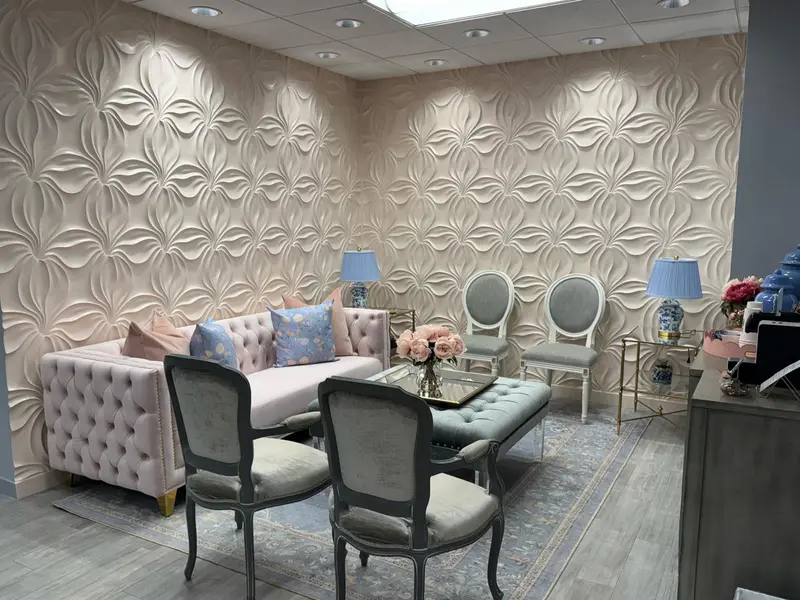
A dental practice's waiting room and reception area, finished in soft gray with applied panel molding, next to a sculpted floral feature wall.
See the photos →Painting for condo owners, landlords and boards of trustees: one unit's rooms, or the stairwells, corridors and siding that every owner shares.
Shared buildings are a large part of local housing. Census estimates show 21.8% of housing units in two- to four-unit buildings, 14.0% in buildings of five or more units, and 8.6% in attached townhouse-style structures. The Census counts building types, not ownership, so those figures mix condominiums with rental apartments; still, together they put 44.4% of the town's housing units in attached or multi-unit buildings.
In a condominium, the painting question always splits in two. There is the unit, which the owner controls within the association's rules, and there are the common elements, which the trustees or board decide on for everyone.
Start with the master deed and the rules and regulations. They define where the unit ends and the common elements begin, including which side of that line windows, entry doors and balconies fall on. Then check the practical rules, such as permitted work hours, whether contractors must register with the management company, and how materials move through shared halls.
Investors should note that 34.8% of occupied homes in town are renter-occupied. A unit repaint between tenants is a different job from an owner's color update: durable, washable, consistent finishes matter more than a statement color, and the timeline is set by the next lease date.
Hallways, stairwells, lobbies and mailbox areas cannot be closed for a week. A workable plan for an association schedules sections so every unit keeps a usable route, posts notice ahead of each phase, uses low-odor coatings in enclosed stair towers, and leaves wet-paint areas marked. Scuff-resistant finishes on walls and a harder enamel on handrails and doors reduce how soon the board has to repaint again.
Boards should also ask about building age. With 63.8% of local housing units built before 1980, an older building may still have early paint layers in shared stairways and on window trim. Paid work disturbing more than six square feet per room inside, or 20 square feet outside, a pre-1978 building has to follow the EPA's lead-safe rules; our lead-safe painting page covers what that involves for occupied buildings.
The Prospect Heights Historic District, northwest of the town center, was built in the early 20th century as Draper Corporation company housing; its 1990 National Register nomination counts 104 housing units across the district, with 37 contributing buildings among them, a mix of wood-frame duplexes and brick rowhouses, and described the properties then as still mostly rentals with some owner-occupied units. Whatever their current ownership form, buildings like these share roofs, porches and facades, so exterior color and material choices affect every unit. The nomination also recorded asbestos shingle on the wood-frame buildings, which changes how exterior prep is done. See the Prospect Heights page and the exterior painting page for detail.
Before any contractor works in a common area, the property manager or board should ask for a certificate of insurance, and the association may want to be listed as certificate holder. Unit owners doing interior work should check whether the master policy or their own HO-6 policy covers damage to neighboring units during a project. AJ Painting is licensed and insured, and the written estimate spells out the scope so the board or owner can compare it against the governing documents.
| Units in 2–4-unit buildings | 21.8% of housing units (2,540 of 11,627) (U.S. Census ACS 2020–2024 5-year, table B25024) |
| Units in buildings of 5 or more | 14.0% (1,628 units, including 175 in buildings of 50+) (U.S. Census ACS 2020–2024 5-year, table B25024) |
| Renter-occupied homes | 34.8% of occupied units (U.S. Census ACS 2020–2024 5-year, table B25003) |
| Prospect Heights Historic District | 104 housing units; 37 contributing buildings, per the 1990 NRHP nomination (National Park Service, NRHP Registration Form (1990)) |
These jobs were in other towns, not in Milford. Each card names the town where the work was done.
A dental practice's waiting room and reception area, finished in soft gray with applied panel molding, next to a sculpted floral feature wall.
See the photos →Inside the unit, usually yes, but read your rules first; some rules cover anything visible from outside, such as front doors or window sashes. When the exterior is a common element, its colors are a board decision.
Common areas are generally an association expense paid from the operating budget or reserves, as set out in the master deed and bylaws. Individual owners should not repaint shared spaces on their own.
If it was built before 1978, the existing paint may contain lead, and disturbing more than six square feet per room inside requires lead-safe methods. Testing before the project lets the board plan the schedule and budget around it.
Typically a certificate of insurance, proof of licensing, a written scope, and an agreed schedule for access and noise. Having those in hand before the start date avoids delays.
For a single unit, size and repair needs drive price; for common areas, wall area, height of stair towers and phasing do. The Massachusetts painting cost guide shows market ranges, and AJ Painting provides a written estimate after a free site visit.
Yes. Single-family attached units make up 8.6% of local housing; the Census does not say how many are condominiums. Where one is, the split is set by the master deed, which often leaves the inside to the owner and siding and trim to the association.
Owners and boards can call (508) 258-4325, 7AM–6PM Monday through Saturday, for a free site visit and a written estimate from a licensed, insured painter.
5.0 on Google · 35 verified reviews · Licensed & insured · Written quote in 48h