
Location not listed
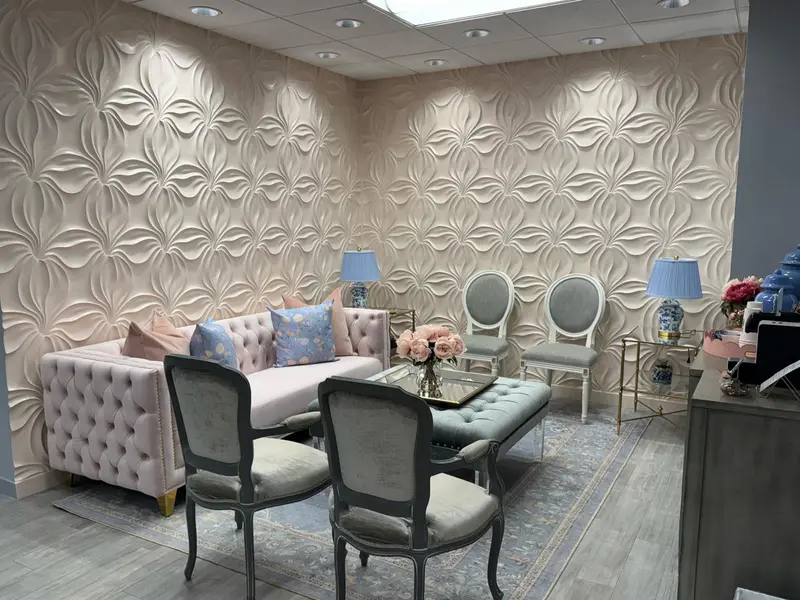
Dental Office Waiting Room
A dental practice's waiting room and reception area, finished in soft gray with applied panel molding, next to a sculpted floral feature wall.
See the photos →Painting for Braintree condo owners inside their units and for boards and managers responsible for shared spaces.
Census figures show 22.0% of Braintree's housing units sit in buildings of five or more units, including 971 units in buildings of 50 or more. Another 9.1% are in two- to four-unit buildings and 3.7% are attached townhouse-style homes. The census counts structures, not ownership, so those numbers mix condominiums with rental apartments, but they show the range of shared buildings in town, from a converted two-family to a large complex.
Zoning shapes where those buildings can go. The town's 2023 Master Plan says Residence C, roughly 2% of Braintree's land, is the only district where apartment buildings and two-family homes are allowed by right.
Your master deed and bylaws define the line between your unit and the common elements. In many associations, interior walls and ceilings fall to the owner, while exterior siding, trim, hallway walls and shared stairwells are common elements; your own documents are what count. Gray areas include entry doors, balcony rails, decks and window sashes, which may be limited common elements: assigned to one unit but still controlled by the board's rules on color and contractors.
Reading those documents before you collect estimates saves arguments later. If a board rule requires approval for colors visible from the hall or the street, get it in writing before the start date.
Unit interiors call for the same prep as any home, with a few added constraints: elevator reservations, protected hallway floors, quiet hours, and parking or loading rules set by management. With renters making up 22.4% of the town's occupied homes, an owner who rents out a unit may need a quick turnover repaint between leases, timed around move-out and move-in dates. Our Braintree interior painting page and the cabinet painting page cover the work itself.
Corridors, lobbies and stairwells stay in use during the job, so the work is best split into sections, with notices posted ahead and a clear path kept open. A washable, scrub-resistant sheen suits walls that take daily traffic and moving-day bumps, and low-odor products help in enclosed corridors.
Exterior projects on a shared building often need a board vote and a reserve-fund plan. A written estimate broken out by building, elevation or phase lets the association spread costs across fiscal years if needed. Siding, trim and historic-district rules are covered on our Braintree exterior painting page.
Of all Braintree housing units, 74.7% were built before 1980. In a building from before 1978, paid work that disturbs paint in units or common areas falls under the EPA's lead-safe rule. Because dust from a shared hallway can travel to several doors, containment and cleanup matter even more than in a single house. Our lead-safe painting page explains the steps.
If your association or management company requires a certificate of insurance before contractors work in common areas, the master policy or management contract may dictate who must be named on it. AJ Painting is licensed and insured; send the exact certificate-holder name and wording with your estimate request so the paperwork is ready before the first day.
| Units in buildings of five or more units | 22.0% (3,339 units) (U.S. Census ACS 2020–2024 5-year, table B25024) |
| Units in buildings of 50+ units | 971 (6.4%) (U.S. Census ACS 2020–2024 5-year, table B25024) |
| Renter-occupied homes | 22.4% of occupied units (U.S. Census ACS 2020–2024 5-year, table B25003) |
| Land zoned Residence C (apartments, two-families by right) | About 2% of the town (Braintree Master Plan 2023–2033, p. 12) |
| Lead-safe rule for paid paint work | Pre-1978 housing, including multi-unit buildings (U.S. EPA, RRP Program for Contractors) |
These jobs were in other towns, not in Braintree. Each card names the town where the work was done.
A dental practice's waiting room and reception area, finished in soft gray with applied panel molding, next to a sculpted floral feature wall.
See the photos →Inside the unit, usually yes. Check the master deed and rules for anything that faces a shared hallway or the outside, such as the corridor side of your entry door, a balcony or window trim, since the board may control those colors.
Common areas are generally an association expense paid from operating or reserve funds rather than by individual owners. Your bylaws and budget decide the details.
Send the exact name the certificate should list and any additional-insured wording the manager or master policy requires. AJ Painting is licensed and insured; sending the wording with your estimate request lets the certificate be arranged before work begins.
Phase the work by floor, wing or stairwell, post the schedule ahead of time, and keep one entrance and route open. Quick-drying, low-odor paints can let some areas reopen the same day.
Costs depend on building height, siding type, access and prep. Our Massachusetts painting cost guide gives market ranges, and a free on-site visit produces a written estimate the board can vote on and phase.
If the building predates 1978 and the work disturbs paint, yes. The federal rule covers rental housing too, so sanding or scraping must follow lead-safe practices.
Unit owners and boards can book a free on-site visit and written estimate. Call (508) 258-4325, Monday to Saturday, 7AM–6PM.
5.0 on Google · 35 verified reviews · Licensed & insured · Written quote in 48h