
Location not listed
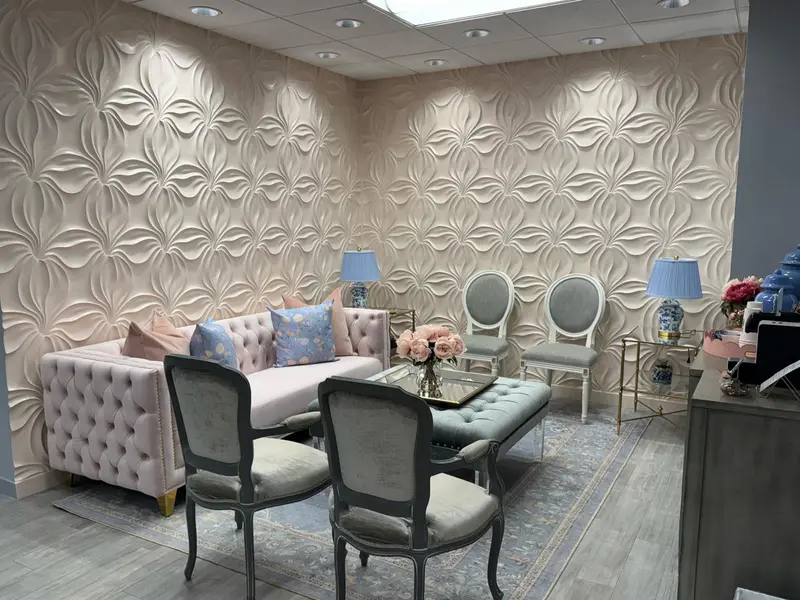
Dental Office Waiting Room
A dental practice's waiting room and reception area, finished in soft gray with applied panel molding, next to a sculpted floral feature wall.
See the photos →Interior painting for Belmont condominium owners, plus hallways, stairwells and exteriors for associations, from two-unit buildings to larger complexes.
Census counts of units in structure show how varied multi-unit housing is here. Of 10,881 housing units, 29.7% are in two-unit buildings, 8.7% in buildings of three or four units, and 10.3% in buildings with five or more, including 5.1% in buildings of 50 units or more. The census does not say how many of those are condominiums rather than rentals, but the building size tells you a lot about how a paint project gets organized.
In a two-unit condominium, the association may be just the two owners, and decisions about a shared stairwell or the exterior are a conversation between neighbors. In a large building, a board, and possibly a management company, sets the rules for access, hours and paperwork, and an owner painting inside a unit still has to work within them.
Walls, ceilings and interior trim inside a unit are generally the owner's to paint, but check the master deed and rules before scheduling. An association may set working hours, require advance notice for contractors, or limit where materials can be staged and how elevators and parking can be used.
Age matters inside units too. With 87.3% of the town's housing built before 1980, a condo carved out of an older house or apartment building may have pre-1978 paint on its doors, windows and trim. The EPA rule on lead-safe renovation covers apartments as well as houses, so prep that disturbs those surfaces has to be done by a certified firm. See our lead-safe painting page.
Common-area painting is an association decision, and it usually comes with more steps than a unit job. Residents need to get in and out while the work is going on, so stairwells may be done in sections, wet-paint areas need clear signs, and lead-safe containment in an occupied hallway has to leave a safe path.
Expect the board or manager to ask for proof of coverage. If a certificate of insurance is needed, the master insurance policy or the management agreement may specify who must appear as certificate holder, and getting those details in writing early keeps the start date from slipping. AJ Painting is licensed and insured.
A condo building inside the Pleasant Street, Common Street or Richardson Farm local historic district is subject to the same Historic District Commission review as a house. Even repainting the existing colors requires a Certificate of Non-Applicability, and new colors need a Certificate of Appropriateness. When the master deed makes the exterior a common element, the association, not an individual owner, is the logical applicant.
Associations budgeting for repainting can start with our painting cost overview for Massachusetts, which summarizes market data. Owners planning work inside a unit can also read our page on interior painting in Belmont, and boards weighing exterior work can see exterior painting in Belmont. Neighborhood notes are on the Waverley and Belmont Center pages.
| Housing units in two-unit buildings | 29.7% (3,228 of 10,881) (U.S. Census ACS 2020–2024 5-year, table B25024) |
| Units in buildings with 5 or more units | 10.3% (1,125 units), including 556 in buildings of 50+ (U.S. Census ACS 2020–2024 5-year, table B25024) |
| Renter-occupied homes | 35.3% of 10,412 occupied units (U.S. Census ACS 2020–2024 5-year, table B25003) |
| Housing units built before 1980 | 87.3% (9,495 of 10,881) (U.S. Census ACS 2020–2024 5-year, table B25034) |
These jobs were in other towns, not in Belmont. Each card names the town where the work was done.
A dental practice's waiting room and reception area, finished in soft gray with applied panel molding, next to a sculpted floral feature wall.
See the photos →Check the master deed first. If it makes the exterior a common element, both owners, acting as the association, need to agree on scope and color before anyone paints. Painting half a building also tends to leave a visible line where old and new paint meet.
For walls and ceilings inside your unit, generally not, but your association may have rules about contractor hours, notice, parking and moving materials through common hallways. Read the rules or ask your manager before booking so the crew can follow them from day one.
It should be assumed until tested. Common areas in a building that old may have pre-1978 paint on doors, railings and trim, and scraping or sanding them is covered by the EPA's lead-safe rule. In a shared hallway that also means planning containment so residents can still pass safely.
Ask the manager for the exact wording they need, including who should be named as certificate holder and any coverage minimums set by the master policy or management agreement. Sending those requirements with your request lets the paperwork be prepared before the start date.
Yes, if the building is in one of the local historic districts. Exterior repainting there needs a certificate from the commission whether or not the colors change (a Certificate of Non-Applicability for the same colors, a Certificate of Appropriateness for new ones), and if the exterior is a common element, the association should be the one to apply.
We do not post our own rates. Our Massachusetts painting cost overview gathers market data that boards can use for a first budget line, and a written estimate after a walkthrough of the common areas gives the figure to present to owners.
Free on-site visit and written estimate for owners and boards. Call (508) 258-4325, Monday to Saturday 7AM–6PM.
5.0 on Google · 35 verified reviews · Licensed & insured · Written quote in 48h