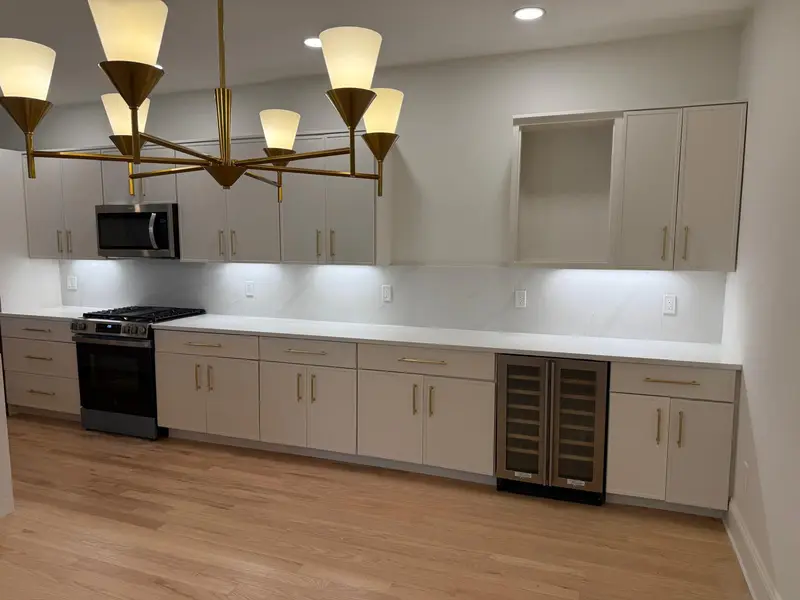
Cabinet painting, Sudbury MAPainting kitchen cabinets in a Sudbury home: which era of kitchen you are starting from
Painting cabinets is a refinishing job, not a decorating one. The doors take more handling than any other painted surface in a house, so the coating has to grip a slick factory finish or decades of cooking residue and then stand up to fingernails, dishwasher steam and cleaning sprays. What that takes depends largely on when the kitchen was built and what it was finished with.
Two eras stand out in the local housing count. Units from the 1950s and 1960s make up 35.0% of the total, and units from 2000 onward a further 24.1%. A kitchen in the older group may have been remodeled since it was built, so the cabinets in a 1962 house may be anything from original site-built boxes to a 1990s oak replacement. Opening a door and looking at the hinges, the back of the panel and the box material tells more than the house's age does.
Matching the method to the cabinet
Every surface is degreased before sanding, because sanding a greasy door only spreads the film into the scratches. Finishing doors flat avoids runs and lets each coat cure properly before rehanging. The cabinet painting process article goes through the stages in order.
- Red oak with open grain: the grain pattern will telegraph through paint unless it is filled first, which is a choice to make before priming
- Maple, birch and cherry: tight grain that paints smoothly once the clear topcoat is scuffed and primed with a bonding primer
- Thermofoil or vinyl-wrapped doors: peeling wrap cannot be painted over reliably; these are often candidates for new doors instead
- MDF doors and panels: paint well, but exposed edges absorb primer and need sealing so they do not swell or show texture
- Previously painted site-built cabinets: may hold several old coats, and in a pre-1978 kitchen, possibly lead
Lead in older kitchens
The pre-1980 share of local housing is 53.7%, and federal lead rules cover paid work in pre-1978 housing that disturbs more than six square feet of paint per room. The door and drawer faces of a single run of painted cabinets add up to more than that quickly. When the existing coating on original cabinets may predate 1978, the kitchen is set up with plastic sheeting and HEPA dust collection, and old paint is tested or treated as lead-containing. The lead-safe painting page covers how a kitchen is protected and cleaned afterward.
Refinish or replace?
Paint makes sense when the boxes are solid wood or plywood, the doors are flat or a simple raised panel, and the layout still works. It does not fix sagging shelves, water-swollen sink bases or a layout that needs to change. The comparison of painting versus replacing cabinets works through the decision.
No district approval needed
Even inside the Town Center or Wayside Inn historic districts, cabinets are interior work. The Historic Districts Commission reviews only exterior features visible from a public street, way or place, so a kitchen in an antique house can be painted any color without an application. If the kitchen project also includes walls, ceilings or trim, the interior painting page covers that part.
Sudbury at a glance
| Units built 1950–1969 | 35.0% (2,273 of 6,497) (U.S. Census ACS 2020–2024 5-year, table B25034) |
| Units built in 2000 or later | 24.1% (732 in the 2000s, 663 in the 2010s, 168 since 2020) (U.S. Census ACS 2020–2024 5-year, table B25034) |
| Units built before 1980 | 53.7% (3,486 of 6,497) (U.S. Census ACS 2020–2024 5-year, table B25034) |
| Lead-safe threshold indoors | Over 6 sq ft of paint per room, housing built before 1978 (U.S. EPA, Renovation, Repair and Painting Program: Contractors) |