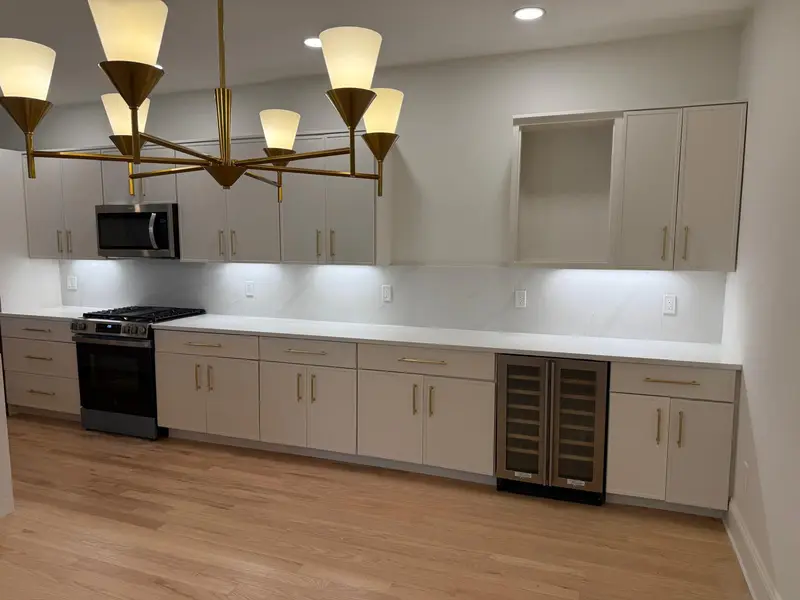
Cabinet painting, StonehamRepainting cabinets in kitchens built from the 1950s on
Among homes standing today, more date from the 1950s than from any other single decade after 1939: 1,634 housing units, 16.0% of the total, and the 1960s and 1970s add 2,503 more. A house of that age may still have its first kitchen or one from a later remodel, so the cabinets in a 1958 Cape might be original painted wood, 1980s oak or a 2000s maple set.
Each of those calls for a slightly different start. What they share is a question worth asking before any paint is bought: are the cabinet boxes square, solid and laid out the way you want? If so, painting can change the room for a fraction of the disruption of a replacement.
Refinish or replace
Paint is a surface fix. It does not repair swollen particleboard under a sink, drawers whose sides have come apart, or a layout that leaves no room for a dishwasher. Those problems point toward new cabinets, at least in part. Solid wood or plywood boxes with working drawers are good candidates for paint, and new hinges, pulls and soft-close hardware can go on at the same time.
Our article on cabinet painting vs. replacement walks through that choice in more detail. The latest Census estimates put the median owner-occupied home value at $671,900. Whether you plan to stay or sell, compare both routes on the condition of your own boxes and layout rather than on a rule of thumb.
Wood species and old finishes
Red oak has open grain that shows through paint as a texture; a grain filler before priming gives a smoother, more furniture-like result if that is what you want. Maple and birch have tight grain and paint smoothly, but their factory finishes are hard and slick, so adhesion depends on degreasing and scuff-sanding. Thermofoil and laminate doors need a specialty primer, and peeling thermofoil is generally not a paint candidate.
On older cabinets that were painted decades ago, the bottom layers may contain lead. In a house built before 1978, sanding painted cabinet doors and frames can exceed the EPA's 6-square-foot interior threshold, and that brings in the lead-safe setup explained on our lead-safe painting page.
How the work is done
Doors and drawer fronts come off, are labeled and are finished away from the kitchen, where they can be sprayed flat and left to cure. The frames stay in place and are masked, sanded and brushed or sprayed. Counters, floors and appliances are covered throughout. The full sequence is described in our kitchen cabinet painting process.
- Degreasing with a cleaner made for kitchen residue
- Scuff-sanding and filling dents, holes and old hardware holes
- Bonding primer chosen for the existing finish
- Two coats of cabinet-grade enamel
- Rehanging and adjusting doors, with new hardware if wanted
The rest of the kitchen
New cabinet color can make tired walls and trim stand out. Wall, ceiling and trim work is covered on our Stoneham interior painting page, and cabinets in a condominium unit are treated the same way, with building rules on our condo painting page.
Stoneham at a glance
| Housing units built 1950–1959 | 16.0% (1,634 of 10,196) (U.S. Census ACS 2020–2024 5-year, table B25034) |
| Housing units built 1950–1979 | 40.6% (4,137 of 10,196) (U.S. Census ACS 2020–2024 5-year, table B25034) |
| Median value, owner-occupied homes | $671,900 (±$25,548) (U.S. Census ACS 2020–2024 5-year, table B25077) |
| Housing units built 2010 or later | 7.7% (783 of 10,196) (U.S. Census ACS 2020–2024 5-year, table B25034) |