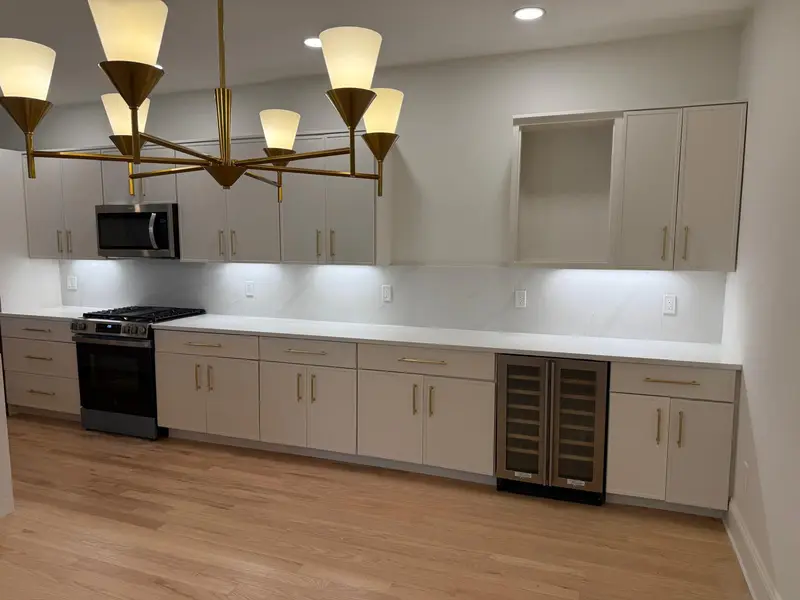
Cabinet painting, Plainville MAPainting kitchen cabinets in a town built mostly between the 1970s and 2000s
Census figures show that the 1970s were the busiest single decade for local home building, at about 16% of today's 4,470 units, and that another 38% followed between 1980 and 2009. A house from those years may still have its original kitchen cabinets or a set from a later remodel, and the boxes can be sound even when the finish looks tired.
Painting keeps the existing layout, hinges and countertops in place and changes the color and sheen. Whether that is the right call depends on what the cabinets are built from and what shape they are in.
Figure out the material first
Opening a drawer and looking at the raw edge of a door or the inside of a box usually tells you which one you have. When it is unclear, testing adhesion on the back of one door settles it.
- Solid hardwood doors and face frames, such as oak, maple or cherry: sand, prime and paint well; open-grain oak needs grain filler if you want a smooth look
- Wood veneer over plywood or particleboard: paints well if the veneer is tight, but peeling edges have to be glued down first
- Thermofoil (a vinyl film over MDF): poor candidate, since heat from ovens and toasters can release the film and take the paint with it
- Plastic laminate: can be painted only with a specialty bonding primer, and edges chip more easily than on wood
How a durable cabinet finish is built
Grease left on cabinet surfaces keeps primer from bonding. Every surface gets degreased, rinsed and dried, then scuff-sanded so primer can grip. Doors and drawer fronts come off, are labeled, and are finished flat to avoid runs; boxes and face frames are masked and finished in place.
A bonding primer goes on first, followed by two coats of a urethane-modified or alkyd enamel made for cabinets and trim. These products level out brush and roller marks and cure harder than wall paint, though full hardness takes a few weeks. Our article on the kitchen cabinet painting process goes step by step.
Older kitchens and lead
About 53% of local housing units were built before 1980, the closest Census break to the 1978 lead paint ban. In a house that old, cabinets or built-ins that have been painted before may have lead in their lower coats. Sanding them is a dust hazard, and federal RRP rules require certified lead-safe practices for paid work. See our lead-safe painting page. Original stained or varnished cabinets with no paint layers are a different case.
Refinish, reface or replace
Painting makes the most sense when the boxes are square, the doors close properly, and you are happy with the layout. If the boxes are water-damaged under the sink, the drawers are falling apart, or you want to move the range or add an island, new cabinets may be worth the expense.
Townhouses, small multi-family buildings and manufactured homes together make up over a quarter of local housing. Kitchens in those units can be compact, which keeps the door count down, but cabinets in some manufactured homes are laminate or vinyl-wrapped and need the material check above. The comparison of cabinet painting versus replacement covers the trade-offs.
Plainville at a glance
| Housing units built in the 1970s | 16.4% (734 of 4,470, ±207), the largest single decade (U.S. Census ACS 2020–2024 5-year, table B25034, Plainville town (computed from table counts)) |
| Housing units built 1980–2009 | 38.2% (1,707 of 4,470) (U.S. Census ACS 2020–2024 5-year, table B25034, Plainville town (computed from table counts)) |
| Single-family attached units | 7.1% of housing units (316 of 4,470, ±126) (U.S. Census ACS 2020–2024 5-year, table B25024, Plainville town (computed from table counts)) |
| Units in 2–4 unit buildings | 13.2% of housing units (590 of 4,470) (U.S. Census ACS 2020–2024 5-year, table B25024, Plainville town (computed from table counts)) |
| Median value of owner-occupied homes | $476,000 (±$35,369) (U.S. Census ACS 2024 5-year, Census Reporter profile) |