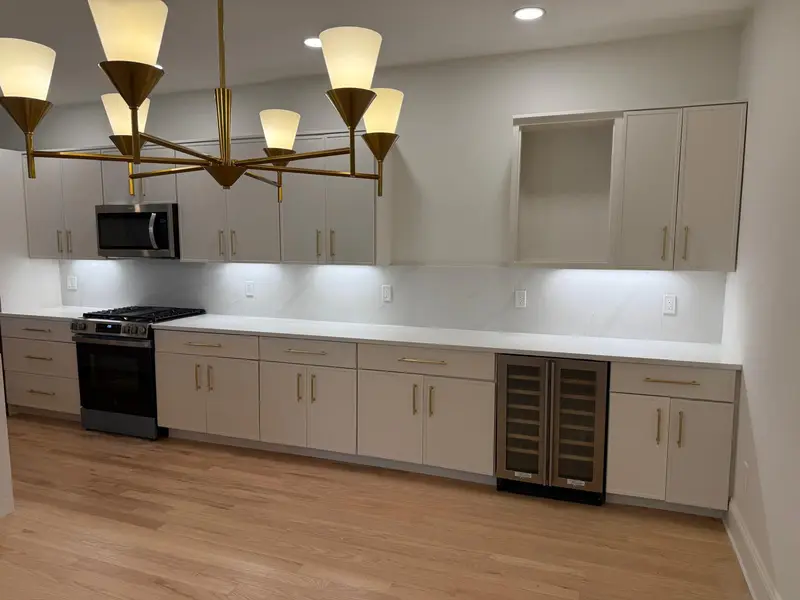
Cabinet painting, Norton MARepainting Norton kitchen cabinets instead of tearing them out
The Census estimates that half of the town's housing was built before 1982 and half after, and the 1980s alone account for 1,257 units, the largest decade in the estimates. A kitchen installed in one of those houses and never remodeled is now around forty years old. When the boxes are still square and solid under a worn finish, painting is worth pricing before any replacement quote.
Whether to paint, reface or replace comes down to the condition of the boxes and doors, the layout, and how long you plan to stay. Painting changes the color and finish; it does not move the sink or add drawers.
What the cabinets are made of
Open a door and look at the edge. Each material takes paint differently:
- Solid oak or oak veneer: open grain shows through paint unless it is filled; a grain filler or several coats of high-build primer give a smooth look
- Maple, birch or cherry: tight grain paints smoothly once the factory finish is scuffed and primed
- MDF doors: paint well, but raw edges and routed profiles soak up primer and need extra attention
- Thermofoil or laminate: vinyl or plastic skins need a specialty bonding primer, and peeling skins should be fixed or the doors replaced first
- Older site-built cabinets and built-ins: may carry several coats of oil enamel and possibly lead paint
Older kitchens and pantry built-ins
About 11% of local housing units were built in 1939 or earlier. In a house that old, the cabinetry may be a later replacement, but pantries, china cupboards and built-in dressers sometimes survive with decades of paint on them. With about 46% of the town's housing predating 1980, sanding those surfaces can raise lead dust, so testing first and following lead-safe prep is the safe route. Our lead-safe painting page covers the precautions.
How the work is sequenced
In a durable cabinet job, doors and drawer fronts come off, get labeled by location, and are finished away from the kitchen so they can dry flat without dust. The boxes stay in place and are masked off from counters, floors and appliances.
Every surface is degreased first, since cooking residue near the range keeps primer from bonding. After a scuff sanding, a bonding primer goes on, followed by two topcoats of a cabinet-grade urethane-modified or waterborne alkyd enamel. These finishes feel dry within hours but take weeks to reach full hardness, so the first days back in use call for gentle handling. Our kitchen cabinet painting process post walks through each step.
Paint or replace?
The median owner-occupied home here is valued at $501,400 in Census estimates, a useful benchmark when deciding how much to put into a kitchen. Painting keeps the existing boxes and countertops, so the kitchen is out of service for days rather than weeks. Replacement makes sense when boxes are water-damaged, the layout no longer works, or the doors are a style paint cannot fix. Our cabinet painting vs. replacement comparison goes deeper on that choice.
Norton at a glance
| Median year housing was built | 1982 (±2 years) (U.S. Census ACS 2020–2024 5-year, table B25035, Norton town) |
| Housing units built 1980–1989 | 1,257 of 6,791, the largest decade bin (U.S. Census ACS 2020–2024 5-year, table B25034, Norton town) |
| Median value, owner-occupied homes | $501,400 (±$26,552) (U.S. Census ACS 2020–2024 5-year, table B25077, Norton town) |
| Housing units built 1939 or earlier | about 11% (749 of 6,791) (U.S. Census ACS 2020–2024 5-year, table B25034, Norton town (computed from table counts)) |