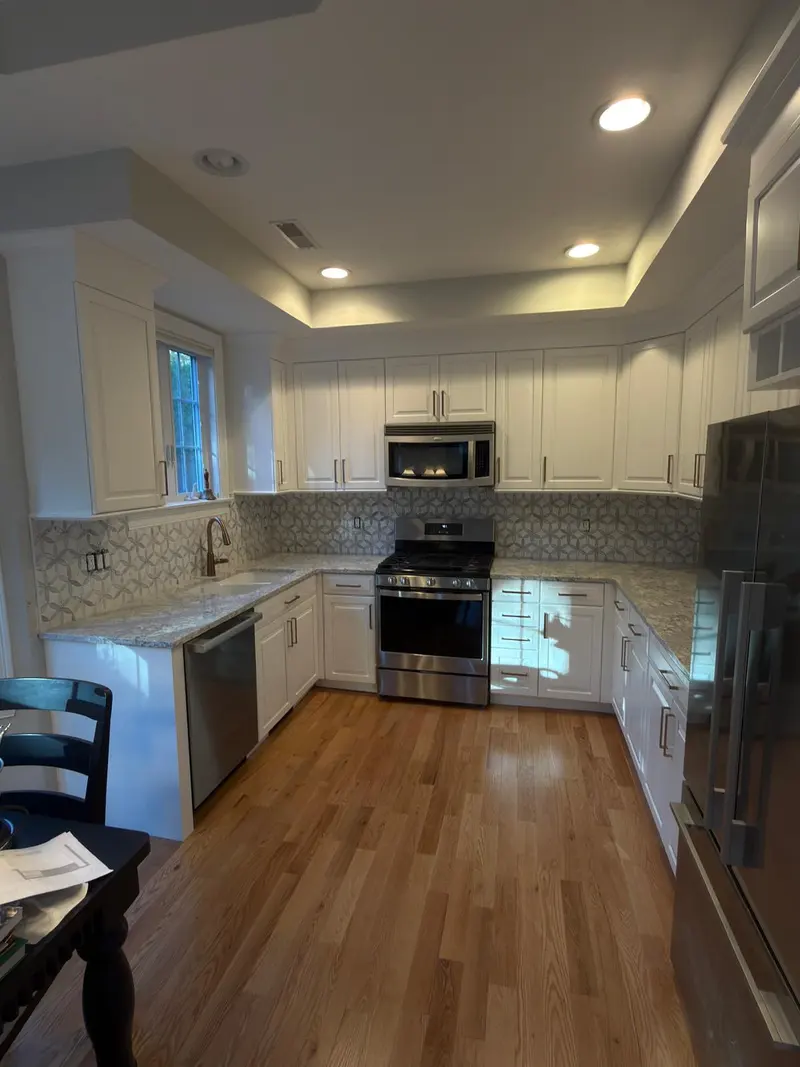
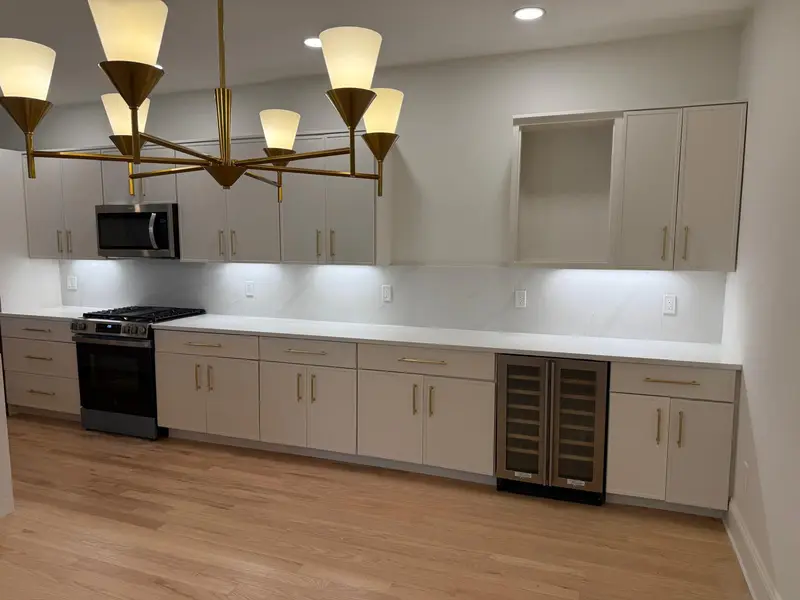
Cabinet painting, NorthboroughPainting the cabinets you have in a Northborough kitchen
Whether paint is the right move for a kitchen comes down to two things: the cabinet boxes have to be sound, and the material has to accept a primer. The age of the house gives a first clue about both.
Census figures show the 1980s were the busiest decade of home building here, with 1,111 units (18.2% of the stock), and the 1970s and 1990s close behind. There was also an earlier wave in the 1950s, when 810 units went up. Kitchens that were never remodeled still carry the cabinets of those eras, and each era has its own surface to deal with.
What different decades left behind
Solid wood and MDF take paint well. Thermofoil, the vinyl wrap that peels at the edges near a dishwasher or oven, is a poor candidate; once it starts lifting, replacing those doors is usually more reliable than painting them. Plastic laminate can be painted with a specialty bonding primer, but it chips more easily than wood.
- 1950s and 1960s: site-built or early factory cabinets, sometimes carrying several layers of old paint or varnish; doors may be flat slab or lipped
- 1970s: dark-stained wood, sometimes with a thick polyurethane that has to be scuffed hard before primer will stick
- 1980s and 1990s: oak was a common choice, with an open grain that shows through paint unless it's filled; some kitchens used thermofoil or laminate doors instead
- 2000s and later: may be painted or stained maple or MDF, which paints smoothly once the factory finish is sanded
Oak grain: fill it or let it show
Painted oak never looks like painted maple unless the grain is filled first. Some people like the texture showing through a solid color. Others want a smooth, furniture-like door, which means applying a grain filler or several coats of high-build primer, sanding between each, before the color coats. That extra step adds labor, so decide which look you want before getting quotes.
Lead on older cabinets
Lead paint was banned for homes in 1978, and 49.3% of the local housing stock was built before 1980. If your kitchen is original to a house from the 1950s or 1960s and the cabinets have been painted before, the bottom coats could contain lead. Sanding doors in a kitchen where food is prepared is exactly where that matters. Test before sanding, and if lead turns up, follow the state's lead-safe rules described on our lead-safe painting page.
Condo and townhouse kitchens
The town's 2020 master plan, citing the assessor, counted 718 condominium units in 2016, up 77.3% from 405 in 2000, with apartment and condominium development concentrated along and near Route 20. In a condo, the kitchen cabinets are normally part of the owner's unit, but check the association documents for rules on work hours, spraying, and where doors can be set up to dry. Removing doors and drawer fronts for off-site spraying keeps overspray and odor out of shared hallways.
How the work is done
A durable cabinet finish depends on degreasing, scuff-sanding, a bonding primer and a cabinet-grade enamel, with doors labeled so every one goes back on its own hinge. Boxes are brushed and rolled or sprayed in place with the kitchen masked. The walkthrough in our kitchen cabinet painting process covers each step, and refinish vs. replace helps if you're still deciding. The walls around the cabinets fall under interior painting in Northborough.
Northborough at a glance
| Homes built 1980–1989 | 1,111 units (18.2%), the largest decade (U.S. Census ACS 2020–2024 5-year, table B25034) |
| Homes built 1950–1959 | 810 units (13.3%) (U.S. Census ACS 2020–2024 5-year, table B25034) |
| Built before 1980 | 49.3% (3,011 of 6,108 units) (U.S. Census ACS 2020–2024 5-year, table B25034) |
| Condominium units (assessor, 2016) | 718, up 77.3% from 405 in 2000 (Town of Northborough Master Plan 2020, Ch. 4 Table 4-2, citing the Town Assessor) |