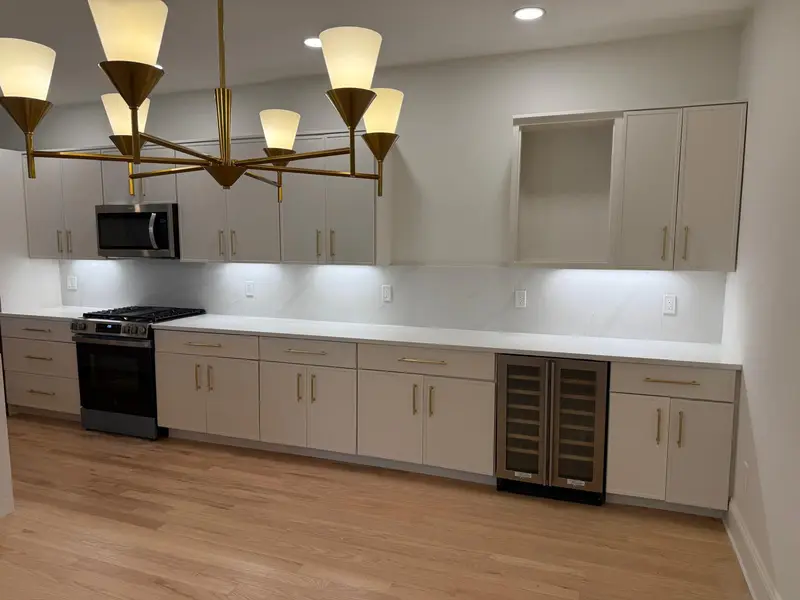
Cabinet painting, NorfolkRepainting the cabinets in a Norfolk kitchen instead of tearing them out
Of the town's 3,557 housing units, 824 were built in the 1980s and 427 more in the 1990s, according to the Census. A kitchen that went in with one of those houses is now roughly 27 to 46 years old if it hasn't been redone. When the boxes are still square and solid but the finish is tired, paint is worth a serious look.
The Census counts 94.9% of occupied homes here as owner-occupied. Only 176 occupied units are rented, so in roughly 95 of every 100 homes the choice between paint and new cabinets rests with the owner, not a landlord.
What the cabinets are made of
The material decides the prep. Oak has deep, open grain that shows through paint as a texture; if you want a smooth, furniture-like look, the grain has to be filled before priming. Maple and birch are tight-grained and take paint smoothly but need a bonding primer because the factory finish is hard. MDF and thermofoil doors behave differently: MDF paints very well, while peeling thermofoil has to be stripped or the doors replaced.
If the house is one of the 614 units built since 2010 and the cabinets still wear their original factory finish, that coating may be a catalyzed or conversion varnish. A finish like that is tough, so it is scuff-sanded thoroughly and primed with a product rated for it rather than painted directly.
How the work is done
Doors and drawer fronts come off, get labeled, and are finished lying flat so the enamel levels and cures without runs. The cabinet boxes, face frames and any end panels stay in place and are degreased, sanded, primed and brushed or sprayed under masking.
- Degrease every surface first; cooking residue keeps primer from bonding
- Sand and prime with a bonding primer suited to the existing finish
- Fill oak grain only if a smooth look is wanted
- Finish with a cabinet-grade enamel, then let doors cure before rehanging
- Reinstall with new hinges or pulls if you are changing hardware
Paint, refinish or replace
Painting is the right call when the layout works, the boxes are sound and the doors are a style you can live with in a new color. Replacement makes more sense when the boxes are water-damaged, particleboard is swelling under the sink, or you want to move appliances. Our refinish vs. replace comparison and the post on cabinet painting vs. replacement go through the choice in detail.
If the house was built before 1978, original cabinets may carry lead in older layers of paint or finish, which changes how they can be sanded. Factory-finished cabinets added during a later renovation are less of a concern, but a test settles it. See the lead-safe page.
Living with the kitchen during the job
While the doors are out, the kitchen stays usable with open shelves; the main limits are the masked areas and the cure time on the boxes. The kitchen cabinet painting process post lays out each day. If the walls or ceiling around the cabinets also need work, interior painting in Norfolk can be done in the same visit.
Norfolk at a glance