Interior painting, NorfolkMatching interior prep to the age of a Norfolk house
The town's housing leans recent. The Census sets the median build year at 1984, and 58.8% of housing units date from 1980 or later. Only 278 units, or 7.8%, go back to 1939 or earlier.
Those groups need different things inside. Newer houses mean drywall, builder-grade trim and big open rooms; the older ones can mean plaster walls, layered woodwork and lead in the paint. A good estimate starts with which kind of house it is.
Drywall homes from the 1980s onward
By the 1980s gypsum board was the standard wall and ceiling material in new houses, and the problems it develops come from age and movement rather than material: nail pops, cracked tape at corners, scuffed flat paint that won't wash, and dents along hallways. Those are patched, sanded and spot-primed so they don't show through the finish.
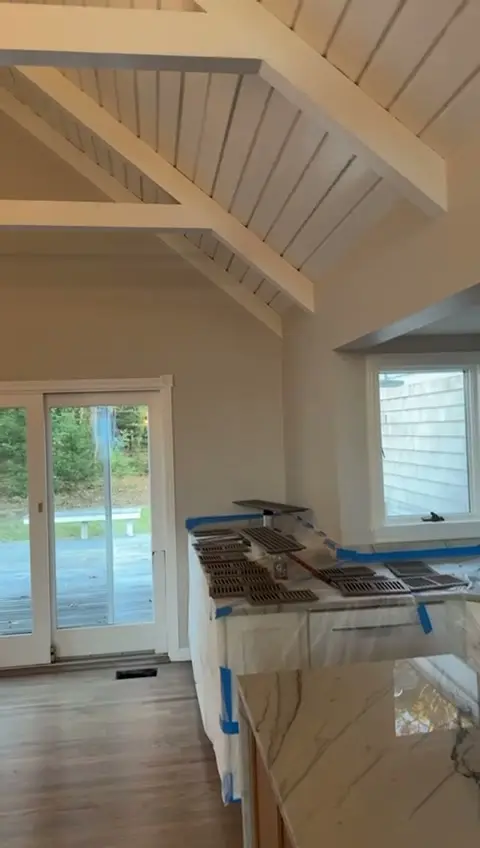
If your house has a tall foyer or a two-story family room, ceilings and walls at that height need planks or scaffolding, and the time spent setting them up is a real part of the job. It is worth painting everything that height reaches in one visit instead of returning for it later.
Plaster and lead in the older houses
In the pre-1940 group, small as it is, walls may be plaster on wood lath rather than drywall. Plaster can have hairline cracks, loose keys and bulges; it gets repaired with plaster-compatible materials so the patch moves the way the wall does.
More broadly, 41.2% of the town's housing units were built before 1980. In homes built before 1978, older paint on window sashes, door jambs and stair parts may contain lead, and sanding it creates dust that settles on floors and sills. Lead-safe practice means plastic containment, HEPA vacuums, misting instead of dry sanding, and a cleaning check at the end. Our lead-safe page explains the steps.
- Rooms sealed with plastic and the HVAC vents covered during prep
- Wet scraping and hand sanding in place of power sanding on old trim
- HEPA vacuuming and wet wiping before the room is reopened
- Window wells and sills cleaned last, where dust tends to collect
Trim, doors and finishes
Trim and doors take the most handling, so they get a harder finish than walls: a waterborne alkyd or a quality acrylic enamel in satin or semi-gloss. If the existing trim is oil-based, it must be deglossed and primed with a bonding primer before latex goes on, or the new coat can peel off with a fingernail. A quick alcohol rub test tells which one you have.
For walls, a washable matte or eggshell holds up in kitchens, mudrooms and kids' rooms. The Aura vs. Regal Select comparison covers two common premium lines.
Painting in the colder months
Interior work doesn't depend on the weather, which makes late fall and winter a practical time for it. Low-odor paints and a cracked window or a fan keep air moving; the post on ventilation with the windows closed goes through it. If an ice dam left a stain on a ceiling, the leak should be fixed and the stain sealed with a stain-blocking primer before paint, as explained in ceiling stains after an ice dam.
Norfolk at a glance