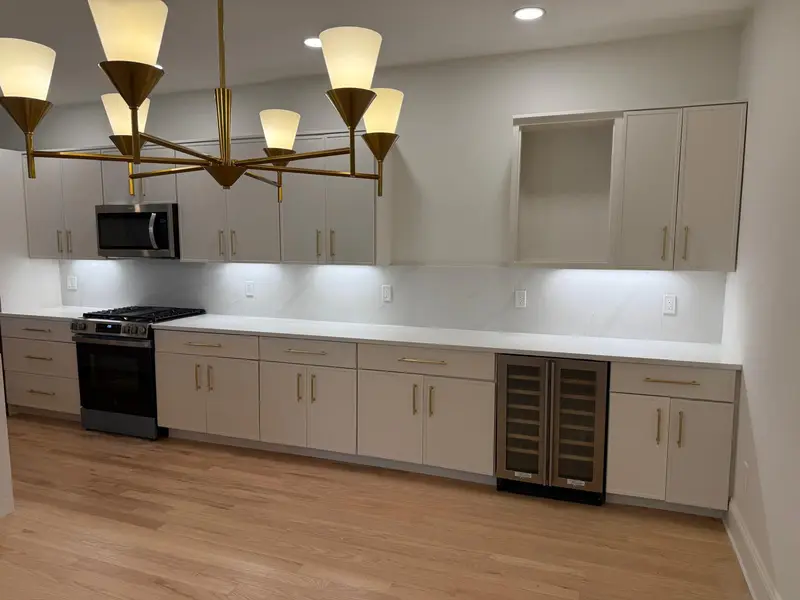
Cabinet painting, MaldenPainting cabinets from three very different building eras
The kitchens in this city were built across a long span. Census figures show 7,182 units from the 1940s through the 1970s, another 4,233 from 2000 onward, and 12,572 from 1939 or earlier, where the kitchen you see today may not be the first one in the house. Each era tends to leave a different kind of cabinet, and the right prep depends on what the boxes and doors are actually made of.
Before anything is sanded, a door comes off and gets examined: solid wood, veneer over particleboard, thermofoil, laminate or metal. That decides whether painting is a good investment or whether the money belongs in new doors.
Which cabinets paint well
Painting makes the most sense on a sturdy, well-laid-out kitchen whose doors are simply worn. If the layout no longer works or the boxes are water-damaged, new cabinets usually make more sense. Our post on cabinet painting vs. replacement walks through that decision.
- Solid wood doors and face frames (maple, oak, birch, cherry): the best candidates; oak's open grain shows through paint unless it is filled first
- Wood veneer: paints well if the veneer is intact; lifting edges need gluing first
- Steel cabinets, found in some mid-century kitchens: paintable after degreasing, rust treatment and a bonding primer
- Thermofoil or peeling vinyl wrap: paint will not hold on a delaminating skin, so replacing doors is usually the better choice
- Particleboard with swollen edges near the sink: repair or replace the damaged piece before painting the rest
Old finishes and lead
In a house built before 1978, cabinets that were painted decades ago may carry lead under the newer coats. That matters because cabinet prep involves sanding every door and frame. A quick test tells you before any dust is made; if it is positive, sanding moves to contained, HEPA-extracted methods under EPA lead-safe rules. Our lead-safe painting page describes them. Stained cabinets that were never painted are a lower concern, though testing before sanding is still sensible in a pre-1978 kitchen.
How a cabinet repaint is sequenced
Doors and drawer fronts are removed, labeled and finished flat on racks, away from cooking and foot traffic, so they cure without dust. Frames and cabinet sides are cleaned with a degreaser, scuffed, primed with a bonding primer and painted in place. A urethane-modified or catalyzed enamel gives a harder film than wall paint, which matters on edges that hands brush against every day.
Expect the kitchen to be usable but missing doors for several days. The full sequence is laid out in our cabinet painting process.
Rentals and condo kitchens
Renters occupy 58.7% of occupied homes here, so a large share of local kitchens sit in rented units, where the owner may want a refresh between leases. Painted cabinets can suit that, as long as the color stays neutral and touch-up paint is left on site. In larger buildings (34.6% of units are in buildings of five or more), check the association's rules on work hours and on spraying before booking; brushing and rolling inside the unit, or spraying doors outside the building, keeps fumes out of shared halls.
If the rest of the room needs paint too, see the interior painting page.
Malden at a glance