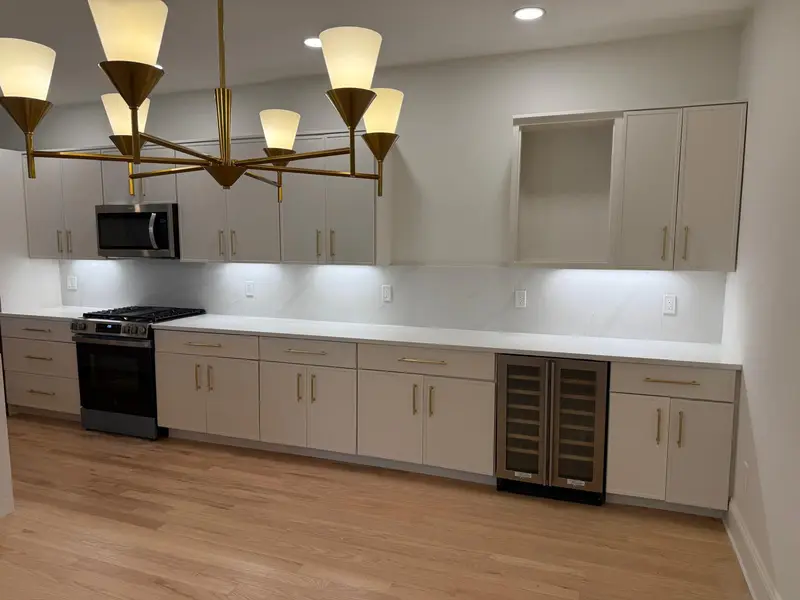
Cabinet painting, EastonCabinets from the 1970s and 1980s: repaint, refinish or replace
Cabinets tend to date a kitchen. In Easton, the 1980s produced 2,089 housing units, or 22.3% of the total, and the 1970s another 1,861, or 19.8%, so about 42% of units come from those two decades. Kitchens from that stretch may still have their original cabinets, and whether those boxes are worth keeping is the first question at any visit.
That is the argument for refinishing: keep the construction you already own, change what you see every morning.
Reading the kitchen you have
Census counts show 14.2% of Easton's units are attached single-family homes and 14.3% are in buildings of five or more units. The data says nothing about cabinet material, but kitchens in those housing types are worth checking for MDF or laminate doors, because the substrate dictates the primer.
- Solid wood or plywood boxes with real wood doors: the best candidates, since the surface sands and accepts primer well
- Open-grain oak: paints well but shows grain through the finish unless a filler step is added
- MDF or laminate doors, common in townhouse and condo kitchens: paintable with a bonding primer, provided edges are sealed and not swollen
- Thermofoil: a vinyl skin that can peel; if it already lifts at edges, replacement of those doors is more honest than painting
Refinish or replace
Replacement makes sense when the layout is wrong, the boxes are water-damaged particleboard, or the hinges and drawer slides have worn out. Painting makes sense when the cabinet frames are solid and the issue is color or tired finish. New hardware, soft-close hinges and drawer-slide swaps can ride along with a paint job. The refinish vs. replace guide lays out the decision in more detail, and the cabinet cost page shows Massachusetts market data.
Older kitchens and lead
About half of Easton homes, 51.3%, predate 1980, and some kitchens in older ones may keep original woodwork, built-in cupboards or painted trim that could contain lead coatings. Before sanding any cabinet of uncertain age, the work follows the steps on our lead-safe page. Newer factory-finished cabinets present no such concern, but dust control still matters in a kitchen where food is prepared.
The finishing process
A typical sequence has doors and drawer fronts removed and numbered, sprayed away from the house, with boxes masked and finished in place. Kitchen grease is the enemy of adhesion, so degreasing comes before any sanding. A bonding primer goes on next, followed by light sanding and two thin coats of a cabinet-grade enamel. Thin coats cure harder and drip less than one heavy coat.
Curing takes longer than drying. The surface may feel dry the same day, but gentle use for the first couple of weeks avoids dents and fingerprints that stay. Expect a kitchen without its doors for several days, and set up a temporary spot for dishes and small appliances.
Bathrooms and built-ins
Vanities in humid bathrooms need a moisture-resistant primer and a finish that tolerates steam. Built-in hutches, mudroom lockers and bookcases can be refinished with the same method, and can take paint well when the wood is solid.
If you want the visit, call (508) 258-4325 or use the Easton cabinet page. The estimate is free and written.
Easton at a glance
| Units built in the 1980s | 22.3% (2,089 of 9,382) (U.S. Census ACS 2020–2024 5-year (via Census Reporter), table B25034) |
| Units built in the 1970s | 19.8% (1,861 of 9,382) (U.S. Census ACS 2020–2024 5-year (via Census Reporter), table B25034) |
| Single-family attached units | 14.2% (1,332 of 9,382) (U.S. Census ACS 2020–2024 5-year (via Census Reporter), table B25024) |
| Units in buildings of 5 or more | 14.3% (1,346 of 9,382) (U.S. Census ACS 2020–2024 5-year (via Census Reporter), table B25024) |
| Units built before 1980 | 51.3% (4,816 of 9,382) (U.S. Census ACS 2020–2024 5-year (via Census Reporter), table B25034) |