
Norwood, MA
Porch Floor, Steps & Railings in Norwood, MA
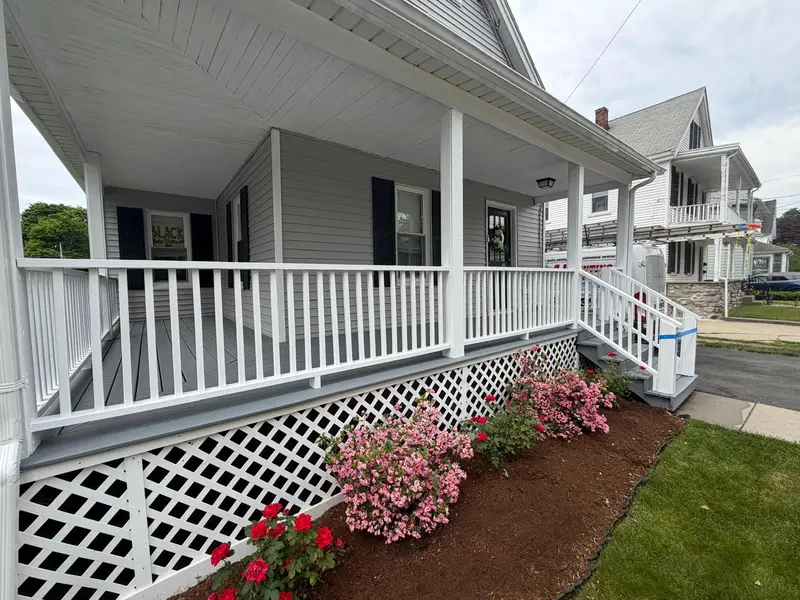
A Norwood home's front and back porches: floor boards and steps painted gray, with railings, balusters and lattice skirting in white.
See the photos →Wood decks, porches and steps cleaned, repaired and refinished with stain or deck paint, picked according to the board, the sun and the water on your lot.
Decks live outside the house's paint system, with their own rules. In Easton, 64.4% of housing units, 6,039 of 9,382, are single-family detached homes, the house type with its own yard, where a rear deck, side porch or set of entry steps is possible. Census counts do not say how many have decks, but 26.4% of units date from 1990 or later, and a deck on a newer house raises a different question than one on an older house: whether the wood has aged enough to hold a finish.
Deck failures come from three sources: water, sun, and foot traffic. Your lot decides how much of each you get.
The state survey describes the town's surface as generally level, with sandy to gravelly soils, and notes that the southeast corner is dominated by the Great Cedar Swamp. Level, sandy ground generally drains better than clay, which helps post footings. Low spots near swampy or brook-fed areas are different: damp air and wet ground slow drying under the deck, and boards cup or grow mildew sooner.
Check the underside during the estimate visit. If joists feel soft near the ledger or posts, the answer is repair, not another coat. If the underside is dry and the boards are merely gray, cleaning and stain will do the job.
The paint vs. stain comparison compares upkeep for each. For horizontal surfaces, stains are generally easier to maintain over the years because they do not peel the way a film can.
Pressure-treated lumber needs time to dry after installation before it takes a finish evenly; a splash test, where water beads instead of soaking in, indicates it still holds moisture. Cedar and redwood hold finishes well but lose color quickly in sun. Composite decking is a separate case, since most manufacturers advise against staining it.
Prep is the real service. The deck is washed with a deck cleaner, brightened if the wood has turned black or gray, sanded where splinters stand, and allowed to dry for a few days. Nails are set or screws replaced, and rails are checked for wobble. A finish applied to wet or dirty wood fails in a season.
Front porches and steps on pre-1978 houses can carry old lead paint. With 51.3% of Easton's units built before 1980, scraping an old painted porch calls for ground cover and wet methods. The lead-safe page has the specifics, and it applies to porch floors, balusters and posts just as it does to siding.
Staining wants dry weather, moderate temperatures and no rain for at least a day after application. Late spring through early fall is the usual window in Massachusetts. For market data on what deck refinishing runs in Massachusetts, see our deck staining cost guide. To book the free visit, call (508) 258-4325 or visit the Easton deck page.
| Single-family detached homes | 64.4% (6,039 of 9,382) (U.S. Census ACS 2020–2024 5-year (via Census Reporter), table B25024) |
| Units built 1990 or later | 26.4% (2,477 of 9,382) (U.S. Census ACS 2020–2024 5-year (via Census Reporter), table B25034) |
| Units built before 1980 | 51.3% (4,816 of 9,382) (U.S. Census ACS 2020–2024 5-year (via Census Reporter), table B25034) |
| Terrain | generally level, sandy to gravelly soils; Great Cedar Swamp in the southeast (Massachusetts Historical Commission, Reconnaissance Survey Town Report: Easton (1981)) |
| Ponds | all of the town's ponds are artificial; Leach Pond created in 1825 (Massachusetts Historical Commission, Reconnaissance Survey Town Report: Easton (1981)) |
These jobs were in other towns, not in Easton. Each card names the town where the work was done.
A Norwood home's front and back porches: floor boards and steps painted gray, with railings, balusters and lattice skirting in white.
See the photos →For sound boards, stain is usually easier to maintain, since it fades instead of peeling. Paint suits worn boards that need cracks filled, but it demands scraping before every recoat.
When it no longer soaks up water. Sprinkle some on the boards: if it beads, wait; if it absorbs, the wood is ready. That can take weeks or months depending on the lumber and weather.
Less well. Poor airflow and wet ground under the deck slow drying and encourage mildew. Opening up skirting, trimming shrubs and fixing drainage help the finish more than switching brands.
Usually, if the wood is solid. Cleaning and brightening bring back much of the color, and sanding removes raised grain. Rotted boards should be replaced before finishing.
It varies with square footage, railing detail, and how much old finish must come off. Massachusetts market data is on our deck cost guide, and the written estimate follows our on-site visit.
Most manufacturers recommend against it. Composite is cleaned rather than coated, and warranty terms often prohibit finishes, so check yours first.
Free on-site visit, written estimate, and an honest call on stain, paint or board replacement.
5.0 on Google · 35 verified reviews · Licensed & insured · Written quote in 48h