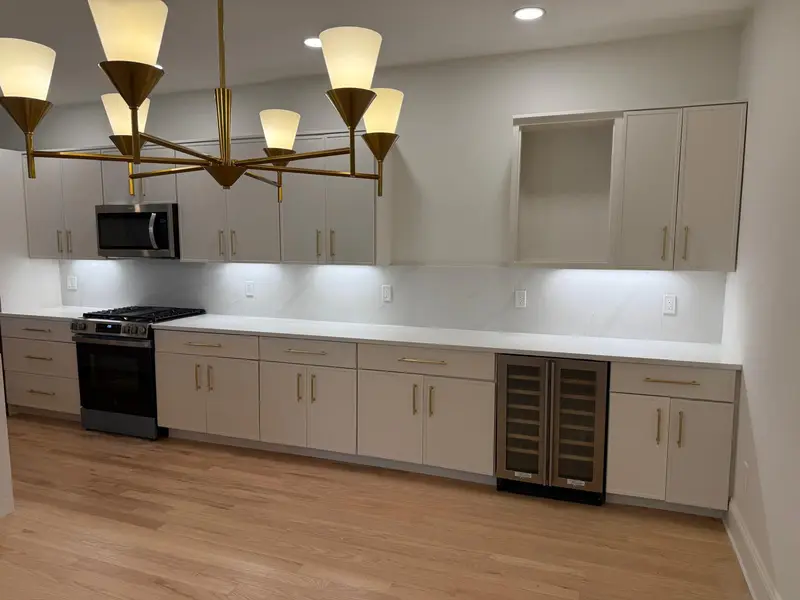
Cabinet painting, East BridgewaterRepainting the cabinets you have in an East Bridgewater kitchen
The Census breakdown for the town shows 728 housing units built in the 1970s, 562 in the 1980s and 952 in the 1990s, the largest single decade. Where original cabinets from those years survive, the boxes can still be solid while the doors look dated, and that is where paint makes the most sense.
The decision comes down to construction. If the cabinet boxes are square, the drawers run and the doors are solid wood or a stable veneer, painting gives the room a new look for a fraction of the disruption of a tear-out.
What kitchens from each era tend to have
Cabinets from the 1950s and 1960s may be site-built from painted pine or birch plywood, sometimes with layers of old enamel already on them. In a house built before 1978, those layers can contain lead, and sanding them is lead-safe work. Our lead-safe painting page explains what that involves.
Factory cabinets from the 1980s and 1990s can be oak with a clear finish or maple, and some have thermofoil or laminate doors. Oak has open grain that shows through paint unless it's filled. Thermofoil can't be sanded and primed reliably, and peeling foil is a sign those doors need replacing rather than painting.
- Solid wood and wood veneer: good candidates for paint
- Open-grain oak: grain filler first if you want a smooth look
- Melamine and laminate: possible with a specialty bonding primer
- Peeling thermofoil: replace the doors, then paint the boxes to match
Refinish or replace
Replacing cabinets means countertops come off, plumbing gets disconnected and the kitchen is out of use for weeks. Painting keeps the counters, sink and layout in place. It doesn't fix boxes swollen from a leaking dishwasher, a layout that doesn't work, or particleboard that has crumbled at the hinge screws.
The refinish vs. replace guide goes through the trade-offs in more depth, and the cabinet painting vs. replacement post covers when new boxes are worth it.
How a cabinet finish is built
Grease is the enemy of adhesion. Doors and drawer fronts come off, get labeled and are degreased, then scuff-sanded so the primer can grip. A bonding or shellac-based primer blocks tannin bleed from oak and knots in pine. The finish is a cabinet-grade enamel, sprayed for an even surface, and it needs time to cure hard before heavy use, even after it feels dry to the touch.
The boxes stay in the kitchen and are painted in place with the room masked and the counters covered. Hinges can be cleaned and reused or swapped for new ones while the doors are off. Our post on the kitchen cabinet painting process walks through each day of a typical job.
Bathrooms, built-ins and older pantries
Census figures show 1,042 units in town built in 1939 or earlier, and houses of that age can have a built-in china cabinet, a pantry or a painted bathroom vanity. Those pieces take to the same degrease, sand and prime sequence, with extra care around old hardware and glass panes. For the walls around a refreshed kitchen, see interior painting in East Bridgewater.
East Bridgewater at a glance