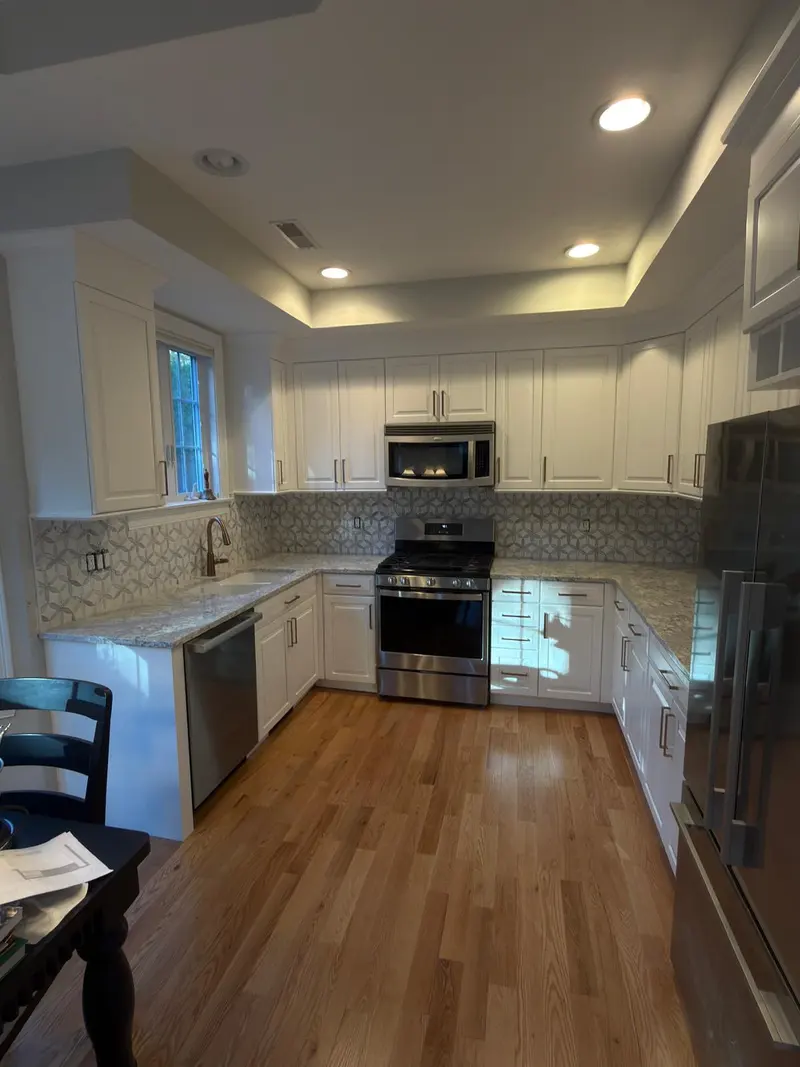
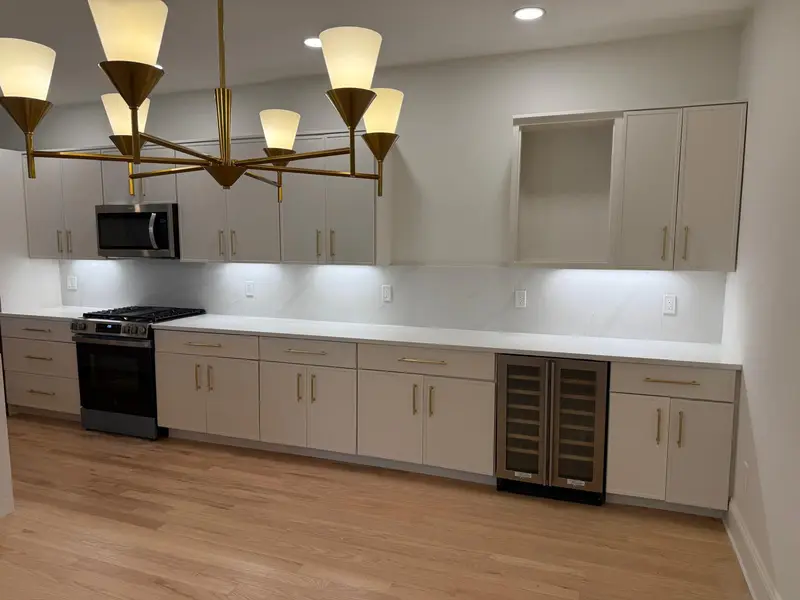
Cabinet painting, AttleboroPainting Attleboro kitchen cabinets instead of replacing them
Kitchens tend to be remodeled on their own clock, separate from the age of the house, so a 1920s house can have 2015 cabinets and a 1985 house can still have its originals. Even so, the age of the stock gives a sense of what is out there. The census puts the city's median year built at 1972, and the 1970s and 1980s together account for 27.4% of all housing units. Cabinets original to those houses would now be roughly 35 to 55 years old.
If the boxes are sound and the layout still works for you, paint is a way to change the look of a kitchen without tearing it out. Whether that works depends first on the material.
What the doors are made of decides the method
Look at the back and the edges of a door, not just the front face, because a veneer or foil skin can pass for solid wood from the front.
- Solid wood (oak, maple, cherry): the best candidate; needs degreasing, sanding and a primer suited to the species
- Wood veneer over plywood or particleboard: paintable if the veneer is tight; lifting edges have to be glued first
- MDF: takes paint smoothly, but raw edges swell if water gets in, so they are sealed before priming
- Thermofoil or plastic laminate: a poor candidate, since the film can peel away from the core regardless of the paint
- Older steel cabinets: paintable after rust treatment and a metal primer
Oak grain and tannin bleed
Red oak has open pores that show as a ribbed texture under paint. Some owners like that wood character; others want a smooth, furniture-like face. Getting smooth means a grain filler applied and sanded before primer, which adds time and should be agreed up front.
Oak and cherry also contain tannins that can migrate through water-based primers and show as yellow or brown spots in a white finish. A shellac-based or dedicated stain-blocking primer stops that. Without it, a white cabinet job can look blotchy within weeks.
Refinishing or replacing
Painting makes sense when the cabinet boxes are solid, the drawers run, and the floor plan suits you. Replacement is the better call if the sink base has water damage, shelves sag, or you want to move the range or add an island. Our refinish vs. replace guide lays out the decision in more detail, and cabinet painting vs. replacement compares the disruption and timeline of each.
How a durable cabinet finish is built
Cabinet doors and drawer fronts get opened, bumped and wiped far more than any wall, so the finish has to be harder than wall paint. The sequence is degrease with a cleaner that removes cooking residue, scuff-sand, prime, sand lightly again, then apply two finish coats of a cabinet-grade enamel. Doors and drawer fronts come off and are labeled so they go back in the same openings, and hinges and pulls are bagged by location.
Enamels feel dry within hours but take weeks to reach full hardness, so the first stretch after the job calls for gentle use. Our cabinet painting process post goes step by step.
Built-ins in the older houses, and cabinets in rental units
Close to a quarter of units, 24.1%, were built in 1939 or earlier. Pantry cupboards, china cabinets and butler's-pantry built-ins from that period may carry many layers of paint, and any layer applied before 1978 may contain lead. Sanding those layers is a dust hazard, so the work follows the lead-safe practices on our lead-safe painting page.
With 33.8% of households renting, apartment kitchens are part of the picture too. In a rental, the finish has to tolerate rough cleaning, so a harder enamel and plain hardware that is easy to replace are practical choices.
Attleboro at a glance