
Location not listed
Dental Office Waiting Room
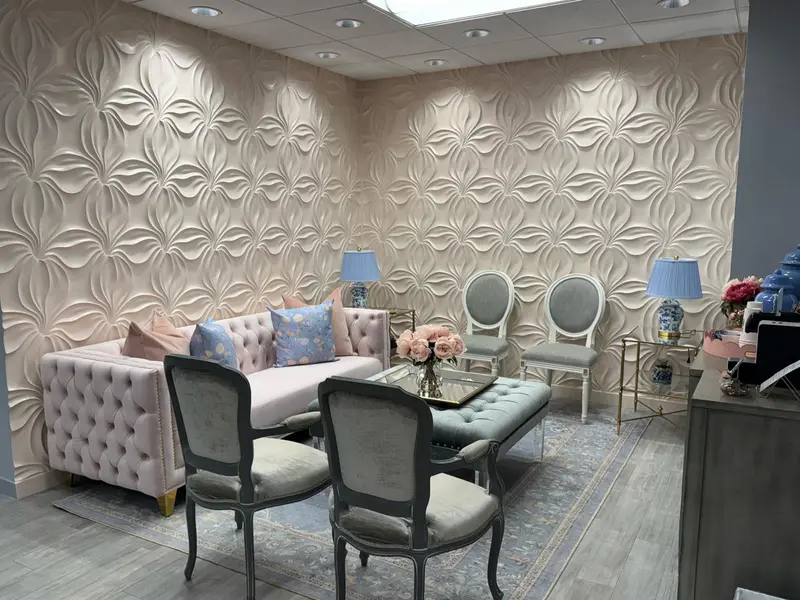
A dental practice's waiting room and reception area, finished in soft gray with applied panel molding, next to a sculpted floral feature wall.
See the photos →Painting inside individual condo units and in association common areas, scheduled around residents and documented the way managers and boards need it.
The city's housing is far from all single-family. Census estimates count 15.4% of units in buildings with five or more apartments, including 5.7% in buildings of fifty or more, another 12.1% in three- and four-unit buildings, 7.5% in two-unit buildings and 6.6% in attached single-family homes such as townhouses. The census does not record which of those are condominiums, so whether a given building is a condominium comes from its master deed, not the census count.
Condo work has two clients who want different things. The unit owner wants their rooms done well and on time. The association wants shared spaces painted without blocking exits, with insurance and paperwork in order and costs that the board can explain to owners.
Under the Massachusetts condominium statute, Chapter 183A, each condominium's master deed defines what belongs to the unit and what is a common element. Interior wall surfaces inside a unit are typically the owner's to paint; hallways, lobbies, exterior siding and trim, and sometimes entry doors and balconies are typically the association's. Your own master deed and bylaws are what control, so read them before hiring anyone for anything that touches the outside or a shared space.
Some associations also require notice before work inside a unit, set quiet hours, or limit when the elevator can be used for moving materials. Those rules belong in the schedule from the start.
In a two- or three-unit condo, the association may be just the owners themselves, with no manager. Painting exterior common elements is typically a common expense, and Chapter 183A has common expenses shared according to each unit's percentage interest set in the master deed. Getting a single written estimate addressed to the association, with the scope spelled out by elevation and by porch, makes it easier for owners to agree on what they are paying for.
If the building is one of the city's older multi-family houses, its trim and porches may need significant scraping, and if it was built before 1978 the lead-safe requirements below apply.
Common-area painting happens around people who live there and need to get in and out at all hours. A workable plan does stairwells and corridors in sections so one route always stays open, uses low-odor waterborne coatings, posts notices with dates ahead of each section, and protects floors and handrails at the end of each day.
Walls in corridors take scuffs from carts, strollers and move-ins. A scrubbable eggshell or satin on walls and a semi-gloss on doors and frames are easier to clean between repaints than flat paint.
AJ Painting is licensed and insured, and the estimate is free. With 61.2% of the city's units built before 1980, lead-safe practice matters for any association whose building predates 1978; details are on our lead-safe painting page.
| Units in buildings with 5 or more units | 15.4% (2,953), including 5.7% in 50+ unit buildings (U.S. Census ACS 2020–2024 5-year, table B25024) |
| Units in 3- and 4-unit buildings | 12.1% (2,311) (U.S. Census ACS 2020–2024 5-year, table B25024) |
| Attached single-family homes (townhouses) | 6.6% (1,257) (U.S. Census ACS 2020–2024 5-year, table B25024) |
| Owner vs. renter households | 66.2% owner; 33.8% renter (U.S. Census ACS 2020–2024 5-year, table B25003) |
These jobs were in other towns, not in Attleboro. Each card names the town where the work was done.
A dental practice's waiting room and reception area, finished in soft gray with applied panel molding, next to a sculpted floral feature wall.
See the photos →Usually not for interior walls within your unit, but check your bylaws and rules. Some require notice, insurance from the contractor, or set hours for work and elevator use. Painting your entry door's hallway side or a balcony may need approval, since those are often common elements.
No. AJ Painting is licensed and insured, and a certificate naming the association can be requested from the insurer before the start date. Send the exact wording the manager wants on it.
If it was built before 1978, the EPA's lead-safe rule covers common areas in multi-unit housing, not just individual apartments. Disturbing more than six square feet of painted surface per room indoors means containment and cleaning verification, and residents of affected units must be notified of the work, its locations and its dates.
The work is split into flights and landings so part of the route is always usable, with fast-drying waterborne paint and floor protection. Notices go up ahead of time so residents know which sections are wet on which days.
Ask every bidder to price the same written scope. Your master deed sets each unit's percentage interest, which governs how common expenses are shared. For market context, see our Massachusetts painting cost guide and why quotes vary.
Yes. An empty unit is the simplest to schedule, and a scrubbable wall finish holds up better to the next move-in. Let the association know about the work dates if your rules require it.
Unit owners and boards can book a free on-site visit and get a written scope and estimate. Call (508) 258-4325, Monday to Saturday.
5.0 on Google · 35 verified reviews · Licensed & insured · Written quote in 48h