Interior painting, Dover MAInterior painting for Dover houses, from 1960s rooms to two-story foyers
Two figures say a lot about an interior project in Dover: when the house went up and how much floor area it holds. Census estimates put the median year built at 1970, and the 1960s alone account for 27.4% of the town's housing units, the biggest share of any decade.
Size is the other half. The Town Assessor's FY2021 data, published in the Housing Production Plan, puts the average single-family living area at 4,363 square feet, and houses from 2000–2009 average 7,356. More floor area means more ceiling, more baseboard and casing, and sometimes stair halls or great rooms tall enough to need staging instead of a stepladder. A job that size can be split by floor or wing to keep part of the house usable.
Old paint on sills, doors and stair parts
Of the roughly 2,000 housing units the Census counts in town, 61.1% were built before 1980. Lead-based paint was banned for residential use in 1978, so any of those homes may still carry it under newer coats. Woodwork that is handled, rubbed or bumped is of particular concern: window sills and stools, door jambs, stair treads and railings.
Inside the house, the risk is dust. Sanding or scraping those surfaces makes fine particles that settle on floors and window wells. For pre-1978 homes, the EPA's Renovation, Repair and Painting rule requires a certified firm and lead-safe work practices once disturbed paint passes 6 square feet in a room: plastic containment, no dry power sanding without HEPA dust collection, and a specific cleaning and verification routine. Our lead-safe painting page covers how that works under Massachusetts law.
Plaster walls in the oldest houses
Census data show 10.2% of units here dating from 1939 or earlier, and the Assessor lists 66 single-family homes from 1670–1899. Houses of those ages may have plaster on wood lath, and plaster fails in its own ways: hairline cracks along lath lines, bulges where the keys behind it have let go, and ceilings that sound hollow when tapped.
Paint alone won't fix any of that. Loose plaster needs to be reattached with plaster washers or adhesive, cracks opened up and filled with a setting compound, and patches primed before finish coats so they don't flash through. Old woodwork in these rooms may also have dozens of paint layers that have softened its profiles; whether to strip, smooth or simply repaint is a decision best made room by room.
Mid-century and later interiors
A 1960s house can have drywall, plaster, or a mix of both after decades of remodeling, so the surface itself is checked before patching and primer are chosen. Trim from that period may have been finished in oil-based enamel. Water-based paint will not bond to glossy oil without cleaning, deglossing and an adhesion primer, and without that step the new coat can peel off in strips.
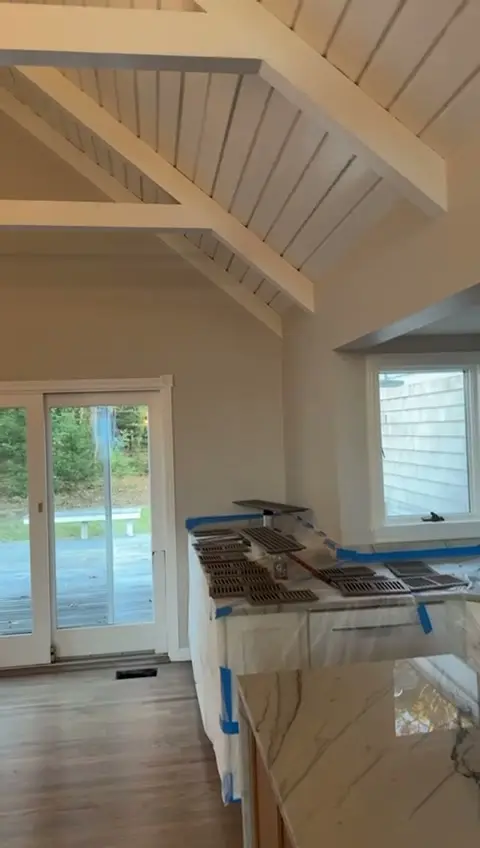
Newer, larger interiors raise different questions: color continuity across open plans, crisp lines where walls meet tall ceilings, and how to reach clerestory windows or the wall above a stair landing safely.
Working around a household
Census figures show 97.9% of occupied homes in town are owner-occupied. If you plan to stay in the house during the work, furniture moves, floor protection, which rooms stay in use, and how pets are kept away from wet paint all belong in the plan. These guides help with that: getting a house ready for interior painting, painting with kids and pets at home, and interior painting through the winter.
AJ Painting Services is licensed and insured, based in Ashland, and offers a free on-site visit with a written estimate that lists rooms, surfaces, repairs and the number of coats.
Dover at a glance